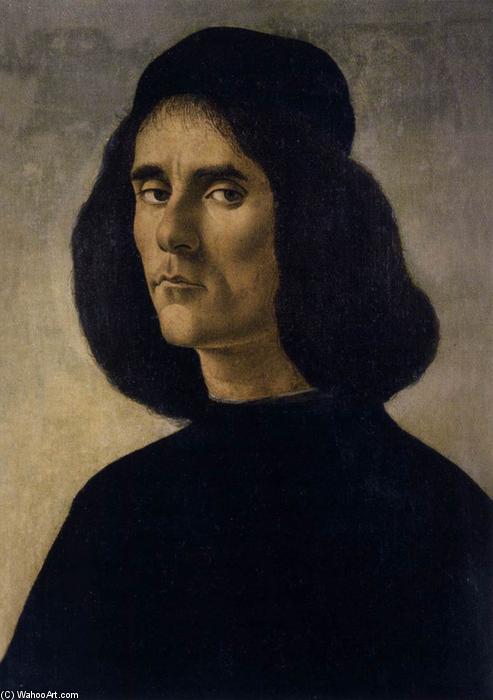
Admire Sandro Botticelli’s ‘Portrait of a Man,’ a 1490 Renaissance masterpiece. Explore its melancholic beauty, oil-on-canvas detail & dramatic lighting – a timeless work of art.
フィレンツェ
イタリア
サンドロ・ボッティチェリ
アレッサンドロ・ディ・マリアーノ・フィリペピ
ルネサンス期の巨匠ボッティチェリ。代表作「ヴィーナスの誕生」や「春」は、優美な線描と神話的世界観が魅力。初期ルネサンス美術を象徴する芸術家として、今もなお多くの人々を魅了し続けています。
初期ルネサンス
プレラファエリスム協会
フラ・アンジェリコ
1445年頃
1510年
アレッサンドロ・ディ・マリアーノ・フィリペピ
イタリア人
ヴィーナスの誕生
イタリア、フィレンツェ
ローマ
3
サンドロ・ボッティチェリは、どのイタリアの都市で生まれましたか?
A Glimpse into Renaissance Introspection: Sandro Botticelli’s Portrait of a Man (c. 1490)
This captivating portrait by Sandro Botticelli, painted around 1490, offers an intimate encounter with a man of the Italian Renaissance. Measuring 49 x 35 cm, this oil on canvas work exemplifies Botticelli’s mastery of capturing not just *likeness*, but also the inner life of his subjects. The painting is part of a series of portraits by Botticelli depicting young men, several of which are remarkably similar in composition and style – suggesting they may represent members of the same social circle or even studies for larger works.
Style & Technique: Bridging Gothic Grace with Renaissance Realism
Botticelli’s artistic signature lies in his elegant linearity and delicate rendering of form, a stylistic bridge between the late Italian Gothic period and the burgeoning Early Renaissance. While embracing the emerging realism of the era – evident in the detailed depiction of facial features and drapery – he retains a certain gracefulness and refinement characteristic of earlier traditions. The artist employs oil paints with skillful layering and *impasto*, particularly noticeable in the textured hair and rich fabrics, creating a tactile quality that draws the viewer closer. Dramatic lighting, originating from above and to the left, sculpts the face and clothing, emphasizing contours and adding depth despite the relatively shallow perspective.
Historical Context: Florence at the Height of Artistic Innovation
Born in Florence in 1445, Botticelli lived and worked during a period of immense cultural and artistic flourishing. The city was a hub of humanist thought, fueled by the patronage of powerful families like the Medici. While celebrated for his mythological paintings such as *The Birth of Venus* and *Primavera*, Botticelli also produced numerous portraits, often commissioned by Florentine elites. This portrait likely reflects that demand, offering a window into the lives and aspirations of Renaissance society. The late 1480s and 90s saw a shift in Botticelli’s style towards greater personal expression, moving away from the High Renaissance ideals embraced by artists like Leonardo da Vinci.
Symbolism & Interpretation: A Contemplative Presence
The subject's melancholic or contemplative expression invites introspection. The dark color palette – dominated by browns, blacks, and muted golds – contributes to a somber yet dignified atmosphere. While the painting lacks overt symbolic elements, the man’s gaze and posture suggest a thoughtful, perhaps even burdened, inner life. Some scholars have speculated about potential identities of the sitter, linking him to members of Florentine society or intellectual circles. The precise meaning remains open to interpretation, adding to the portrait's enduring mystique.
Emotional Impact & Aesthetic Appeal
This *Portrait of a Man* is more than just a representation; it’s an evocation of mood and character. Botticelli masterfully captures a sense of quiet dignity and introspective depth, inviting viewers to connect with the subject on a human level. The painting's refined aesthetic and subtle emotional resonance make it a compelling addition to any art collection or interior space. Its classic composition and rich color palette lend themselves well to both traditional and contemporary settings, offering a timeless elegance that transcends stylistic boundaries. It’s a piece that speaks to the enduring power of portraiture – its ability to capture not just how someone looked, but who they were.