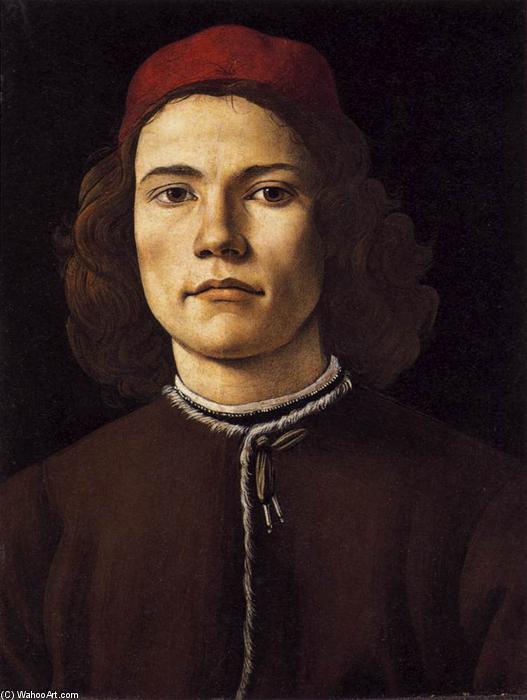
Capturing the serene gaze and Florentine elegance of the Early Renaissance, this exquisite portrait by Sandro Botticelli embodies youthful idealism and invites you to bring a piece of history into your collection.
フィレンツェ
イタリア
サンドロ・ボッティチェリ
アレッサンドロ・ディ・マリアーノ・フィリペピ
ルネサンス期の巨匠ボッティチェリ。代表作「ヴィーナスの誕生」や「春」は、優美な線描と神話的世界観が魅力。初期ルネサンス美術を象徴する芸術家として、今もなお多くの人々を魅了し続けています。
初期ルネサンス
プレラファエリスム協会
フラ・アンジェリコ
1445年頃
1510年
アレッサンドロ・ディ・マリアーノ・フィリペピ
イタリア人
ヴィーナスの誕生
イタリア、フィレンツェ
ローマ
3
サンドロ・ボッティチェリは、どのイタリアの都市で生まれましたか?
ナショナル・ギャラリー
(London, United Kingdom)
13世紀から20世紀初頭までのヨーロッパ絵画をロンドンのナショナル・ギャラリーで探求!ヴァン・ゴッホ、レンブラントなどの名作を無料で鑑賞。トラファルガー広場に位置し、英国の文化遺産を感じてください。
A Gaze Across Centuries
To stand before Sandro Botticelli’s Portrait of a Young Man is to engage in a silent, profound dialogue with the past. Painted around 1483, this exquisite tempera on panel captures more than just a likeness; it captures an era. The sitter, draped in the dignified attire of the Florentine elite—notably a striking red hat adorned with gold trim—meets the viewer’s eyes with an unwavering, contemplative gaze. There is a certain psychological depth here that transcends the mere recording of features. Through his masterful use of light and shadow, Botticelli breathes life into the subject, creating a sense of volume and presence that makes the young man feel as though he might step directly from the panel into the modern room.
The Grace of Florentine Technique
Botticelli’s approach in this work exemplifies the refined elegance of the Early Renaissance. Eschewing the heavy, muscular forms often found in contemporary sculpture, the artist opted for a more delicate and lyrical mannerism. He employs chiarroscuro with remarkable precision, using the subtle interplay of light to sculpt the contours of the face and the textures of the clothing. The meticulous application of tempera allows for a smooth, almost porcelain-like finish on the skin, contrasted beautifully by the rich, earthy tones of the brown jacket. This technical mastery does not merely showcase skill; it serves the higher purpose of conveying idealized beauty and an inner serenity that reflects the humanist ideals of his time.
Humanism and the Medici Legacy
The historical weight of this portrait is inextricably linked to the golden age of Florence under the patronage of Lorenzo de’ Medici. During this period, the rise of Humanism shifted the artistic focus toward the celebration of individual intellect and earthly virtue. This portrait serves as a quintessential emblem of that shift, moving away from purely religious iconography toward a study of human character. The sitter's introspective expression suggests a life of thought and dignity, embodying the very values that the Medici circle sought to cultivate. For the collector, owning a reproduction of such a piece is not merely about decoration; it is about inviting the intellectual spirit of the Renaissance into one’s personal sanctuary.
An Inspiration for Sophisticated Interiors
For the discerning interior designer or art enthusiast, Botticelli’s work offers an unparalleled sense of timelessness. The muted yet rich color palette—dominated by deep reds, golds, and warm browns—provides a sophisticated anchor for a variety of decor styles, from classical European to contemporary minimalist. A high-quality reproduction of this masterpiece brings a layer of historical narrative and quiet prestige to any space. It acts as a focal point that commands attention through subtlety rather than noise, offering an atmosphere of cultured tranquility and enduring grace that can transform a room into a gallery of personal reflection.