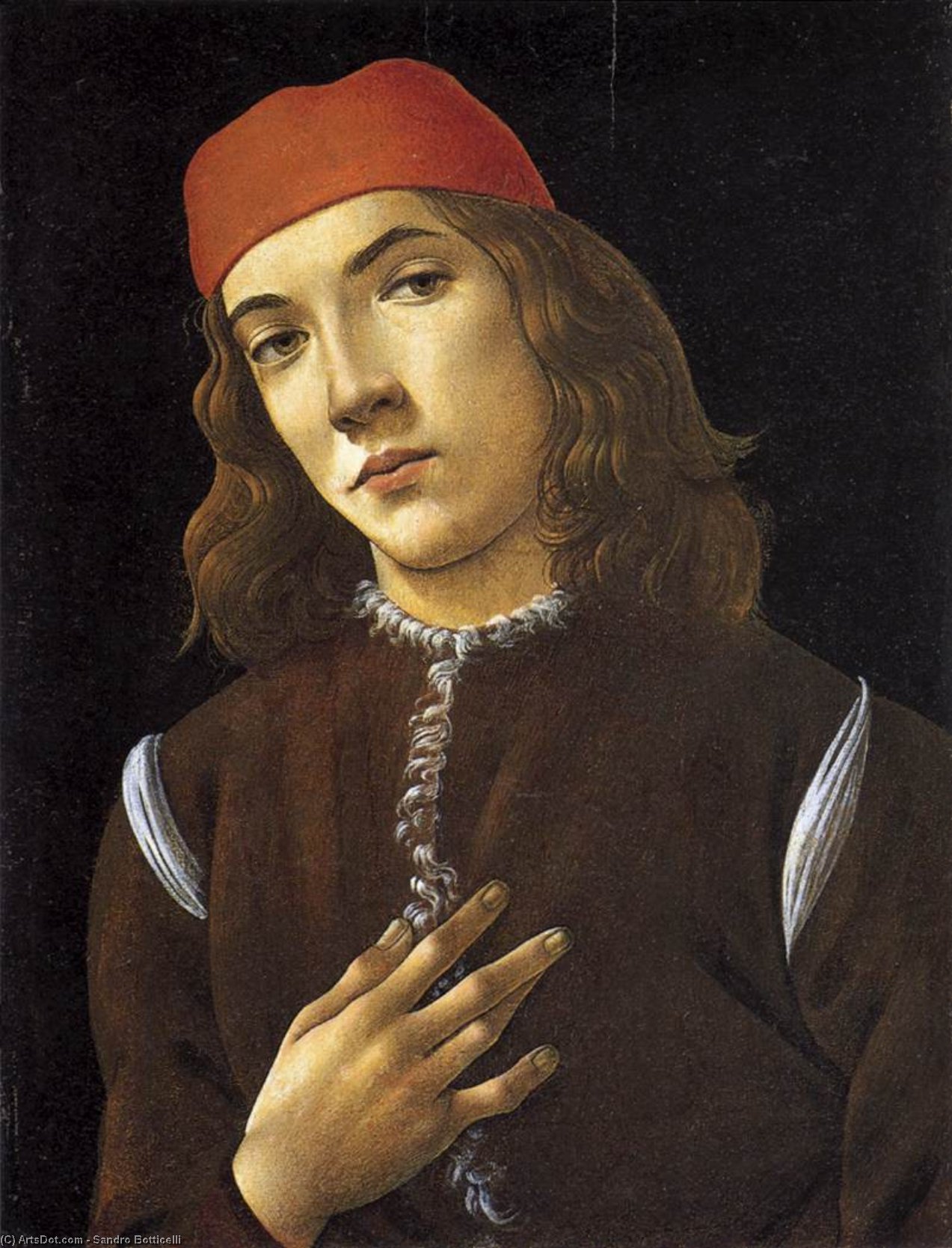
A captivating study of youthful idealism, this tempera portrait by Renaissance master Sandro Botticelli captures a contemplative gaze that invites you to explore the profound beauty of Florentine humanism.
フィレンツェ
イタリア
サンドロ・ボッティチェリ
アレッサンドロ・ディ・マリアーノ・フィリペピ
ルネサンス期の巨匠ボッティチェリ。代表作「ヴィーナスの誕生」や「春」は、優美な線描と神話的世界観が魅力。初期ルネサンス美術を象徴する芸術家として、今もなお多くの人々を魅了し続けています。
初期ルネサンス
プレラファエリスム協会
フラ・アンジェリコ
1445年頃
1510年
アレッサンドロ・ディ・マリアーノ・フィリペピ
イタリア人
ヴィーナスの誕生
イタリア、フィレンツェ
ローマ
3
サンドロ・ボッティチェリは、どのイタリアの都市で生まれましたか?
レンブラントからモネ、ピカソまで!ワシントンD.C.の国立美術館で、ルネサンスから現代アートまでを無料で堪能。名画の数々を心ゆくまでお楽しみください。
アメリカ合衆国
ワシントンD.C.
国立美術館
ルネサンス期の巨匠作品
膨大、数世紀にわたる
美術館
1937
1927年
1
国立美術館はいつ設立されましたか?
The Soul Behind the Gaze
To encounter Sandro Botticelli’s Portrait of a Young Man is to engage in a silent, profound dialogue that has spanned over five centuries. Painted around 1482, this work does not merely capture a likeness; it captures an essence. The subject, with his direct and contemplative gaze, seems to pierce through the veil of time, bridging the gap between the Florentine Renaissance and the modern observer. There is an undeniable emotional gravity in his expression—a delicate balance of youthful idealism and a burgeoning, serious intellect that reflects the very heart of the era in which he lived. For the discerning collector or the lover of fine art, this portrait offers more than just aesthetic beauty; it provides a window into a pivotal moment in human history where the individual began to emerge from the shadows of the medieval past with newfound dignity and grace.
Luminosity and the Master's Hand
The brilliance of this masterpiece lies in Botticelli’s masterful command of tempera, a medium that demands incredible precision and foresight. Unlike the slow-drying oils that would later dominate the art world, tempera requires the artist to work with rapid, meticulous strokes, building up layers of color to achieve a luminous, almost ethereal glow. In this portrait, one can observe the delicate rendering of the young man’s skin, the intricate texture of his hair, and the soft, yet defined folds of his attire. This technique allows for a subtle tonal gradation that breathes life into the subject, creating a sense of three-dimensional presence that is both haunting and incredibly lifelike. For interior designers seeking to curate sophisticated spaces, the inherent luminosity of Botticelli’s style brings a unique light to any room, acting as a focal point that commands attention through its quiet, refined elegance and its ability to add texture and depth to a contemporary setting.
An Echo of Renaissance Humanism
Beyond the technical prowess, the painting is deeply steeped in the intellectual currents of the late 15th century. This was the age of Humanism, a movement that celebrated human potential, reason, and the beauty of the natural world. The young man’s attire—notably the red hat adorned with a feather—serves as more than mere decoration; it is a symbol of status and the burgeoning individual identity characteristic of the Medici era. The composition reflects the Neoplatonic ideals of harmony and proportion, where physical beauty was seen as a reflection of divine grace. Integrating such a piece into a curated collection offers a sense of historical continuity and intellectual depth. Whether placed in a minimalist gallery-style living room or a classic, richly textured study, this reproduction serves as a timeless testament to the enduring power of classical beauty and the eternal pursuit of human excellence.