Smeralda Bandinelli: An Elegant Portrait Reflecting Renaissance Ideals
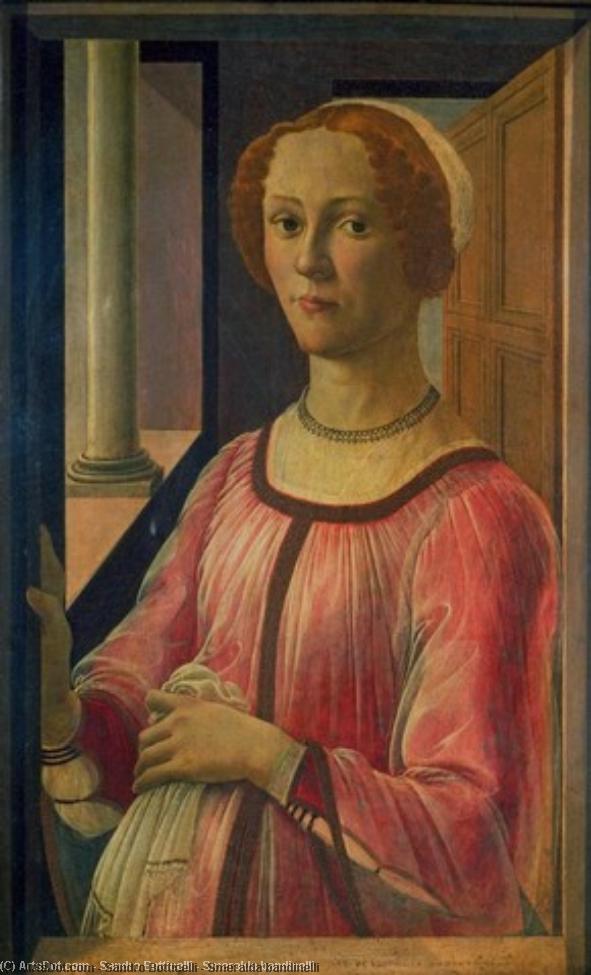
Alessandro Botticelli’s *Portrait of a Lady Known as Smeralda Bandinelli*, painted around 1475, stands as a testament to the burgeoning humanist spirit of Florence during its golden age. More than just a depiction of an individual woman—likely Smeralda di M.Bandinelli Moglie di VI... Bandinelli—the painting embodies sophisticated artistic conventions and subtle symbolic gestures that speak volumes about Renaissance values.
- Subject Matter & Composition: The portrait presents a woman in a three-quarter pose before a window, a stylistic innovation for Florentine portraits of the time. Botticelli meticulously arranged the elements—the window frame, shutter, and shadowed column—to draw the viewer’s gaze directly to her face, emphasizing her contemplative expression.
- Style & Technique: Executed in tempera on panel, Botticelli employed a technique characterized by layering translucent glazes over an underpainting of oil paint. This method allowed for remarkable luminosity and tonal subtlety—essential qualities for capturing the delicate beauty of the sitter’s complexion and drapery.
- Dress & Ornamentation: Smeralda wears a sumptuous crimson ‘cotta,’ slit at the forearms to reveal a white silk camisa beneath, reflecting the prevailing fashion trends of the period. The gown is adorned with intricate embroidery—a hallmark of Botticelli’s style—demonstrating the artist's mastery of decorative arts and his keen awareness of visual aesthetics.
- Symbolism & Context: The window frame serves as a powerful symbol, referencing classical ideals of contemplation and harmony. Furthermore, Botticelli’s deliberate positioning of the woman’s gaze—looking outwards rather than inwards—suggests an engagement with the broader world beyond domestic confines—a concept central to Renaissance humanism.
The painting's influence extends far beyond its immediate visual appeal. It exemplifies Botticelli’s pioneering approach to portraiture, establishing a precedent for capturing psychological nuance and conveying emotional depth. Its serene beauty continues to inspire artists and collectors alike, cementing its place as an iconic masterpiece of the Early Renaissance.
Discover more about Sandro Botticelli and his artistic legacy at ArtsDot!