A Vision in Monochrome: The Grace of Botticelli’s Athene
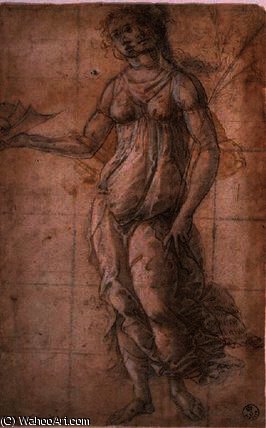
In the quiet, focused atmosphere of a Renaissance workshop, amidst the scent of aged parchment and charcoal, Sandro Botticelli captured a moment of profound stillness. His Study of Athene is not merely a sketch; it is an intimate window into the mind of one of Florence’s greatest masters. Executed around 1480, during the height of the Medici era, this monochrome drawing serves as a breathtaking testament to the Renaissance obsession with anatomical precision and the revival of classical ideals. The figure, likely representing the Greek goddess of wisdom, stands in a state of quiet contemplation, her form rendered with a delicate balance of strength and vulnerability that invites the viewer into her private world of thought.
The beauty of this piece lies in its deceptive simplicity. While it functioned as a preparatory study—a vital step for the artist to refine his vision before committing to grander, more expensive commissions—it possesses an emotional depth that rivals his most famous finished paintings. There is a palpable sense of humanist spirit here, where the exploration of the human nude becomes a way to honor the divine proportions of nature and classical mythology. For the collector or designer, this work offers a sophisticated touch of understated elegance, bringing the intellectual rigor of the Quattrocento into a contemporary space.
Mastery of Line and Light
Technically, the Study of Athene showcases Botticelli’s unparalleled ability to manipulate dry media to create volume and texture. Using what appears to be charcoal or pencil on aged paper, the artist employs an intricate system of hatching and cross-hatching to build tonal depth. These fine, rhythmic lines do not merely outline the body; they sculpt it. They mimic the soft undulations of skin and the heavy, graceful drape of fabric, creating a velvety surface texture that feels almost tactile to the eye. The way light seems to diffuse across the figure’s limbs suggests a soft, natural illumination, casting subtle shadows that emphasize the musculature and the rhythmic grace of her pose.
The composition is masterfully balanced, with the figure dominating the vertical plane while being anchored by a subtle grid pattern in the background. This geometric reference point provides a sense of spatial structure, allowing the organic, flowing lines of the goddess to stand out in stark, beautiful contrast. The lack of vibrant color forces the viewer to focus entirely on the interplay of light and shadow, making the piece an ideal selection for those who appreciate the timeless allure of monochromatic art and the power of pure form.
An Eternal Legacy for the Modern Collector
To possess a reproduction of this study is to bring a piece of Florentine history into one's personal sanctuary. The Study of Athene resonates with a melancholic yet serene mood, making it a profound focal point for an interior designed around themes of wisdom, reflection, and classical beauty. It is a work that does not shout for attention but rather commands respect through its quiet intensity and technical perfection.
For interior designers seeking to evoke a sense of cultured sophistication, this artwork provides a bridge between the ancient world and modern aesthetics. Whether placed in a sunlit study or a minimalist gallery-style living room, Botticelli’s mastery of line and his devotion to the human form continue to inspire awe. It remains an enduring symbol of an era when art, science, and philosophy converged to create something truly eternal.