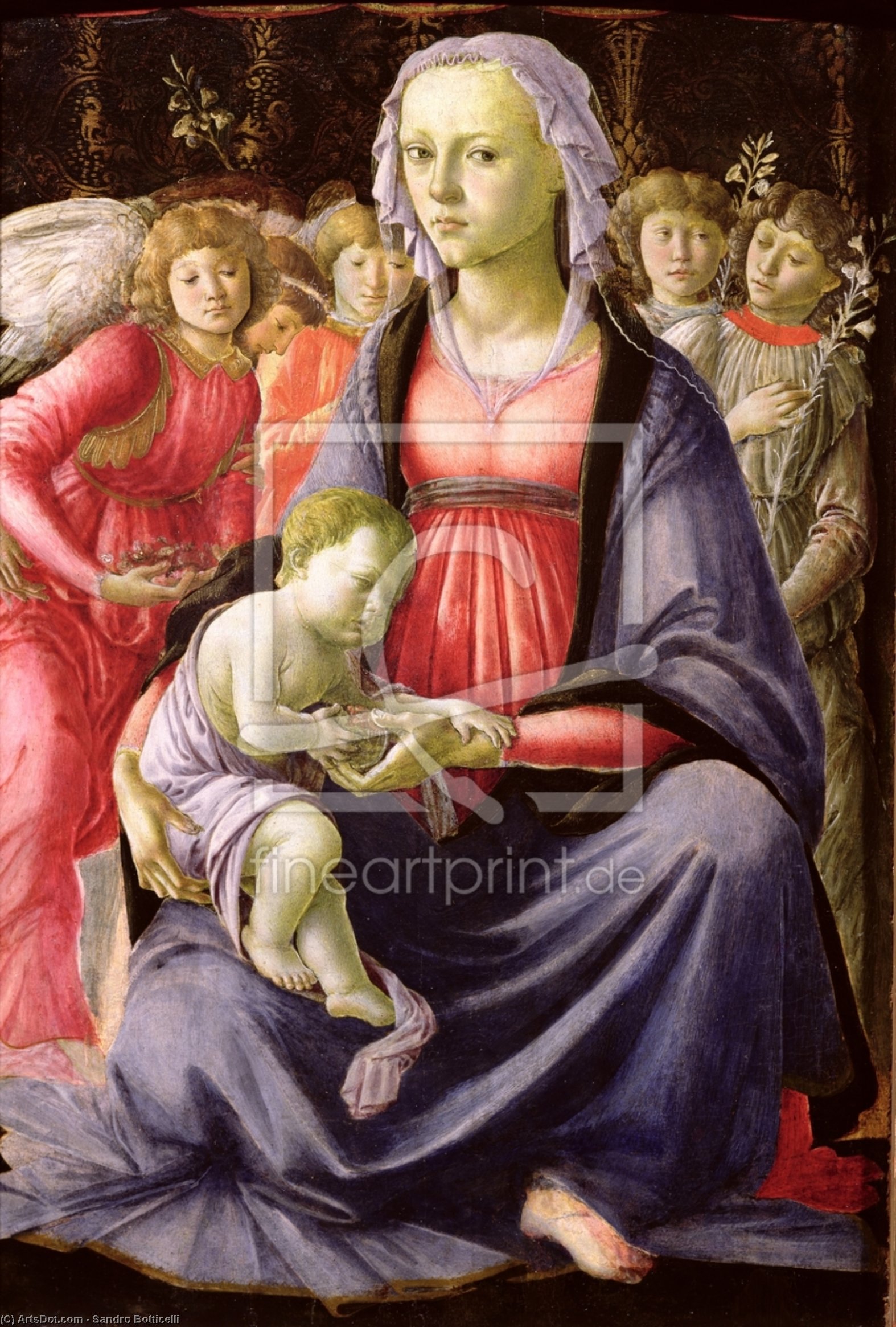
Botticelli’s ethereal 'The Virgin And Child Surrounded By Five Angels' embodies the sublime beauty of Florentine Renaissance art—a masterpiece showcasing serene grace and meticulous detail. Painted in 1486, this iconic depiction captures Mary cradling Jesus amidst angelic figures, inviting viewers to immerse themselves in its timeless elegance.
A Celestial Vision of Florentine Grace
In the heart of the Italian Renaissance, few artists captured the ethereal boundary between the earthly and the divine as masterfully as Sandro Botticelli. His masterpiece, "The Virgin And Child Surrounded By Five Angels," serves as a breathtaking window into a period defined by humanist ideals and spiritual luminosity. Painted around 1486, this work is far more than a religious icon; it is a visual poem composed of delicate lines and profound devotion. The scene unfolds with a sense of quiet majesty, presenting the Virgin Mary cradling the Christ Child amidst a celestial entourage of five angels. This composition does not merely depict a biblical moment; it invites the viewer into a sacred space where the weight of the world seems to dissolve into a state of eternal grace.
The narrative depth of the painting draws heavily from the profound mysteries of the Annunciation, evoking the divine promise that changed the course of history. Botticelli utilizes a pyramidal composition to anchor the figures, providing a sense of structural stability that contrasts beautifully with the fluid, lyrical movement of the angels' garments. As one gazes upon the Virgin, her gaze is directed downward in a moment of tender, maternal contemplation, while the surrounding angels act as celestial witnesses, their presence bridging the gap between heaven and earth. The inclusion of subtle secondary figures adds layers of human connection to the divine drama, reminding us that even within the most transcendent visions, the warmth of earthly relationships remains central to the human experience.
The Mastery of Line and Luminous Technique
To behold a Botticelli is to witness the triumph of line over mere form. The artist’s signature aesthetic—characterized by graceful, undulating contours and an almost weightless quality—is on full display here. Eschewing the rigid, heavy structures of previous eras, Botticelli employs a technique that prioritizes expressive gesture and idealized beauty. This particular work showcases his unparalleled mastery of tempera on panel, a medium that requires immense precision and patience. Through the application of multiple translucent glazes, he achieved an otherworldly glow, allowing light to appear as if it is emanating from within the figures themselves rather than merely reflecting off their surfaces.
For the discerning collector or interior designer, this painting offers a unique opportunity to introduce a sense of timeless elegance and serenity into a space. The soft, luminous palette—dominated by the Virgin’s iconic blue gown and the delicate, pale tones of the angelic host—creates an atmosphere of calm and sophistication. A high-quality reproduction of this work does not simply decorate a wall; it transforms a room, acting as a focal point that inspires quiet reflection and aesthetic wonder. Whether placed in a grand gallery or a private study, the painting’s intricate details and emotional depth provide a continuous source of inspiration, making it an enduring treasure for those who appreciate the pinnacle of Renaissance artistry.