The Divine Descent: Capturing Chaos in Sebastiano Ricci's Fall of Phaethon
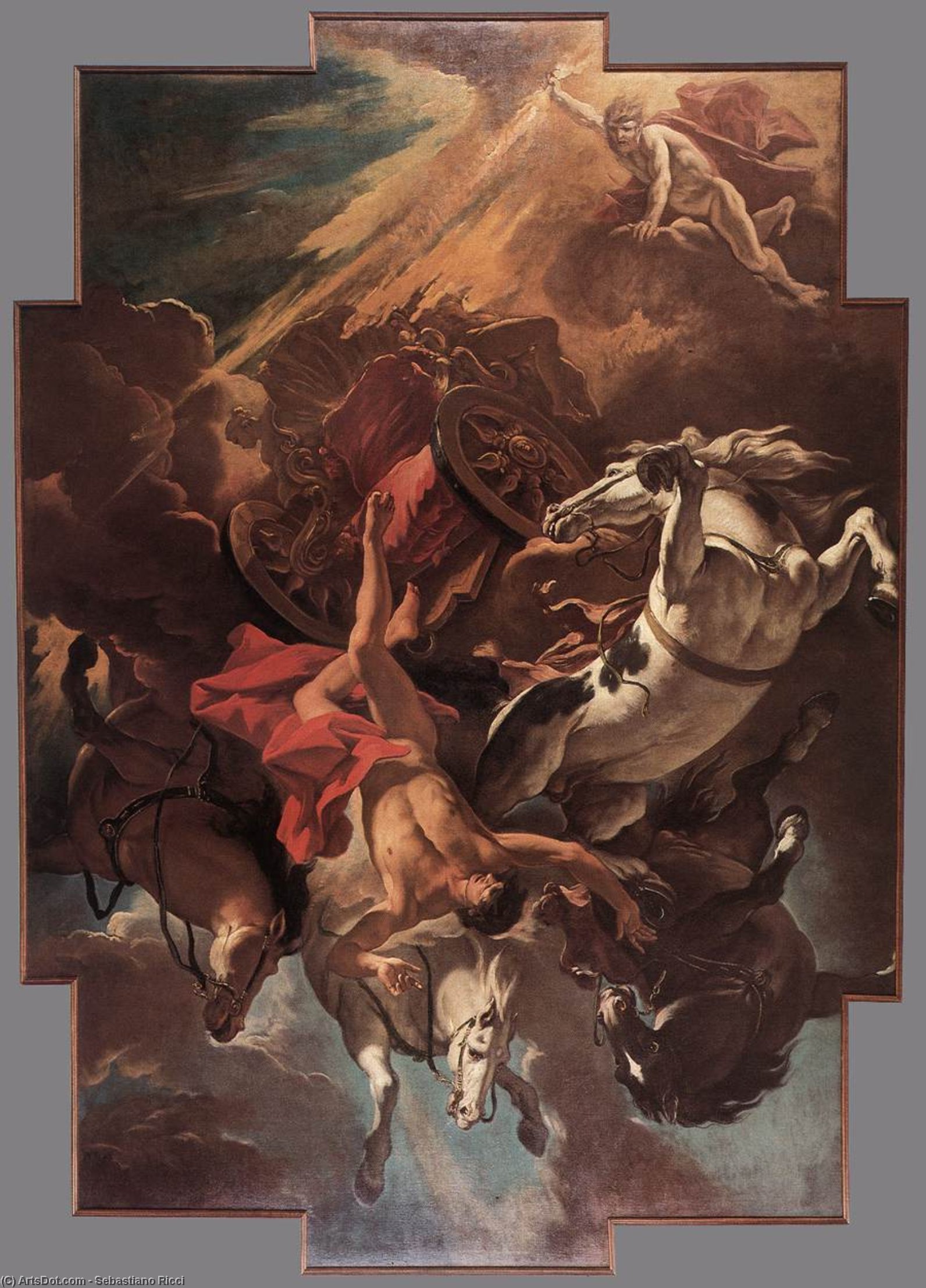
To stand before Sebastiano Ricci’s Fall of Phaethon is to be swept away by a torrent of divine drama and raw, untamed energy. This magnificent oil on canvas, executed in 1703, is not merely a depiction of mythology; it is a visceral experience rendered in pigment. The scene captures the catastrophic moment when Phaethon, son of the sun god Helios, loses control of his father's celestial chariot. One can almost feel the scorching heat and the dizzying plunge as the young demigod tumbles through the heavens. Ricci masterfully translates this mythological catastrophe into a breathtaking visual narrative, inviting the viewer not just to observe, but to participate in the very chaos unfolding before them.
Baroque Drama: Light, Shadow, and Emotional Intensity
The painting is a quintessential embodiment of the Baroque style. This period favored drama, movement, and intense emotional resonance, and Ricci channels all these elements into every brushstroke. Observe how the interplay between light and shadow—the dramatic chiaroscuro—does more than simply illuminate; it heightens the tension. Rays of divine light pierce through tumultuous clouds, spotlighting Phaethon’s desperate fall while simultaneously emphasizing the muscular strain on the four powerful horses surrounding him. The composition is a vortex of motion; every figure seems caught in an eternal, agonizing instant. It speaks to the Baroque fascination with the sublime—that overwhelming feeling evoked by immense power, whether divine or destructive.
Symbolism and Celestial Power
At the heart of the narrative lies profound symbolism. Phaethon’s fall represents hubris—the danger inherent in wielding godlike power without wisdom or restraint. Helios, reaching out from above with his radiant aura, embodies paternal authority and divine intervention, yet even his gesture seems insufficient to halt the inevitable descent. The chariot itself is a symbol of unchecked ambition. For the modern collector or designer, this piece offers a potent meditation on themes of overreach, consequence, and the delicate balance between human potential and cosmic law. It is art that demands contemplation.
A Legacy for Your Space
The technical brilliance displayed by Ricci—the detailed rendering of fur, the dynamic musculature of the horses, and the sweeping grandeur of the sky—makes this work a monumental statement piece. While its original setting was the Museo Civico in Belluno, Italy, owning a high-quality reproduction allows you to bring this epic narrative into your own home or gallery space. Imagine the impact: the vibrant colors and palpable energy of Fall of Phaethon anchoring a grand hall or lending dramatic depth to an opulent drawing room. It is more than decoration; it is a conversation starter, a window into the passionate artistic soul of the late Baroque era.