A Symphony of Color and Texture
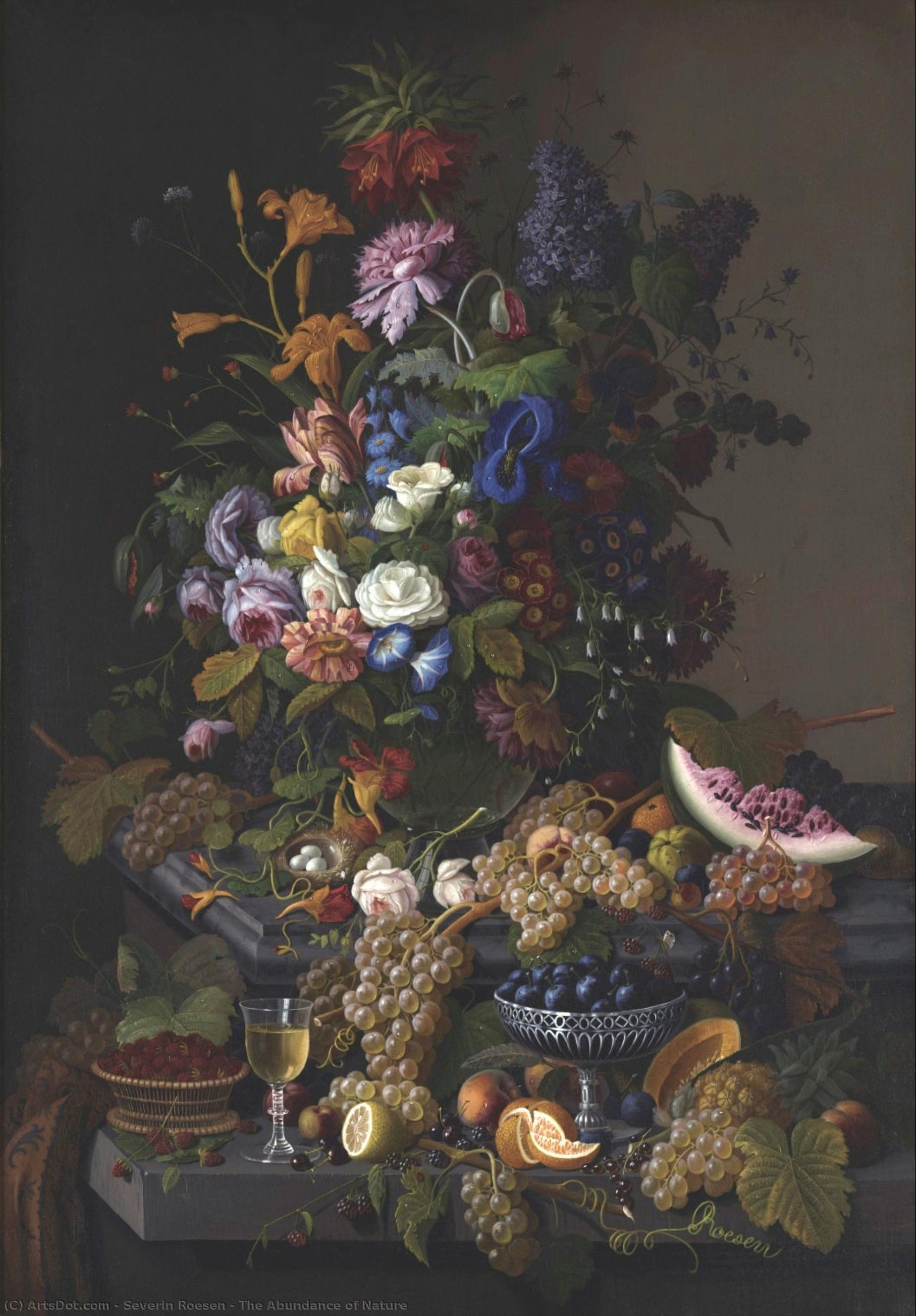
In the quiet, shadowed corners of nineteenth-century American art, few works radiate as much vitality and sensory richness as Severin Roesen’s “The Abundance of Nature.” This masterpiece is not merely a depiction of food; it is a breathtaking celebration of life's bountiful offerings. At first glance, the viewer is swept up in an overflowing arrangement where the delicate, velvety petals of roses and lilies dance alongside the heavy, sun-ripened weight of apples, peaches, and pears. Roesen, a German immigrant who brought the meticulous precision of his porcelain-painting training to the United States, creates a composition that feels both incredibly intimate and grandly operatic. The way the light catches the smooth skin of a pear or the reflective sheen of a wine glass invites the observer to reach out and touch the canvas, bridging the gap between the painted world and our own reality.
The brilliance of this work lies in its masterful use of contrast and light. Set against a dark, muted background that evokes the mysterious depths of a Dutch master’s studio, the fruits and flowers emerge with a luminous, almost supernatural glow. This technique, often achieved through careful layering and glazing, allows for a depth of color that feels truly three-dimensional. Deep crimsons, vibrant golds, and lush greens pop against the shadows, creating a visual rhythm that guides the eye across the asymmetrical yet perfectly balanced arrangement. For the discerning collector or interior designer, this painting offers a profound sense of luxury and warmth, making it an ideal centerpiece for spaces that demand a touch of classical elegance and organic splendor.
Symbolism and the Romantic Spirit
Beyond its surface beauty, “The Abundance of Nature” is steeped in the symbolic language of the Romantic era. During the mid-1800s, still life paintings often served as meditations on the fleeting nature of time and the eternal cycle of growth. The lushness of the fruit represents fertility and prosperity, a theme that would have resonated deeply with an expanding American nation seeking its own identity and wealth. Yet, there is a subtle tension within the piece; the very ripeness of the fruit hints at the inevitable passage of time, a concept known as vanitas. The inclusion of a glass of wine adds a layer of sensory indulgence, suggesting the pleasures of the present moment that must be cherished before they fade.
Roesen’s ability to weave these complex emotional threads into a single, cohesive image is what elevates this work from a mere botanical study to a profound piece of fine art. He captures not just the physical form of the objects, but the very essence of abundance itself—a feeling of overwhelming gratitude for the natural world. For those looking to adorn a home with art that inspires awe and contemplation, this reproduction serves as a constant reminder of the beauty and generosity found in nature's most delicate and robust forms.