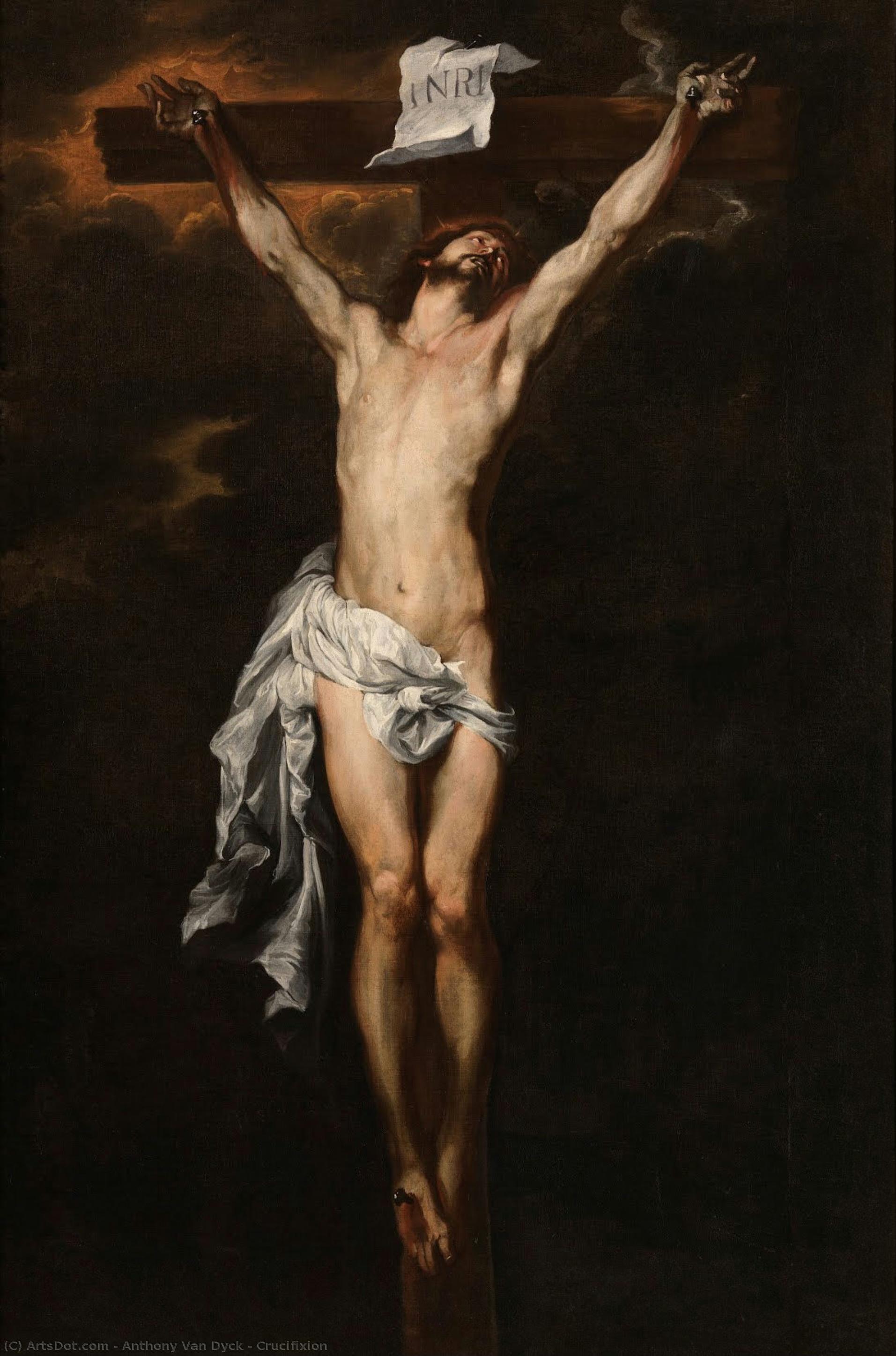
Crucifixion by Sir Anthony van Dyck
Sir Anthony van Dyck’s *Crucifixion*, completed circa 1630, stands as a monumental testament to Baroque artistry and theological contemplation. Initially commissioned for the Convent of the Récollets in Lille during his second Antwerp period—a time marked by collaboration with Rubens—the painting swiftly transcended its initial purpose to become an emblem of Christian faith and artistic innovation.
- Subject Matter: The scene depicts Jesus Christ crucified on a cross, meticulously rendered with profound emotional depth. Alongside the central figure is Mary Magdalene, positioned prominently on the left side, embodying compassion and sorrow; Saint John the Evangelist appears at the upper right corner, symbolizing unwavering devotion.
- Style & Technique: Van Dyck’s masterful brushwork—characterized by a velvety smoothness achieved through layering thin glazes—captures the dramatic tension of the crucifixion with unparalleled precision. The artist skillfully employs chiaroscuro, manipulating light and shadow to heighten the emotional impact and imbue the composition with palpable realism.
- Historical Context: Executed during Van Dyck’s formative years in Antwerp and subsequently revisited during his London engagement, *Crucifixion* reflects the prevailing artistic currents of its time—namely, the influence of Venetian masters like Titian and Tintoretto. It embodies the Baroque fascination with grandeur, emotion, and spiritual fervor.
- Symbolism: The painting’s iconography is rich in symbolic references. The three mourners—Mary Magdalene, Saint John, and Mary—wear garments bearing distinct colors—gold, red, and blue—representing divine light, passion, and humanity respectively. Beneath the cross rests Adam's skull, symbolizing the Fall from Paradise and reminding viewers of mortality.
- Emotional Impact: *Crucifixion* transcends mere visual representation; it evokes profound contemplation on themes of suffering, redemption, and faith. The artist’s expressive portrayal of Jesus’s agony compels viewers to confront existential questions about human existence and divine compassion.
This magnificent artwork resides in the Louvre Museum, where its luminous colors and masterful execution continue to inspire admiration and scholarly debate. Reproductions of *Crucifixion* offer an exceptional opportunity to experience the sublime beauty and spiritual resonance of Baroque art firsthand.