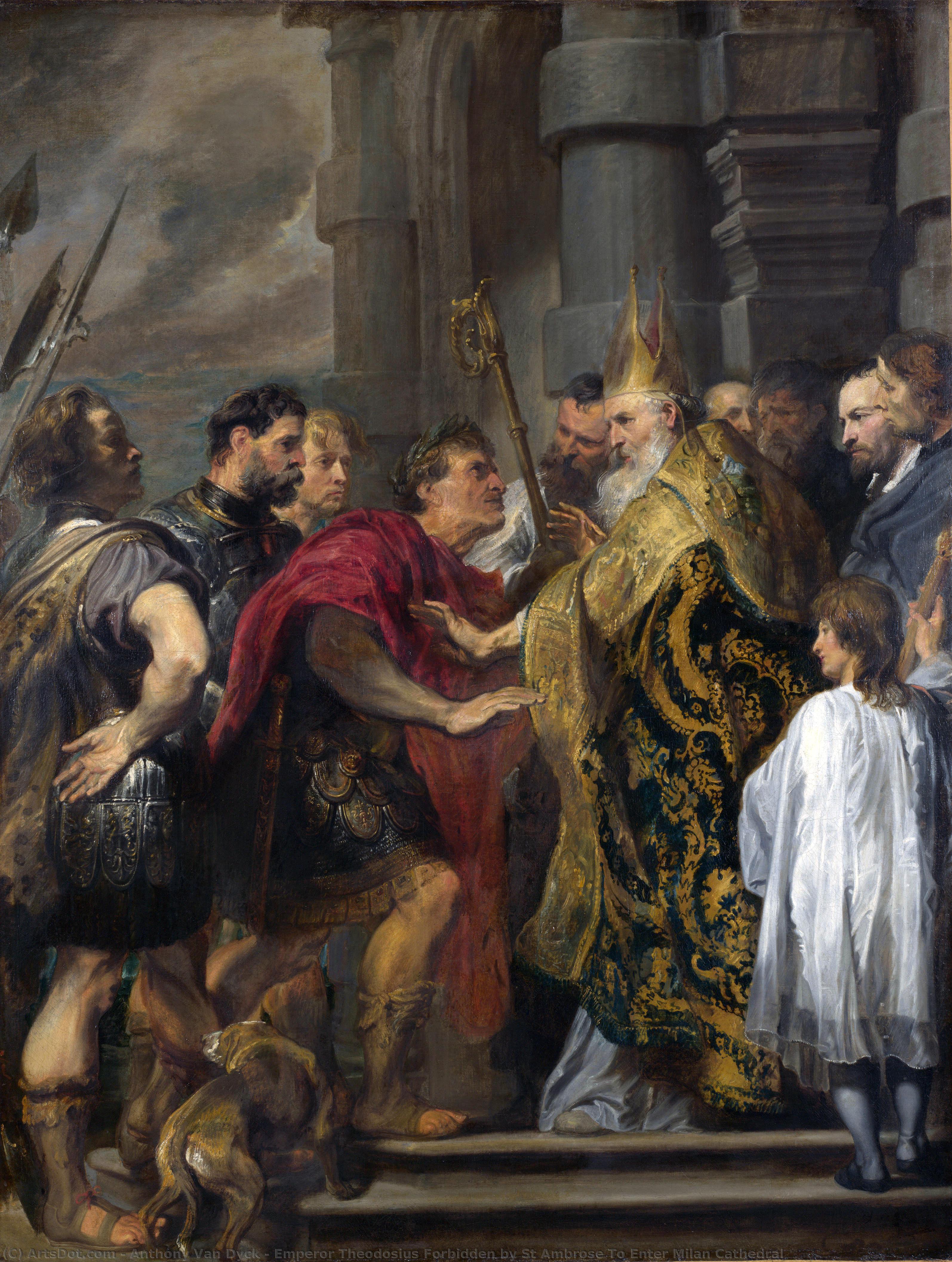
A Dramatic Encounter: Van Dyck’s ‘Emperor Theodosius Forbidden by St Ambrose To Enter Milan Cathedral’
Sir Anthony van Dyck's 1620 painting, “Emperor Theodosius Forbidden by St Ambrose To Enter Milan Cathedral,” is a captivating Baroque masterpiece that transcends mere portraiture to become a potent tableau of religious authority and human drama. Measuring 149 x 113 cm, this work immediately draws the viewer into a scene brimming with unspoken tension and profound symbolism. Van Dyck, a master of his era, expertly employs dramatic lighting – a hallmark of Baroque style – to sculpt the figures and heighten the emotional impact. The composition itself is meticulously arranged; a group of thirteen individuals, rendered with exquisite detail and nuanced expressions, are clustered around an aged figure who embodies both piety and restraint: St. Ambrose. This isn’t simply a depiction of a historical event; it's a carefully constructed narrative exploring themes of power, faith, and the limits of earthly ambition.
The Narrative of Power and Constraint
The subject matter – Emperor Theodosius I’s thwarted attempt to enter Milan Cathedral – is steeped in religious and political significance. The story, recounted by Ammianus Marcellinus, details a moment when Theodosius, despite his imperial authority, was denied entry due to the cathedral's dedication to Saint Ambrose. Van Dyck skillfully captures this pivotal moment, suggesting a deeper conflict than a simple refusal of access. The Emperor’s posture – hesitant, almost pleading – contrasts sharply with St. Ambrose’s dignified composure, representing the unwavering power of the Church. The figures surrounding them are not mere observers; they seem to be caught in the drama, their expressions reflecting curiosity, concern, or perhaps even judgment. This layering of narrative creates a rich and complex visual experience.
Baroque Technique and Compositional Mastery
Van Dyck’s technical skill is immediately apparent in the painting's execution. His brushwork is loose yet controlled, creating a sense of movement and dynamism within the scene. The use of chiaroscuro – the dramatic contrast between light and dark – is particularly effective, emphasizing key figures and adding to the overall atmosphere of solemnity and intrigue. The artist’s attention to detail extends to the rendering of fabrics, textures, and individual facial features, contributing to a remarkable sense of realism. Notice the careful arrangement of the group; Van Dyck utilizes triangular composition principles, directing the viewer's eye through the scene with precision. The inclusion of the dog at the bottom left corner adds an element of unexpected detail, perhaps symbolizing loyalty or guardianship.
Symbolism and Emotional Resonance
Beyond its historical context, “Emperor Theodosius Forbidden by St Ambrose To Enter Milan Cathedral” is rich in symbolic meaning. The cathedral itself represents the authority of the Church, while the Emperor embodies secular power. The act of denial can be interpreted as a challenge to religious dominance or a reminder of the limitations of earthly rule. The painting’s emotional impact lies in its ability to evoke feelings of tension, contemplation, and perhaps even a sense of unease. It's a scene that invites viewers to consider questions about power, faith, and the relationship between these two fundamental forces in human society. This piece is more than just a historical record; it’s a powerful statement on the enduring struggle for influence.