A Symphony of Status and Shadow
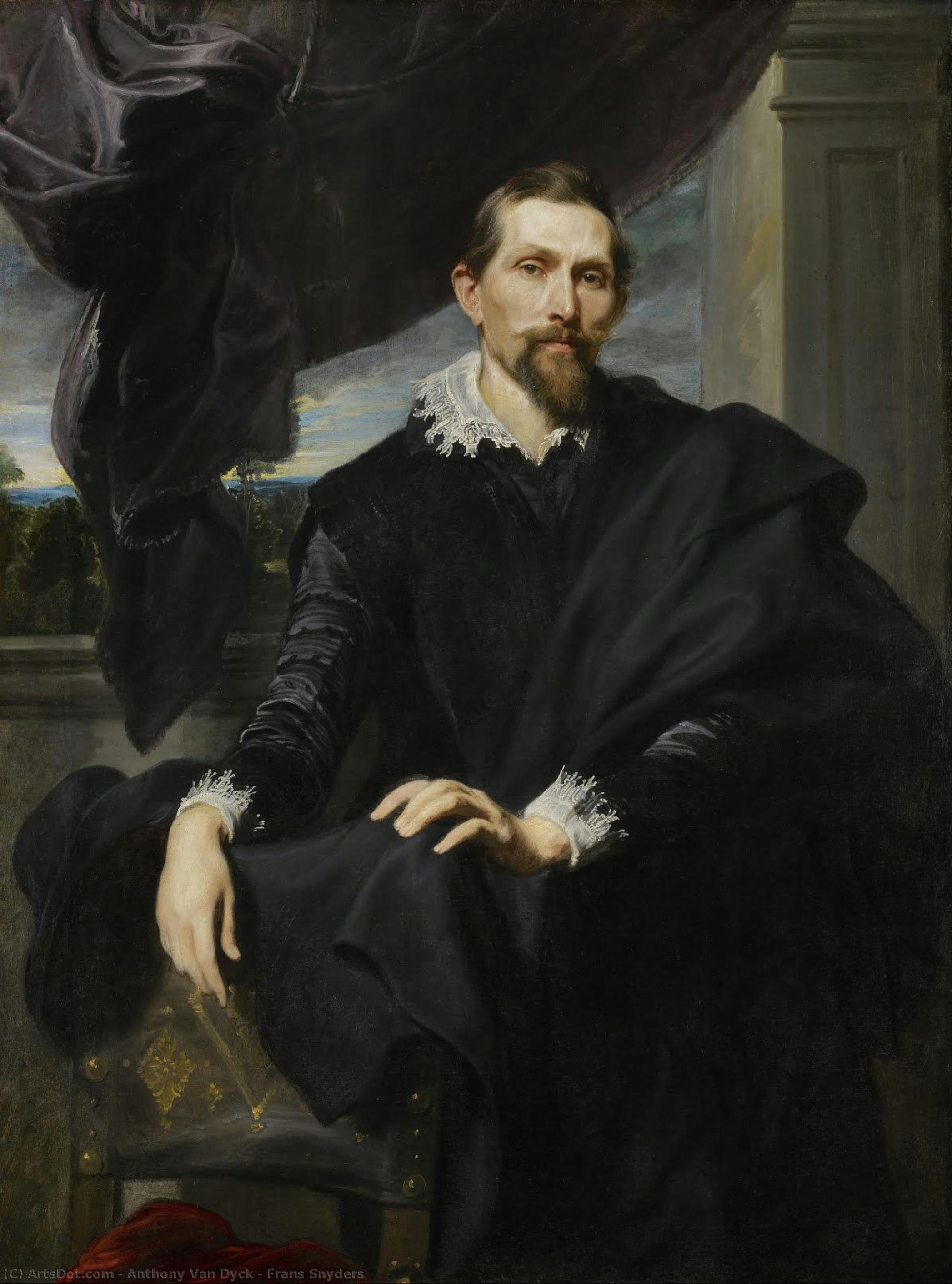
In the grand tapestry of the Flemish Baroque, few moments capture the intersection of artistic genius and social aspiration as poignantly as Sir Anthony van Dyck’s 1620 portrait of Frans Snyders. This masterpiece is far more than a mere likeness; it is a carefully orchestrated performance of prestige. At its heart sits Snyders, a man whose reputation as a master of animalier and still life painting was matched only by his rising social prominence in Antwerp. Dressed in the somber yet luxurious black of a gentleman, with a crisp white collar that draws the eye to his composed features, Sny ck embodies the quiet confidence of the era's burgeoning merchant class. The presence of figures flanking him suggests not just a family portrait, but a tableau of communal success, inviting the viewer into a well-dressed gathering where every fold of fabric and every shadow cast speaks of wealth and stability.
The technical brilliance of Van Dyck is on full display through his masterful manipulation of light and texture. Having refined his craft under the legendary Peter Paul Rubens, Van Dyck brings a dynamic energy to this composition that transcends the stillness of traditional portraiture. One can observe the subtle interplay of chiaroscuro—the dramatic contrast between light and dark—which lends a sculptural depth to Snyders’ face and the heavy drapery surrounding him. The brushwork is both precise and fluid, capturing the tactile reality of silk, lace, and skin with an effortless grace. For the discerning collector, this painting offers a window into the Baroque obsession with materiality, where the sheen of a sleeve or the soft light hitting a cheek serves to ground the subject's lofty status in a palpable, physical reality.
The Golden Age of Antwerp
To understand this work, one must look beyond the frame to the vibrant, prosperous streets of 17th-century Antwerp. This was an era of unprecedented economic flourishing, where trade and artistic innovation fueled a cultural renaissance. The very existence of this portrait serves as a historical document of Snyders’ ascent; having recently acquired a magnificent townhouse on the prestigious Meirstraat, the sitter used Van Dyck’s brush to cement his family's legacy. The painting functions as a visual manifesto of the couple's social ambitions, reflecting a time when art was the ultimate currency of influence. It is a period where the boundaries between the artist and the patron blurred, creating a shared language of elegance that continues to resonate in modern aesthetics.
For those looking to integrate such a profound piece into a contemporary interior, this reproduction offers an unparalleled sense of historical gravity and sophisticated charm. Whether placed in a formal study or as a focal point in a grand hallway, the painting brings with it an atmosphere of intellectual depth and timeless luxury. It is not merely a decoration but an invitation to contemplate the enduring power of legacy and the beauty of human achievement. Owning a piece that captures the essence of Van Dyck’s refined elegance allows a space to breathe with the spirit of the Golden Age, providing a constant source of inspiration and a sophisticated connection to the masters of the past.