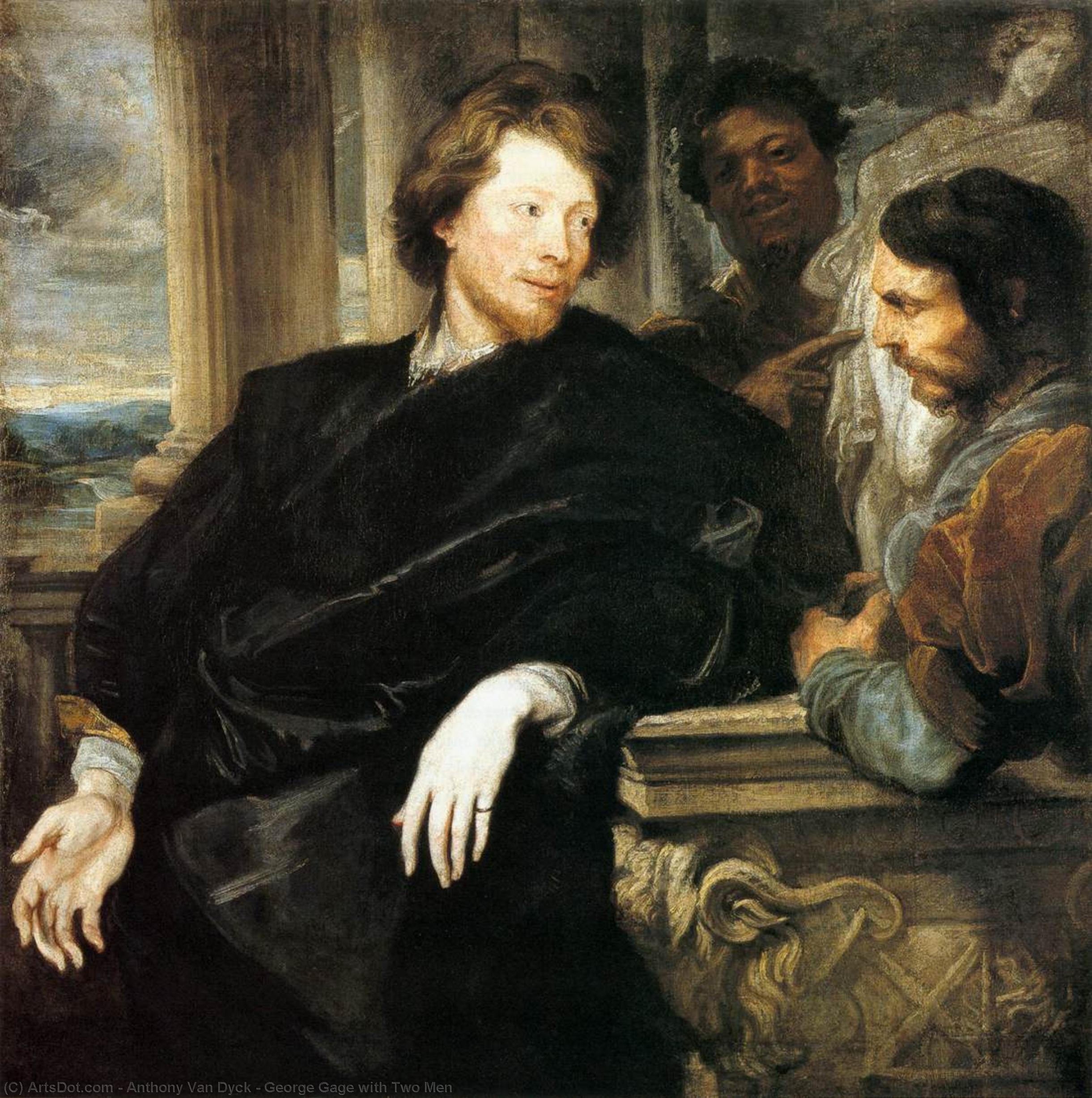
Experience the aristocratic elegance of Sir Anthony van Dyck’s Baroque masterpiece George Gage with Two Men, a portrait of profound character and light that invites you to bring this timeless Flemish legacy into your collection.
「アントニオ・ファン・ダイク」は、ルーベンスの影響を受けながら独自の洗練されたスタイルでヨーロッパ貴族の肖像画を制作したフランドルのバロック画家。特にチャールズ1世の宮廷画家として活躍し、英語美術に大きな影響を与えました。彼の作品は優雅さと繊細さで知られ、現代でも多くの人々を魅了しています。
ナショナル・ギャラリー
(London, United Kingdom)
13世紀から20世紀初頭までのヨーロッパ絵画をロンドンのナショナル・ギャラリーで探求!ヴァン・ゴッホ、レンブラントなどの名作を無料で鑑賞。トラファルガー広場に位置し、英国の文化遺産を感じてください。
A Portrait of Dignified Presence: Exploring Van Dyck’s ‘George Gage with Two Men’
Sir Anthony van Dyck's “George Gage with Two Men,” painted in 1622, stands as a testament to the Baroque mastery achieved by Flemish artist Peter Paul Rubens’ protégé. More than just a depiction of a nobleman—Lord George Gage—the portrait embodies an ideal of aristocratic composure and intellectual engagement, reflecting the cultural currents of its time. Executed with meticulous detail and bathed in warm light, this canvas captures not merely likeness but also character, offering viewers a glimpse into the inner life of its subject amidst a carefully constructed setting.
Style and Technique: Rubensian Influence Meets Individual Expression
The painting’s stylistic lineage is undeniably rooted in Rubens' monumental canvases—particularly his depictions of biblical figures and mythological scenes—where dynamism and opulent color palettes were paramount. However, van Dyck skillfully tempered this grandeur with an understated elegance that distinguishes him from his mentor. The artist employed a technique characterized by smooth brushstrokes and subtle gradations of tone, achieving remarkable realism in the rendering of flesh tones and drapery folds. This meticulous attention to detail speaks volumes about van Dyck’s dedication to capturing not just visual appearance but also conveying psychological nuance—a hallmark of Baroque portraiture aimed at portraying subjects as embodiments of virtue and intellect.
Historical Context: The Elizabethan Court and Artistic Patronage
“George Gage with Two Men” emerged during the reign of James I, marking a pivotal moment in English history. The Elizabethan era had bequeathed a legacy of artistic patronage to its successor, fostering an environment where artists like van Dyck thrived on commissions from influential figures—a tradition that continued unabated into the early seventeenth century. Gage himself was a prominent diplomat and landowner, representing England’s interests abroad with distinction. The portrait reflects this status, positioning Gage within the broader context of Elizabethan society—a realm defined by ambition, erudition, and a fervent belief in humanist ideals.
Symbolism: Gesture and Composition as Vessels of Meaning
Beyond its formal beauty lies a rich tapestry of symbolic significance. Gage’s posture exudes confidence and dignity, conveying an aura of authority tempered by thoughtfulness. The seated figure's gaze directs towards the viewer, establishing a connection that transcends mere representation—a deliberate strategy employed by portraitists to convey not only physical appearance but also moral character. Furthermore, the placement of the two men flanking Gage contributes to the composition’s overall balance and reinforces the notion of intellectual companionship. The window behind them serves as a subtle reminder of the outside world, hinting at Gage's engagement with broader societal concerns.
Emotional Impact: Capturing Inner Reflection
Ultimately, “George Gage with Two Men” succeeds in evoking a profound emotional response. The painting’s luminous palette and masterful handling of light imbue it with an atmosphere of serenity and contemplation—a quality that speaks to the enduring power of portraiture as a medium for conveying psychological depth. It invites viewers to consider not just what Gage looked like but also what he represented: a man of intellect, virtue, and unwavering commitment to his role in shaping history. This artwork remains a captivating example of Baroque artistry, offering an unparalleled glimpse into the spirit of its time and continuing to inspire admiration centuries later.