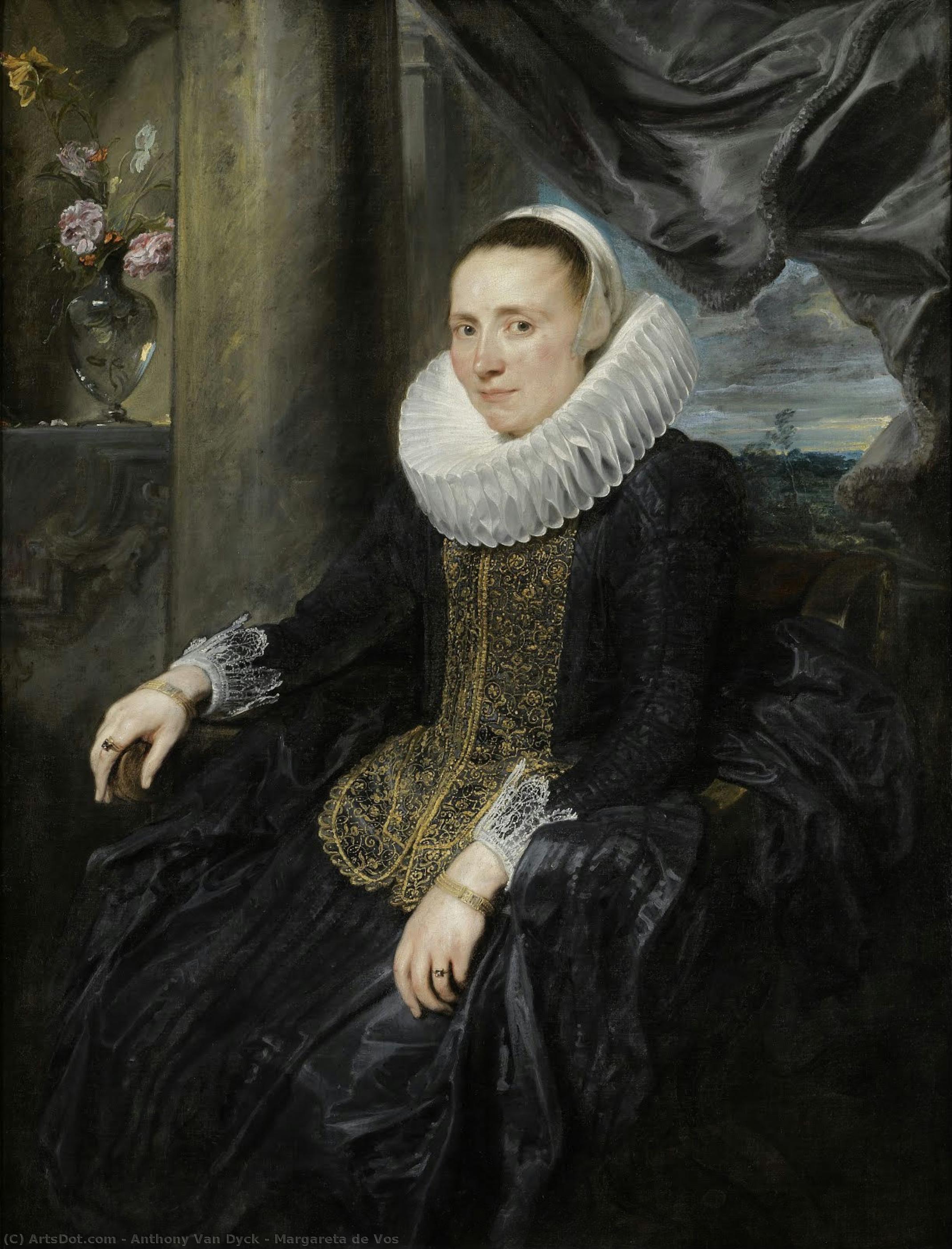
A Portrait of Grace and Prosperity: Margareta de Vos by Sir Anthony van Dyck
Sir Anthony van Dyck’s “Margareta de Vos,” painted in 1620, is more than just a portrait; it's a meticulously crafted tableau of wealth, status, and subtle artistry. This captivating work offers a glimpse into the life of a woman – likely a distiller’s daughter and sister to three painters – within the opulent setting of early 17th-century Flanders. Van Dyck, already establishing his signature style characterized by elegant lines and luminous color, elevates the subject beyond mere likeness, imbuing her with an air of dignified composure and quiet beauty.
The painting’s composition is a masterclass in controlled elegance. Margareta de Vos sits before a window, bathed in soft light that highlights the luxurious details of her attire. Her hands are clasped together – a gesture of modesty and contemplation – while her gaze meets the viewer with an understated confidence. The background, though relatively simple, contributes significantly to the overall effect; the muted tones and suggestion of domestic comfort reinforce the impression of a prosperous household. Notably, Van Dyck subtly alters the composition of her head, a detail that has been meticulously examined by art historians, revealing his deliberate manipulation of perspective to create a more dynamic and engaging portrait.
The Virtuoso Vase: A Symphony of Color
Perhaps the most arresting element of “Margareta de Vos” is the glass vase brimming with flowers positioned prominently in the foreground. This isn’t merely decorative; it's a showcase of Van Dyck’s extraordinary technical skill and his deep understanding of light and reflection. The artist employs bold strokes of blue and buttery yellow paint to create an illusion of depth and luminosity within the vase, capturing the way light plays across its surface and refracts through the blossoms. This passage is considered one of the most virtuosic in Van Dyck’s oeuvre, demonstrating his mastery of color theory and his ability to translate visual effects onto canvas.
The choice of flowers themselves carries symbolic weight. While specific interpretations vary, they likely represent fertility, beauty, and prosperity – qualities highly valued within the context of a family involved in the distillation trade. The careful arrangement and vibrant colors contribute significantly to the painting’s overall sense of abundance and refinement.
A Millstone Collar: Signifier of Status
Van Dyck strategically incorporates details that speak volumes about Margareta de Vos's social standing. The most striking element is her millstone collar, a gleaming white garment fastened with intricate embroidery. This particular detail – a millstone (a large stone used in grinding grain) – served as a potent symbol of prosperity and wealth within the region. It was a clear declaration of the family’s economic success, subtly communicated through the artist's choice of attire.
Furthermore, the collar’s starched appearance speaks to the meticulous attention to detail and the high standards of dress prevalent in the period. Van Dyck’s awareness of these social cues demonstrates his keen understanding of his patrons’ expectations and his ability to translate them into visually compelling portraits.
A Legacy of Elegance
"Margareta de Vos" stands as a testament to Sir Anthony van Dyck's genius – a portrait that seamlessly blends technical brilliance with astute observation of human character and social context. The painting’s enduring appeal lies not only in its exquisite beauty but also in its ability to transport us back to a specific moment in time, offering a glimpse into the lives and aspirations of those who inhabited it. ArtsDot's hand-painted reproductions capture the nuances of Van Dyck’s technique and color palette with remarkable fidelity, allowing art lovers to experience this masterpiece anew.