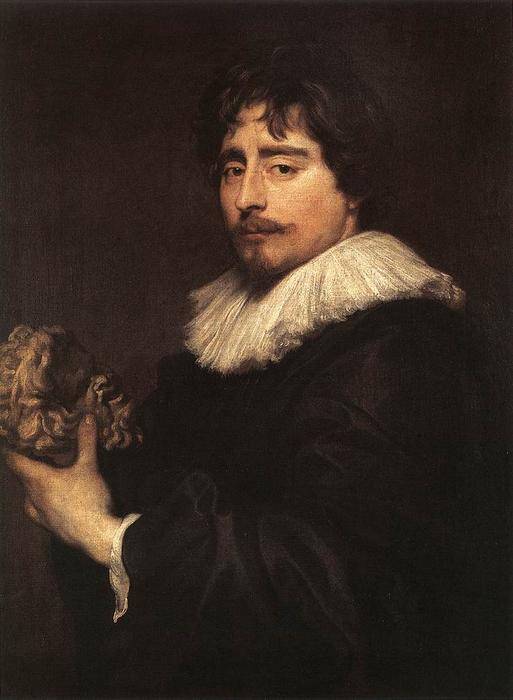
The
Portrait of the Sculptor Duquesnoy, painted by the renowned Flemish artist
Anthony Van Dyck in 1629, is a captivating work that showcases the artist's exceptional skill and attention to detail. This oil on canvas painting measures 77 x 61 cm and is currently housed at the
Musee Royaux des Beaux-Arts de Belgique in Belgium.
The Subject: François Duquesnoy
The subject of the portrait, François Duquesnoy, was a prominent Flemish sculptor who worked primarily in Rome. He is known for his contributions to the development of Baroque sculpture and his influence on later artists. Van Dyck's portrayal of Duquesnoy captures the essence of the sculptor's character, conveying a sense of elegance and sophistication.
Artistic Style and Technique
The painting exemplifies the
Baroque style, characterized by dramatic lighting, intense emotions, and highly detailed realism. Van Dyck's use of chiaroscuro creates a striking contrast between light and dark, drawing the viewer's attention to the subject's face and hands. The artist's masterful brushwork and subtle color palette add depth and texture to the painting.
Symbolism and Composition
The composition of the portrait is noteworthy for its balance and harmony. Duquesnoy is depicted holding a small ball, which may symbolize his artistic creativity and skill. The dark background with a hint of red on the right side adds a sense of mystery and emphasizes the subject's central position.
Van Dyck's Workshop
Anthony Van Dyck was a prolific artist who established a workshop in Antwerp, known as the
Antwerp Workshop Of Sir Anthony Van Dyck. This studio produced numerous paintings, many of which were created by Van Dyck himself or under his supervision. The workshop played a significant role in disseminating Baroque art throughout Europe.
Other Notable Works by Van Dyck
Some of Van Dyck's other notable works include:
In conclusion, the
Portrait of the Sculptor Duquesnoy is a testament to Anthony Van Dyck's artistic genius. This painting not only reflects the artist's technical skill but also provides insight into the cultural and artistic context of 17th-century Europe. For those interested in exploring more of Van Dyck's works or learning about other artists, visit
https://ArtsDot.com for a comprehensive collection of handmade oil painting reproductions.