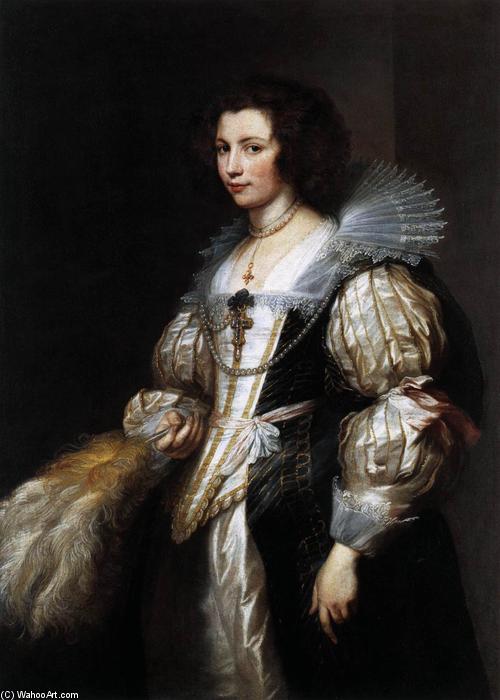
Experience the opulent elegance of Anthony Van Dyck’s ‘Portrait of Maria de Tassis,’ a stunning Baroque masterpiece showcasing rich colors and intricate detail. This captivating portrait offers a glimpse into 17th-century nobility, perfect for art lovers seeking timeless beauty.
A Portrait of Refined Grace: Maria de Tassis by Anthony van Dyck
Anthony van Dyck’s “Portrait of Maria de Tassis,” painted in 1629, is more than simply a depiction of a noblewoman; it's a masterful distillation of the Baroque aesthetic – a shimmering testament to wealth, status, and the enduring power of portraiture. Executed with meticulous detail in oil on canvas, this work transports us directly into the opulent world of 17th-century Europe, offering a glimpse into the life of Maria de Tassis herself, a woman of considerable influence within her family circle.
The Baroque Embrace: Style and Technique
Van Dyck’s genius lies in his ability to seamlessly blend technical mastery with artistic vision. The painting is a prime example of his signature style – characterized by the dramatic use of chiaroscuro, where pools of light sculpt Maria's face and attire while enveloping the background in deep shadow. This technique isn’t merely about creating visual interest; it actively directs the viewer’s gaze, emphasizing her beauty and commanding presence. The layering of thin glazes of oil paint allows for an unparalleled level of detail – observe the intricate embroidery on her gown, the delicate sheen of the lace, or the subtle variations in color that bring the fabric to life. Van Dyck's meticulous approach elevates this portrait beyond a simple likeness, transforming it into a richly textured and emotionally resonant experience.
Symbolism and Social Context
The painting’s context is crucial to understanding its full significance. Created during the height of the Baroque period, “Portrait of Maria de Tassis” reflects the era's fascination with grandeur and luxury. Maria’s elaborate silk gown, adorned with gold braid and lace, wasn’t just fashionable; it was a visual declaration of her family’s wealth and social standing. The cross pendant she wears subtly suggests religious devotion – a common motif in portraits of nobility during this time. Beyond the immediate symbolism, the portrait speaks to the role of women within aristocratic society: a figure of beauty, grace, and influence.
A Masterpiece of Light and Texture
The composition itself is carefully considered. Maria’s slight turn adds a dynamic element to the otherwise formal pose, drawing the eye across her exquisite attire. The dark background serves not as an absence of light but as a powerful tool, intensifying the brilliance of the subject and creating a sense of intimacy. Van Dyck's masterful manipulation of texture – from the smooth silk to the rougher weave of the fabric – adds another layer of depth and realism. The overall effect is one of breathtaking elegance and sophistication, a testament to Van Dyck’s unparalleled skill and his ability to capture not just a likeness but the very essence of his subject.
Own a Piece of History
Handmade oil painting reproductions of “Portrait of Maria de Tassis” are available for purchase, allowing you to bring this iconic Baroque masterpiece into your home or office. Each reproduction is created using traditional techniques and high-quality materials, ensuring that it faithfully captures the beauty and artistry of Van Dyck’s original work. Click here to explore our collection and select your perfect piece.