The Portrait of a Moment – Sir David Wilkie’s “Sotiri, Dragoman of Mr Colquhoun”
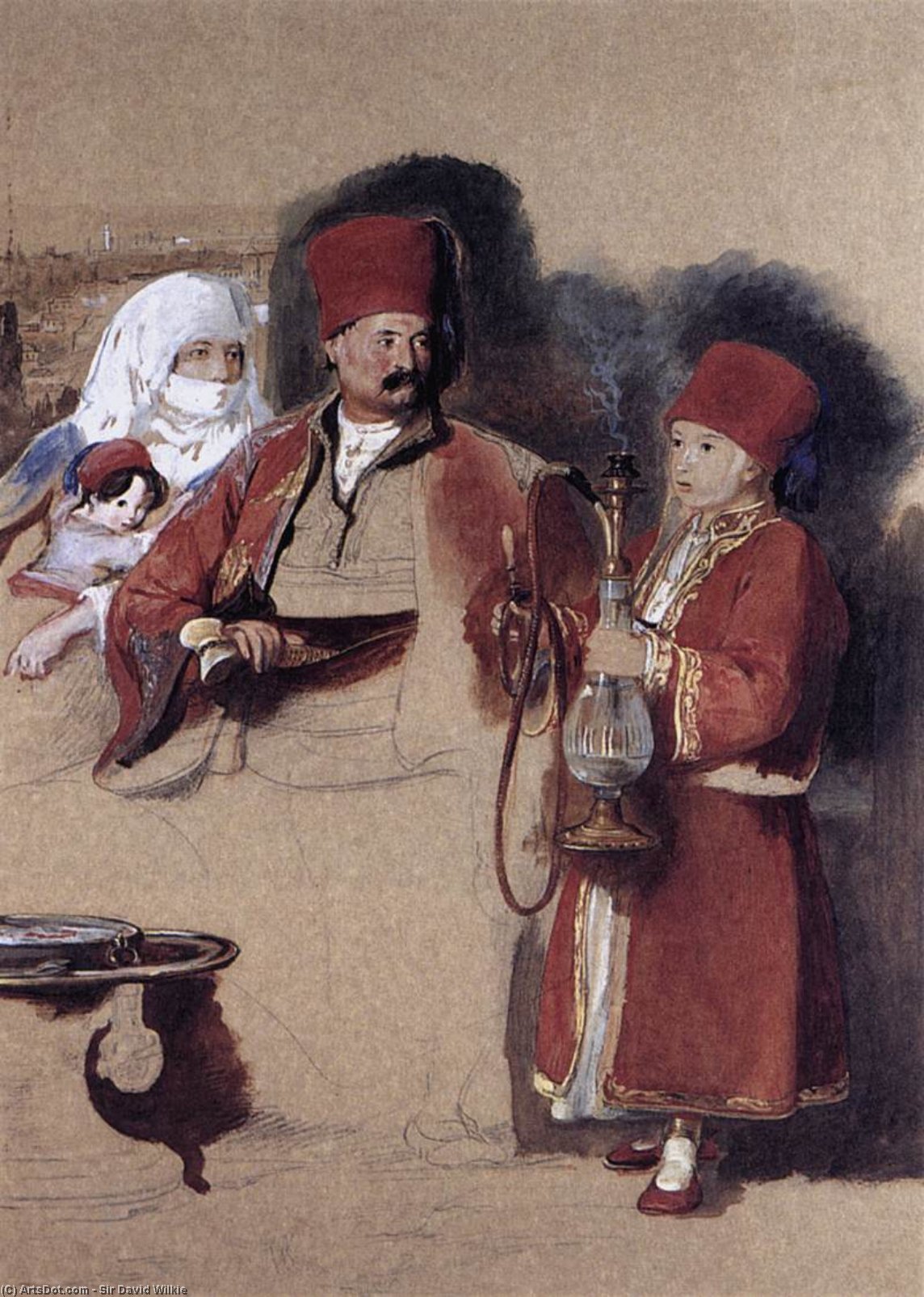
Sir David Wilkie's "Sotiri, Dragoman of Mr Colquhoun," painted in 1840, isn’t merely a portrait; it’s a meticulously crafted snapshot of Victorian society, brimming with subtle social commentary and an undeniable warmth. The painting captures a scene within the bustling environs of a London coffee house, specifically the establishment frequented by Sir John Colquhoun, a prominent figure in Scottish society. At the heart of this tableau stands Sotiri, a Dragoman – essentially a servant or attendant – depicted holding a pipe with a thoughtful expression, radiating an air of quiet dignity amidst the surrounding activity.
Wilkie’s genius lies not just in his technical skill—the delicate rendering of fabrics, the subtle play of light and shadow, and the remarkably lifelike portrayal of each individual—but also in his ability to imbue a seemingly simple scene with profound meaning. The composition is carefully balanced; Sotiri occupies a central position, drawing our attention while simultaneously allowing us to observe the interactions and dynamics unfolding around him. The inclusion of children adds an element of innocence and vulnerability, subtly highlighting the social hierarchy at play.
A Masterclass in Watercolor Technique
Painted entirely in watercolor, “Sotiri” exemplifies Wilkie’s mastery of this challenging medium. He employed a technique known as ‘wet-on-wet,’ layering washes of color to create soft edges and luminous effects. This approach lends the painting an ethereal quality, capturing the hazy atmosphere of the coffee house with remarkable precision. Notice how he builds up layers of pigment to achieve depth and texture – from the sheen on Sotiri’s clothing to the rough surface of the wooden table. The loose brushstrokes contribute to a sense of immediacy and spontaneity, as if we've stumbled upon this intimate scene unexpectedly.
Wilkie’s use of color is particularly noteworthy. He employs a restrained palette—primarily browns, blues, and greens—to create a harmonious and understated effect. The subtle variations in tone and hue contribute to the overall sense of realism and depth. The careful placement of highlights draws our eye to key details, such as Sotiri’s face and the pipe he holds, while the darker shadows define the forms and create a sense of volume.
Historical Context & Social Observation
To fully appreciate “Sotiri,” it's crucial to understand the social context in which it was created. The mid-19th century was a period of rapid industrialization and social change in Britain, marked by growing inequality and shifting class structures. Wilkie’s work reflects these changes, offering a nuanced portrayal of Victorian society—a society grappling with issues of poverty, labor, and social mobility.
The Dragoman figure itself is significant. Historically, Dragomans were Ottoman officials who served as intermediaries between European powers and the Ottoman Empire. In this painting, however, Wilkie uses the role to subtly comment on the complexities of social relationships and the dynamics of power. Sotiri’s position—a servant within a wealthy household—reflects the realities of Victorian society, where opportunities for advancement were limited for those born into lower classes.
Symbolism & Emotional Resonance
Beyond its historical context, “Sotiri” is rich in symbolism. The pipe itself can be interpreted as a symbol of contemplation and quiet dignity—a moment of respite amidst the hustle and bustle of daily life. Sotiri’s gaze, directed slightly off-camera, suggests a sense of introspection and perhaps even melancholy. The painting evokes a feeling of gentle nostalgia, inviting us to reflect on the lives of ordinary people and the complexities of human relationships.
Wilkie's ability to capture such subtle emotions through his masterful technique is what elevates “Sotiri” beyond a simple portrait—it’s a poignant reminder of the humanity that lies beneath the surface of Victorian society. Reproductions of this remarkable work offer a captivating glimpse into a bygone era, inviting viewers to contemplate the enduring themes of social observation and human connection.