A Portrait of Devotion: The Soul Within the Spaniel
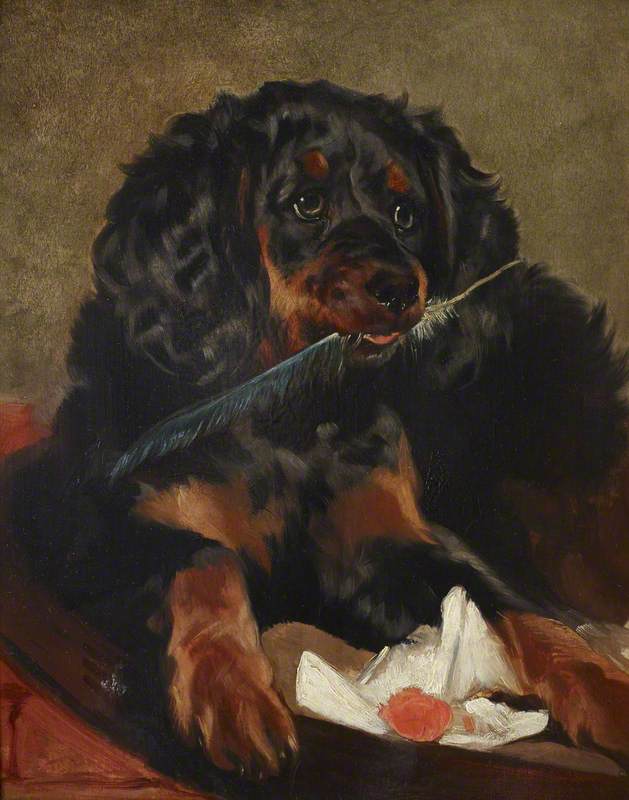
In the grand tapestry of Victorian art, few threads are as tender or as evocative as the works of Sir Edwin Henry Landseer. His 1838 masterpiece, Queen Victoria's Spaniel, 'Tilco', serves as a profound testament to his unparalleled ability to breathe life into the animal kingdom. This is not merely a portrait of a pet; it is an intimate study of character and quiet dignity. The painting captures a spaniel seated with an almost human-like poise upon a chair, delicately clutching a piece of paper in its mouth. Through Landseer’s lens, we witness a moment of stillness that transcends the boundaries between species, inviting the viewer into a private, domestic sanctuary where loyalty is the silent protagonist.
The composition is masterfully orchestrated to draw the eye toward the subject's expressive gaze. While the background—a soft arrangement of a couch, a dining table, and the gentle presence of other chairs—suggests a refined interior, it never distracts from the central figure. The inclusion of a simple bowl on the table adds a touch of domestic realism, grounding the scene in a tangible, lived-in reality. For the collector or interior designer, this piece offers a sense of warmth and narrative depth, making it an exquisite focal point for spaces that value classical elegance and emotional resonance.
The Mastery of Anatomical Realism and Technique
To understand the breathtaking realism of 'Tilco', one must look toward Landseer’s revolutionary approach to his craft. Moving beyond the superficial depictions common in his era, Landseer engaged in a rigorous, almost scientific pursuit of anatomical truth. Influenced by his mentor, Benjamin Robert Haydon, he famously utilized systematic dissection to comprehend the intricate musculature and skeletal structure of his subjects. This dedication allowed him to render the spaniel's form with an unprecedented level of palpable physicality.
Every curve of the dog's frame and every subtle tension in its posture reflects this deep anatomical knowledge. The texture of the fur, the light reflecting off the eyes, and the delicate way the paper is held are all results of a technique that blends scientific accuracy with romantic sensibility. This meticulous attention to detail ensures that the reproduction of such a work retains its lifelike vitality, offering a tactile quality that can transform a room, providing an atmosphere of sophisticated authenticity.
Symbolism and the Victorian Spirit
Beyond its technical brilliance, 'Tilco' is steeped in the symbolic language of the 19th century. During the Victorian era, animals were often used as vessels to communicate complex human virtues such as fidelity, innocence, and constancy. By portraying the Queen's spaniel with such intelligence and poise, Landseer elevates the animal to a symbol of the very stability and loyalty upon which the British monarchy was built. The piece captures a sense of "quiet dignity" that would have resonated deeply with a contemporary audience and continues to captivate modern viewers.
For those seeking to curate an environment of timelessness, this artwork provides more than just decoration; it offers a window into a bygone era of grace. Whether placed in a sunlit library or a formal dining hall, the painting acts as a conversation piece that bridges the gap between historical grandeur and intimate, domestic charm. It is a work that does not demand attention through loud colors or chaotic movement, but rather earns it through a steady, enduring presence that inspires peace and reflection.