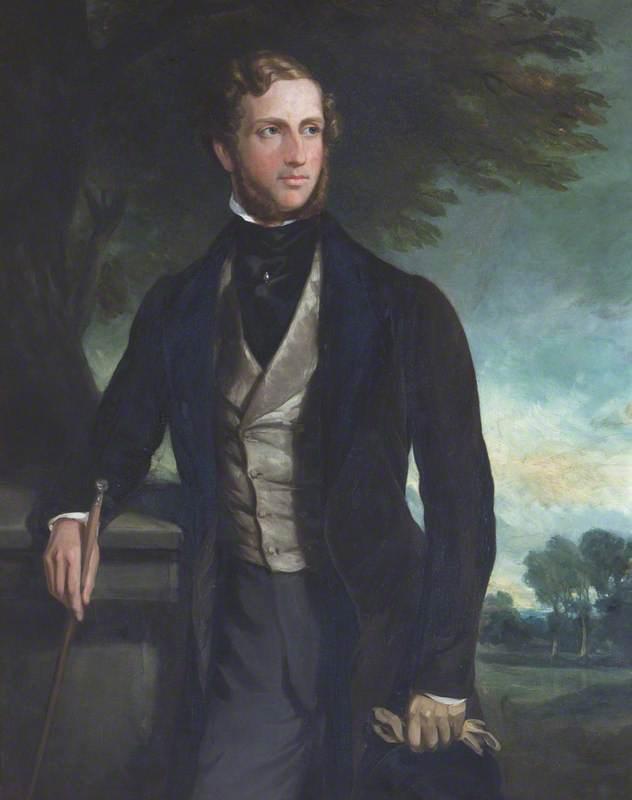
This stunning oil painting by Sir Francis Grant depicts John Hume Egerton, Viscount Alford standing beside a grand oak tree in 1851. Characterized by dark tones, subtle lighting, and meticulous detail, it exemplifies Victorian portraiture’s blend of Romanticism and Realism.
John Hume Egerton, Viscount Alford – A Victorian Portrait of Dignified Presence
Sir Francis Grant’s depiction of John Hume Egerton, Viscount Alford, stands as a testament to the meticulous artistry and stylistic conventions of 19th-century British portraiture. Completed in 1851, this oil painting on canvas transcends mere representation; it embodies the grandeur and restraint characteristic of the Victorian era, capturing not only the likeness of its subject but also conveying an aura of aristocratic composure.
- Subject Matter: The artwork centers around John Hume Egerton (1812–1851), a prominent figure in British politics and society. He is portrayed standing outdoors beside a substantial oak tree, symbolizing strength and longevity – elements frequently employed in Victorian art to convey virtue and stability.
- Composition: Grant’s masterful composition places Lord Alford centrally within the frame, commanding attention with his dignified posture and gaze directed towards the viewer. The expansive tree dominates the left side of the canvas, providing a rich textural backdrop that contributes to the overall depth and atmosphere of the scene. Subtle figures in the background hint at a broader social context.
- Color Palette: Dominated by muted greens and browns mirroring the natural environment, the color palette utilizes dark tones accented with warmer hues—particularly in Lord Alford’s waistcoat and skin—to illuminate his features and imbue the painting with warmth. The restrained use of color reflects Victorian aesthetic ideals prioritizing subtlety and elegance.
- Technique: Grant employed a layered oil paint technique, meticulously blending pigments to achieve remarkable realism and textural detail. Visible brushstrokes are particularly prominent in the landscape background, demonstrating an Impressionistic influence that softens edges and enhances atmospheric perspective—a deliberate choice to capture the fleeting beauty of the natural world.
- Style & Symbolism: The painting exemplifies Victorian portraiture’s blend of Romantic idealism with Realist observation. Lines converge vertically to emphasize Lord Alford's stature, while curving branches from the tree represent organic growth and connection to nature. Overall, the artwork communicates a mood of quiet confidence and understated nobility—a reflection of the aristocratic ideals prevalent during Grant’s time.
Further research into John Hume Egerton reveals him as a staunch supporter of parliamentary reform and a champion of liberal values. This biographical context adds another layer of significance to Grant's portrayal, highlighting the subject’s moral character and aligning it with Victorian societal aspirations for virtue and responsibility.
The painting resides at National Trust, Belton House, where its enduring beauty continues to inspire admiration and scholarly interest. Its meticulous detail and masterful execution solidify Sir Francis Grant’s legacy as one of Britain's most celebrated portrait artists—a figure whose work remains a cornerstone of Victorian art history.