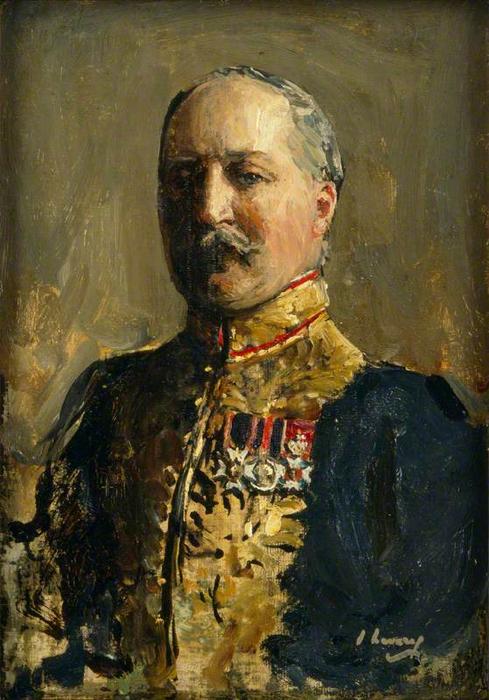
A Portrait of Dignified Authority: Sir Lionel Henry Cust by Sir John Lavery
Sir John Lavery’s 1912 portrait of Sir Lionel Henry Cust offers a captivating glimpse into Edwardian society and the quiet strength of a distinguished gentleman. More than just a likeness, this oil painting is a masterful study in texture, light, and understated emotion – a testament to Lavery's ability to capture not only appearance but also the weight of experience and honor. The work immediately draws the viewer in with its rich palette and visible brushstrokes, creating an immediate sense of intimacy despite the subject’s formal attire.
Cust himself is presented with remarkable composure, his face etched with the subtle lines of age yet radiating a dignified serenity. He wears the uniform of a military officer, adorned with medals and decorations that speak to a life dedicated to service – symbols of achievement and loyalty rendered in vibrant detail by Lavery’s hand. The careful arrangement of these emblems isn't merely decorative; they are integral to the portrait’s narrative, hinting at a history filled with responsibility and perhaps even sacrifice. The composition is tightly focused, filling most of the frame, emphasizing the subject’s presence and drawing attention to the nuances of his expression.
Impressionistic Realism: Technique and Style
Lavery's technique here beautifully marries elements of realism with impressionistic brushwork. The painting isn’t a photographic representation; instead, it’s an interpretation – a distillation of light, color, and form. Notice the deliberate application of paint, particularly in the folds of the uniform and the texture of his jacket. Thick impasto is used to build up areas of shadow and highlight, creating a tactile quality that invites close inspection. The loose brushstrokes contribute to a sense of movement and immediacy, as if capturing a fleeting moment in time.
The lighting, originating from an unseen source above and slightly to the side, plays a crucial role in shaping the portrait’s mood. It casts dramatic shadows across Cust's face, emphasizing his features and adding depth to the composition. The use of color is equally deliberate – rich, saturated hues are employed to create a sense of drama and warmth, while subtle variations in tone suggest the play of light and shadow. The artist skillfully employs visible brushwork, characteristic of Lavery’s style, which adds to the painting's dynamism and vitality.
Historical Context and Symbolism
To fully appreciate this portrait, it’s important to consider its historical context. Created in 1912, during a period of significant social and political change, it reflects the values and aspirations of Edwardian England. Sir Lionel Henry Cust was a prominent figure within British society – his military service and status underscored the importance of tradition, honor, and duty. The portrait itself becomes a symbol of this era’s emphasis on decorum and respectability.
Beyond its social significance, the painting also holds symbolic weight. The medals adorning Cust's uniform represent not only his achievements but also the sacrifices made in service to one’s country. The dignified expression on his face suggests a quiet contemplation of these experiences – perhaps a reflection on the burdens and responsibilities that come with leadership. Furthermore, considering Lavery’s own artistic influences, particularly Whistler’s emphasis on tonal harmony and atmospheric effects, adds another layer of understanding to this work.
A Legacy of Portraiture: Sir John Lavery's Influence
Sir John Lavery was a pivotal figure in British art during the late 19th and early 20th centuries. His portraits captured the spirit of his age, documenting the lives and personalities of prominent figures from society, politics, and the arts. His ability to convey both outward appearance and inner character made him one of the most sought-after portraitists of his time. Reproductions of works like “Sir Lionel Henry Cust” offer a valuable window into this era, allowing us to connect with the individuals who shaped it and appreciate the artistry of a master painter.