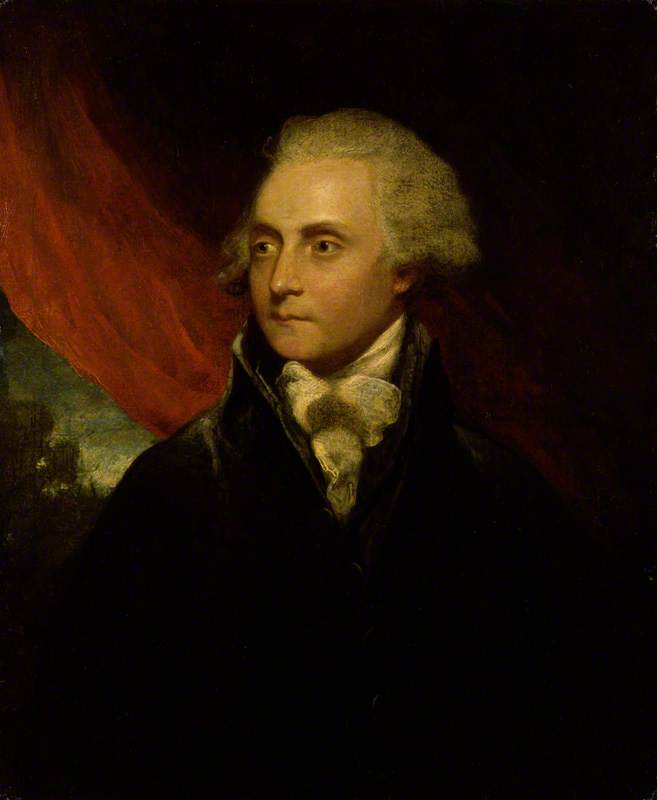
A Glimpse into Enlightenment Grandeur: Edmund Malone by Sir Joshua Reynolds
To stand before this portrait of Edmund Malone is to step directly into the vibrant, intellectual atmosphere of late eighteenth-century London. Painted in 1786 by the master Sir Joshua Reynolds, this work transcends a mere likeness; it is a carefully constructed monument to Enlightenment wit and scholarly gravity. The subject, depicted with striking realism, commands attention through his direct gaze—a look that seems to engage the viewer across the centuries, inviting contemplation of the man's intellect and stature. Reynolds, ever the arbiter of taste during this period, has captured not just a face, but an entire persona: that of the esteemed literary critic and lawyer.
Mastery in Portraiture: Technique and Composition
Reynolds’ technical brilliance is immediately apparent upon viewing the canvas. The handling of the sitter's white hair and wig suggests an almost ethereal quality, contrasting sharply with the deep blacks of his coat and tie. This masterful interplay between light and shadow—the very essence of chiaroscuro—gives the figure a profound three-dimensionality. Notice the richness of the background; those sumptuous red curtains do more than simply decorate the space. They act as a theatrical backdrop, lending an air of permanence and importance to Malone’s presence, suggesting that his life and achievements were themselves dramatic events worthy of grand display.
The Symbolism of Status and Intellect
Every element within this painting speaks volumes about its sitter's place in society. The formal attire, the wig, and the confident posture are not accidental details; they are signifiers of status. Reynolds understood that portraiture during this era was as much about social documentation as it was about artistic representation. Malone is presented not just as a man who spoke eloquently, but as a pillar of the educated elite. The overall effect is one of dignified authority—a visual testament to the power of letters and critical thought in the Age of Reason.
Bringing History Home: Decorating with Art
For the discerning collector or interior designer, this piece offers an unparalleled opportunity to infuse a space with historical gravitas. Reproducing such a work allows one to curate an environment that whispers tales of Georgian refinement and intellectual fervor. Imagine this painting gracing a library, a formal drawing-room, or a study—it instantly elevates the room's narrative, suggesting deep appreciation for history, literature, and the enduring art of portraiture. It is more than decoration; it is cultural conversation starter.