A Vision of Enlightenment Grandeur
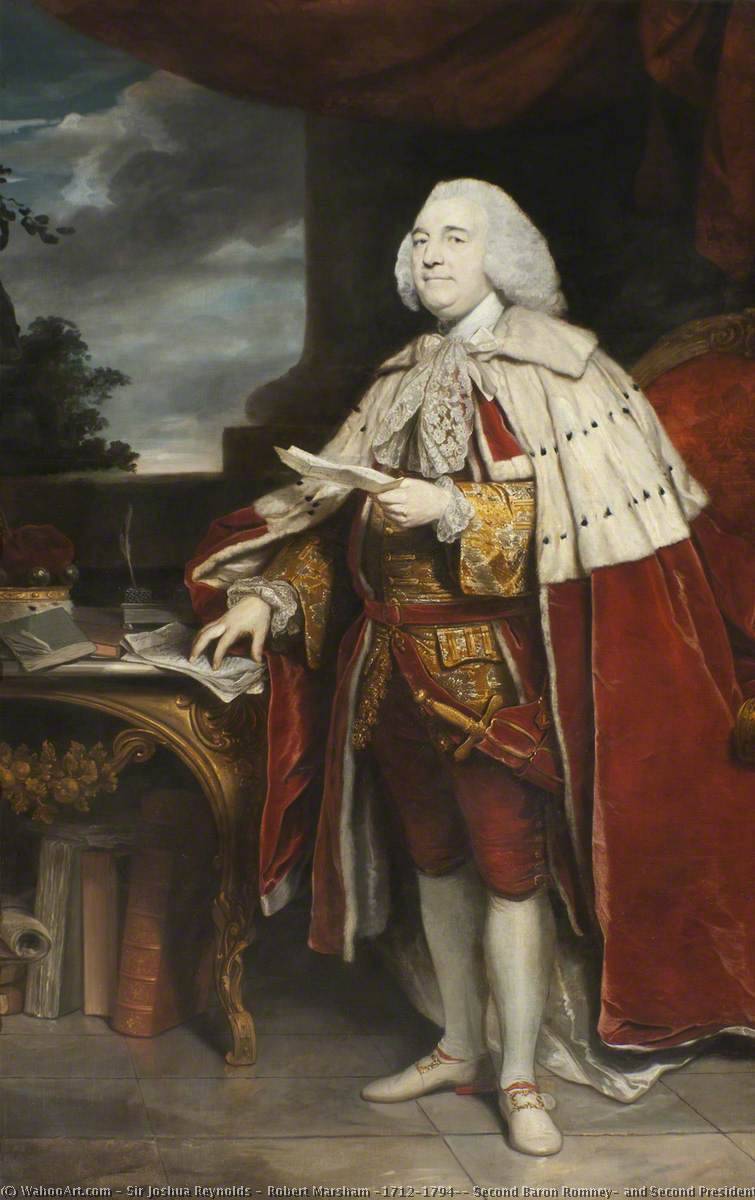
In the luminous realm of eighteenth-century British portraiture, few works capture the intersection of intellectual vigor and aristocratic poise as masterfully as Sir Joshua Reynolds’ 1770 portrait of Robert Marsham, Second Baron Romney. This commanding canvas is far more than a mere likeness of a prominent peer; it is a carefully orchestrated performance of status and enlightenment ideals. As the viewer encounters the figure of Marsham, they are immediately struck by the sheer presence of his scarlet attire, a vibrant splash of color that commands the space and signals his elevated station within the social hierarchy of the era. Reynolds, the pioneer of the “Grand Style,” utilizes this portrait to elevate his subject beyond the temporal, imbuing him with an aura of timeless authority and scholarly grace.
The technical brilliance of the piece lies in Reynolds’ ability to balance meticulous detail with a soft, atmospheric elegance. Through the sophisticated application of sfumato, the artist softens the edges of the composition, creating a subtle haze that lends the scene an air of serene sophistication. This technique allows the light to dance across the gold trim of Marsham's suit and the textures of his wig, enhancing the three-dimensionality of the figure. The interplay of light and shadow—the chiaroscuro effect—not only defines the physical contours of the subject but also directs the eye toward the subtle nuances of his expression, establishing an intimate yet dignified connection with anyone who gazes upon it.
Symbolism and the Spirit of an Era
Every element within this composition serves a narrative purpose, weaving together the personal achievements of Marsham with the broader cultural movements of the Enlightenment. In his left hand, the inclusion of a book acts as a profound symbol of erudition and a commitment to the pursuit of knowledge—a cornerstone of the age. This is not merely an accessory but a testament to his role as a patron of progress and the Second President of the Society of Arts. The surrounding environment further reinforces this theme of prosperity; the potted plants flanking the portrait are not mere decorative flourishes but emblems of harmony, growth, and the stability of the landed gentry.
For the discerning collector or interior designer, this artwork offers a profound emotional resonance. It evokes a sense of historical continuity and the enduring value of intellectual pursuit. The painting possesses a unique ability to anchor a room, providing a focal point that is both intellectually stimulating and aesthetically magnificent. Whether placed in a private library, a formal study, or an elegant salon, a high-quality reproduction of this masterpiece brings with it the weight of history and the sophisticated charm of the British Enlightenment, making it an incomparable addition to any curated collection of fine art.