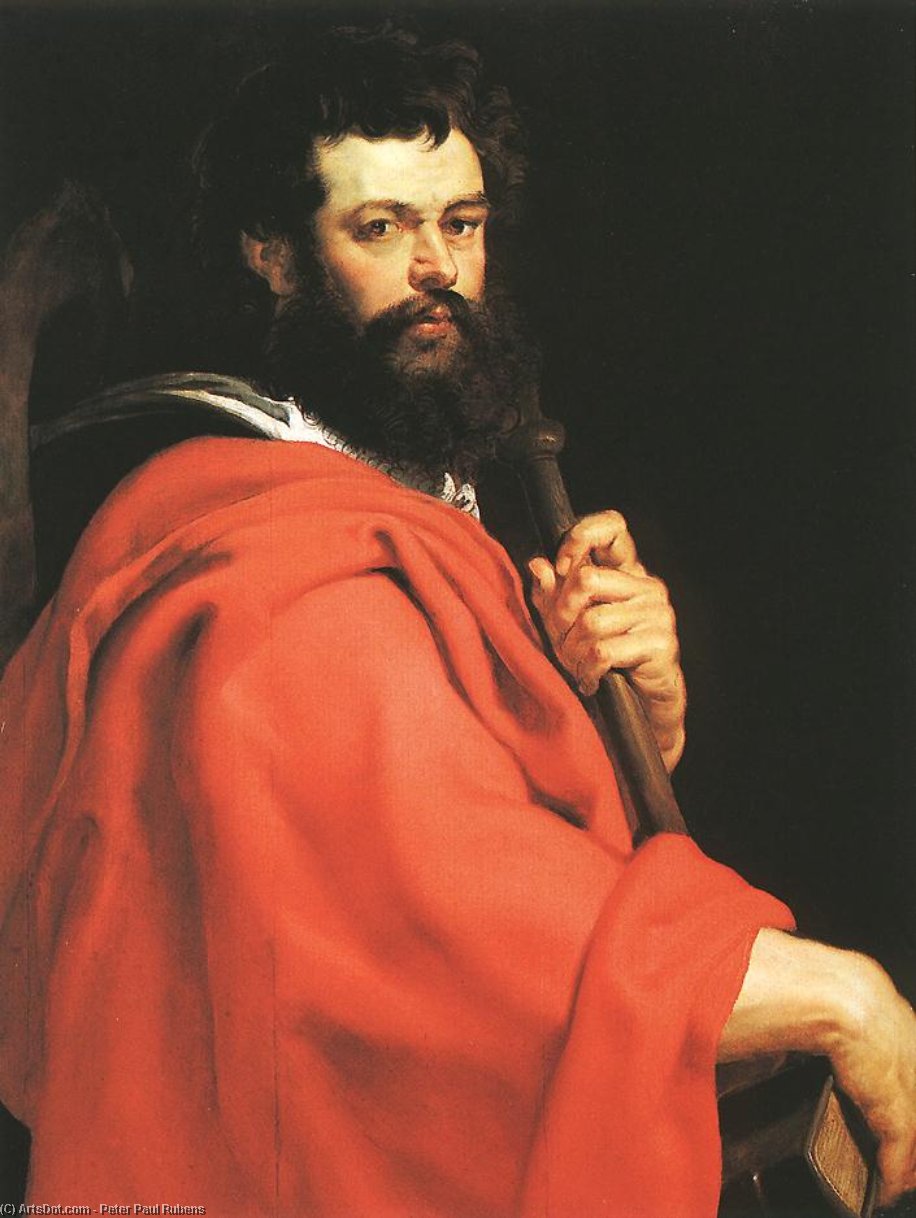
A Testament to Baroque Grandeur: Peter Paul Rubens’ St. James the Apostle
Peter Paul Rubens' "St. James the Apostle," completed in 1613, stands as a cornerstone of Baroque art—a vibrant testament to the artistic fervor and intellectual curiosity that defined its era. Currently residing within the Museo del Prado’s hallowed halls in Madrid, this monumental oil on panel painting transcends mere representation; it embodies Rubens' signature style and communicates profound spiritual contemplation.
The Artist’s Vision: Rubensian Baroque Defined
Rubens, a Flemish titan whose influence reverberates throughout European art history, revolutionized painting with his audacious embrace of dynamism and color. Unlike the restrained elegance favored by Mannerism, Rubens championed movement—captured with breathtaking precision—and saturated palettes that pulsed with life. His technique involved layering glazes upon glazes, creating an illusionistic depth rarely achieved before, mirroring the grandeur of architectural spaces and elevating religious subjects to unprecedented levels of emotional intensity. This meticulous approach is evident in every brushstroke of “St. James,” demonstrating Rubens’ unwavering commitment to mastering the craft of painting.
A Portrait Steeped in Symbolism: Faith Embodied
The composition itself speaks volumes about Rubens' artistic philosophy. St. James, depicted with remarkable realism—characterized by a meticulously rendered beard and mustache—holds aloft a staff, symbolizing authority and spiritual guidance. His scarlet robe – a deliberate choice reflecting the liturgical color of Advent – underscores the painting’s solemn purpose. Surrounding him are two figures positioned in the background, likely intended to represent the Virgin Mary and John the Baptist, reinforcing the narrative's devotional significance. These additions contribute to a broader symbolic tapestry, highlighting the importance of pilgrimage and divine grace within Christian iconography.
Historical Context: The Prado and Rubens’ Legacy
The Museo del Prado’s acquisition of “St. James” underscores its place as one of Rubens’ most celebrated works—a pivotal piece in the artist's prolific output during his time serving as court painter to Philip IV of Spain. This commission reflects the Habsburg monarchy’s ambition to project power and prestige through art, aligning perfectly with Rubens’ stylistic sensibilities. Examining “St. James” alongside other masterpieces housed within the Prado offers invaluable insight into the artistic currents shaping Europe in the early 17th century—a period marked by religious upheaval and intellectual renewal.
Emotional Resonance: Capturing Divine Presence
Beyond its technical brilliance, "St. James" possesses a palpable emotional resonance. Rubens skillfully conveys St. James’ solemn gaze and dignified posture, inviting viewers to contemplate themes of faith, humility, and spiritual fortitude. The luminous color palette—dominated by reds and golds—further enhances the painting's impact, creating an atmosphere of reverence and conveying the sublime beauty associated with religious iconography. It remains a powerful reminder of Rubens’ ability to transform pigment into emotion, cementing his enduring legacy as one of the greatest artists of all time.
- Artist: Sir Peter Paul Rubens
- Born: 1577 Siegen, Germany
- Died: 1640 Antwerp, Belgium
- Notable Works: The Death of Seneca, Triumph of Church over Fury, Tereus Confronted with the Head of His Son, Love Garden
Discover more about Rubens and explore stunning reproductions at ArtsDot.com