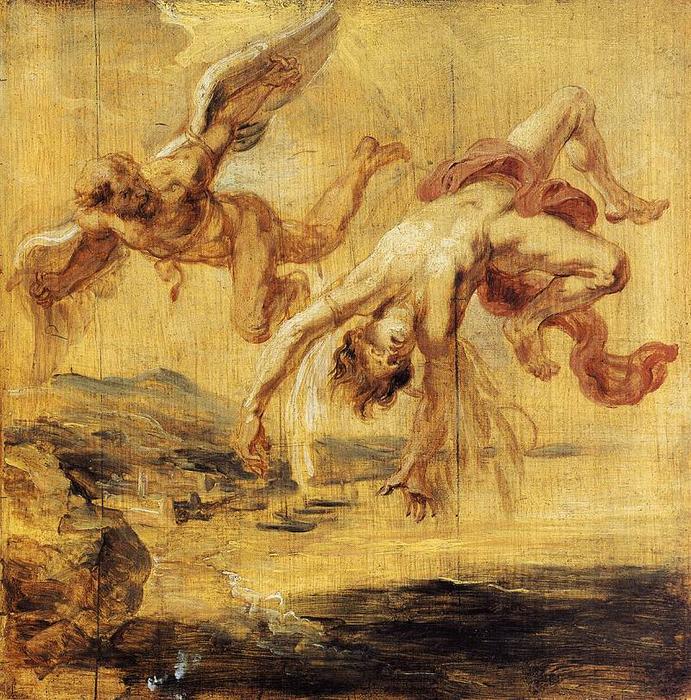
The Fall of Icarus: A Baroque Masterpiece by Peter Paul Rubens
- Title: The Fall of Icarus
- Artist: Peter Paul Rubens
- Date: 1636
- Dimensions: 37 x 37 cm
- Medium: Oil on panel
- Current Location: Gemäldegalerie Donaueschingen, Germany
A Dramatic Depiction of Myth and Hubris
Peter Paul Rubens' "The Fall of Icarus" is a captivating Baroque painting that vividly portrays the tragic tale from Greek mythology. The artwork captures the pivotal moment when Icarus, defying his father Daedalus’s warnings, flies too close to the sun with wings crafted from feathers and wax. As the wax melts, Icarus plummets into the sea below. Rubens masterfully translates this narrative of ambition, disobedience, and ultimately, downfall, onto a small panel, creating an intensely dramatic scene.
Baroque Technique and Artistic Brilliance
Rubens’s skill as a Baroque artist is evident in his dynamic composition and masterful use of light and shadow. The painting's energy stems from the swirling movement depicted in Icarus’s descent and the surrounding elements. The play of light highlights the central figures, drawing the viewer's eye to the tragic event unfolding. Rubens employs a rich color palette characteristic of the Baroque period, further enhancing the emotional intensity of the scene. The composition isn't solely focused on Icarus; it subtly integrates other figures – an angel observing from above and a farmer continuing his work oblivious to the tragedy—adding layers of complexity and commentary.
Historical Context and Symbolic Significance
"The Fall of Icarus" was created during a period of significant artistic flourishing in Europe. The Baroque style, with its emphasis on drama, emotion, and grandeur, reflected the religious and political climate of the time. Beyond the literal depiction of the myth, the painting carries symbolic weight. Icarus’s fall serves as a cautionary tale against hubris and overreaching ambition. His disregard for his father's wisdom represents the dangers of unchecked desire and the consequences of defying natural boundaries. The seemingly indifferent farmer in the foreground underscores humanity's often-unaware existence alongside tragedy, adding a poignant layer to the narrative.
Emotional Impact and Enduring Appeal
Rubens’ "The Fall of Icarus" evokes a powerful emotional response in viewers. The painting’s dramatic composition, combined with its symbolic depth, creates a sense of both awe and melancholy. It is not merely a depiction of a mythological event; it's an exploration of human fallibility, the consequences of ambition, and the fleeting nature of life. This enduring appeal makes "The Fall of Icarus" a timeless masterpiece that continues to resonate with audiences centuries after its creation.