ルーベンス
(1577 - 1640)
美しい色彩と力強い動きが特徴的なバロック絵画の巨匠、ピエール・ポール・ルーベンス。イエス・キリスト降ろしや十字架昇上げなどの傑作は、彼の芸術への情熱と卓越した技術を物語っています。 ルーベンスの生涯と作品について深く知ることができます。
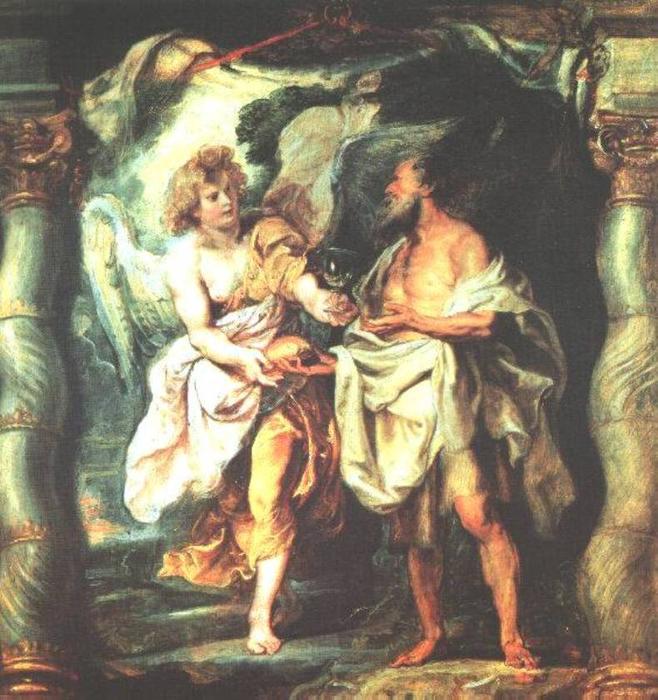
The Prophet Elijah Receiving Bread and Water from an Angel
Peter Paul Rubens’s “The Prophet Elijah Receiving Bread and Water from an Angel,” completed in 1625-28, stands as a cornerstone of Flemish Baroque painting—a dramatic portrayal of biblical faith rendered with unparalleled artistic skill. Currently residing at the Musée Bonnat in Bayonne, France, this oil on canvas masterpiece transcends mere depiction; it embodies the fervor and grandeur characteristic of its era.
The Painting's Narrative and Context
The artwork recounts a pivotal moment from scripture: Elijah’s desperate plea for divine sustenance during his exile under King Jezebel. Rubens skillfully captures the urgency of the scene, portraying Elijah as weary yet resolute, accepting the angel’s offering with profound humility. The inclusion of supporting figures—a man presenting a cup and two birds—adds layers of complexity to the narrative, symbolizing hope and divine providence. Created amidst the turbulent religious landscape of Rubens's time, “The Prophet Elijah Receiving Bread and Water from an Angel” reflects the Baroque preoccupation with emotion and grandeur, mirroring the spiritual fervor prevalent in Europe during the period.
Rubens’ Artistic Technique and Style
Rubens’ mastery is evident in his masterful manipulation of oil paint—a medium renowned for its luminosity and textural richness. He employs chiaroscuro, a technique characterized by dramatic contrasts between light and shadow, to sculpt the figures and imbue them with palpable emotion. The artist meticulously renders drapery folds and skin textures, demonstrating an unwavering commitment to realism while simultaneously elevating the scene to a realm of spiritual significance. Rubens’s use of color is equally striking—warm reds and golds dominate the composition, conveying warmth, majesty, and divine radiance.
Symbolism and Emotional Impact
The angel's gesture of offering bread and water serves as a potent symbol of God’s compassion and provision during times of hardship. It underscores Elijah’s unwavering faith in the face of persecution and embodies the core tenets of Christian piety. Rubens’s depiction captures not only the literal narrative but also its emotional essence—the vulnerability of humanity confronted by divine grace. The painting inspires contemplation on themes of resilience, devotion, and spiritual renewal.
Further Exploration
For those seeking to delve deeper into Rubens's artistic legacy or admire similar masterpieces at the Musée Bonnat, ArtsDot offers exceptional reproductions crafted with meticulous attention to detail. Explore our collection today!