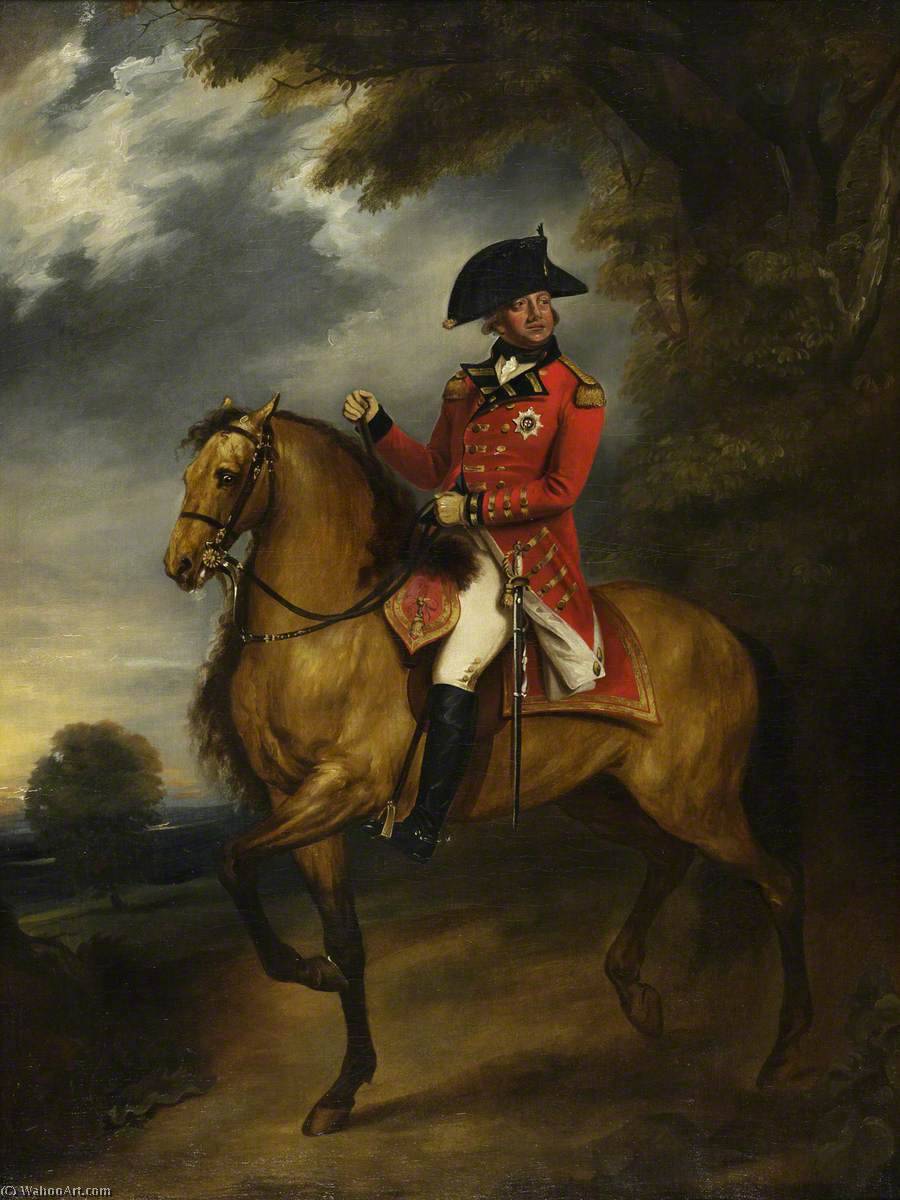
Admire Sir William Beechey's masterful depiction of King George III on horseback – a regal portrait capturing the grandeur of Georgian Britain. Explore its history and artistic significance.
ウィリアム・ビーシー(1753-1839)は、優美な新古典主義様式と王族、貴族、著名人の肖像画で知られる英国を代表する肖像画家でした。
大英図書館
(London, United Kingdom)
1億7千万点以上の膨大なコレクション!大英図書館で、古代マヌスクリプトから現代の記録まで、人類の知と創造性を探求。ロンドンの歴史的建造物で文化遺産に触れる旅へ。
イギリス (United Kingdom)
ロンドン (London)
大英図書館 (British Library)
リンダイスファーン写本 (Lindisfarne Gospels)
1億7千万点以上 (Over 170 million items)
国立図書館 (National library)
歴史的遺物を展示するため
1
大英図書館の主な目的は何ですか?
George III (1738–1820), on Horseback – A Portrait of Majesty and Stability
Sir William Beechey’s depiction of King George III astride Adonis, circa 1800, transcends mere representation; it embodies the ethos of the Georgian era—a period defined by regal grandeur and unwavering confidence in Britain's position as a dominant global power. This impressive canvas, now housed at Weymouth Museum (copy), captures not just the likeness of the monarch but also his commanding presence against the backdrop of a meticulously crafted landscape.
The Artist’s Vision: Beechey’s Neoclassical Style
William Beechey (1753–1839) was a master of neoclassical portraiture, favoring a restrained elegance and meticulous attention to detail that reflected the artistic sensibilities of his time. Influenced by artists like Johann Zoffany – though definitive proof of their collaboration remains elusive – Beechey skillfully employed chiaroscuro lighting to sculpt George III’s form, emphasizing musculature and conveying an aura of authority. The artist's technique involved layering thin glazes of oil paint onto a primed canvas, achieving remarkable tonal subtlety and capturing the nuances of texture—particularly evident in Adonis’s glossy coat and the dappled sunlight filtering through the trees.
A Landscape Reflecting Power and Order
Beyond the central figure, Beechey’s composition incorporates a carefully considered landscape that serves as more than just decorative embellishment. The stylized trees – predominantly oaks and limes – are rendered with precise botanical accuracy, symbolizing strength and resilience—attributes closely associated with George III's reign. Their placement reinforces the impression of stability and grandeur, mirroring the king’s unwavering commitment to upholding British traditions and securing its dominion over vast territories. Notably, a clock subtly positioned in the upper-middle section adds an element of temporal context, reminding viewers of the monarch’s role as protector of the realm and guarantor of continuity.
Symbolism and Emotional Resonance
The horse Adonis itself is laden with symbolic significance. Traditionally associated with nobility and courage, it represents George III's martial prowess and his leadership during pivotal moments in British history—including the Napoleonic Wars. The posture of the King – upright, resolute, and confidently gazing ahead – communicates a sense of unwavering determination and embodies the ideal of aristocratic virtue. Beechey’s portrait aims to inspire admiration for George III not merely as a ruler but as an embodiment of moral fortitude and national pride.
Provenance and Legacy
This artwork is part of the Weymouth Museum collection (accession number BLWA 80). It represents a significant contribution to British art history, showcasing Beechey’s mastery of neoclassical portraiture and offering a captivating glimpse into the visual culture of Georgian Britain. Its enduring appeal lies in its ability to convey both factual detail and emotional depth—a testament to Beechey's artistic skill and his profound understanding of the human condition.