A Fragmented Vision: The Haunting Beauty of Combles
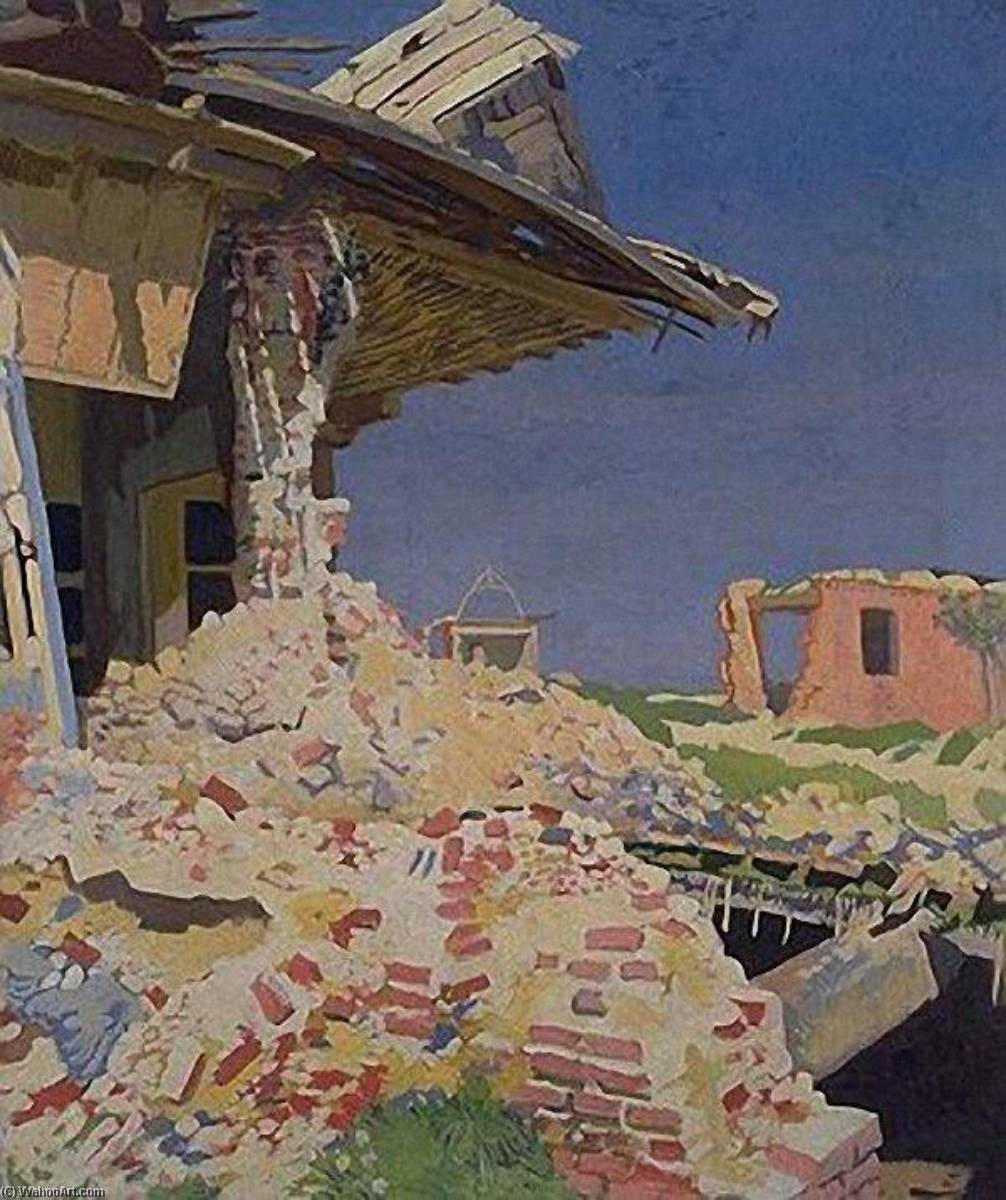
In the evocative canvas of “The Main Street, Combles,” painted in 1917 by the renowned Sir William Newenham Montague Orpen, we are invited to witness a moment suspended between destruction and endurance. This masterpiece does not merely depict a scene of architectural decay; it captures the very soul of a landscape caught in the throes of transformation. The painting centers on a modest dwelling, its weathered façade and partially collapsed thatched roof serving as a poignant focal point. As the eye wanders through the composition, one encounters the stark reality of rubble and debris, suggesting a structure mid-demolition or perhaps recovering from the scars of conflict. Through Orpen’s lens, the physical disintegration of the house becomes a window into a much larger, more profound narrative of change.
The artist’s technical prowess is on full display through a masterful blend of Impressionism and Expressionism. Orpen eschews clinical precision in favor of loose, energetic brushstrokes that breathe life into the scene. By employing the impasto technique—applying thick, tactile layers of paint—he lends a visceral, three-dimensional quality to the textures of stone, thatch, and earth. This heavy application of pigment emphasizes the physicality of the decay, making the weight of the rubble feel almost tangible to the viewer. His palette is a sophisticated dance of vibrant blues, earthy ochres, and striking reds, which work in harmony to convey not just the visual reality of the village, but the emotional temperature of the era.
Historical Resonance and Symbolic Depth
To understand “The Main Street, Combles” is to understand the turbulent atmosphere of the early 20th century. While the subject matter captures a specific location, the painting resonates with the broader anxieties of the time, particularly reflecting the spirit of an era marked by upheaval and the struggle for identity. The crumbling architecture serves as a powerful metaphor for the fading grandeur of a bygone age and the uncertainty of what is to come. The rubble scattered around the base of the house represents more than just construction debris; it symbolizes the literal and metaphorical fragmentation of society during periods of intense political and social transition.
For the discerning collector or interior designer, this work offers an unparalleled emotional depth that transcends mere decoration. It is a piece that commands attention through its ability to evoke both melancholy and resilience. The contrast between the haunting blue sky and the fractured earth creates a tension that is both unsettling and deeply beautiful. Integrating a high-quality reproduction of this painting into a curated space provides more than just an aesthetic focal point; it introduces a profound sense of history and a contemplative atmosphere, making it an ideal selection for those who appreciate art that speaks to the enduring strength of the human spirit amidst the ruins of time.