Estudo para La tasse – A Quiet Reflection of Modern Brazilian Identity
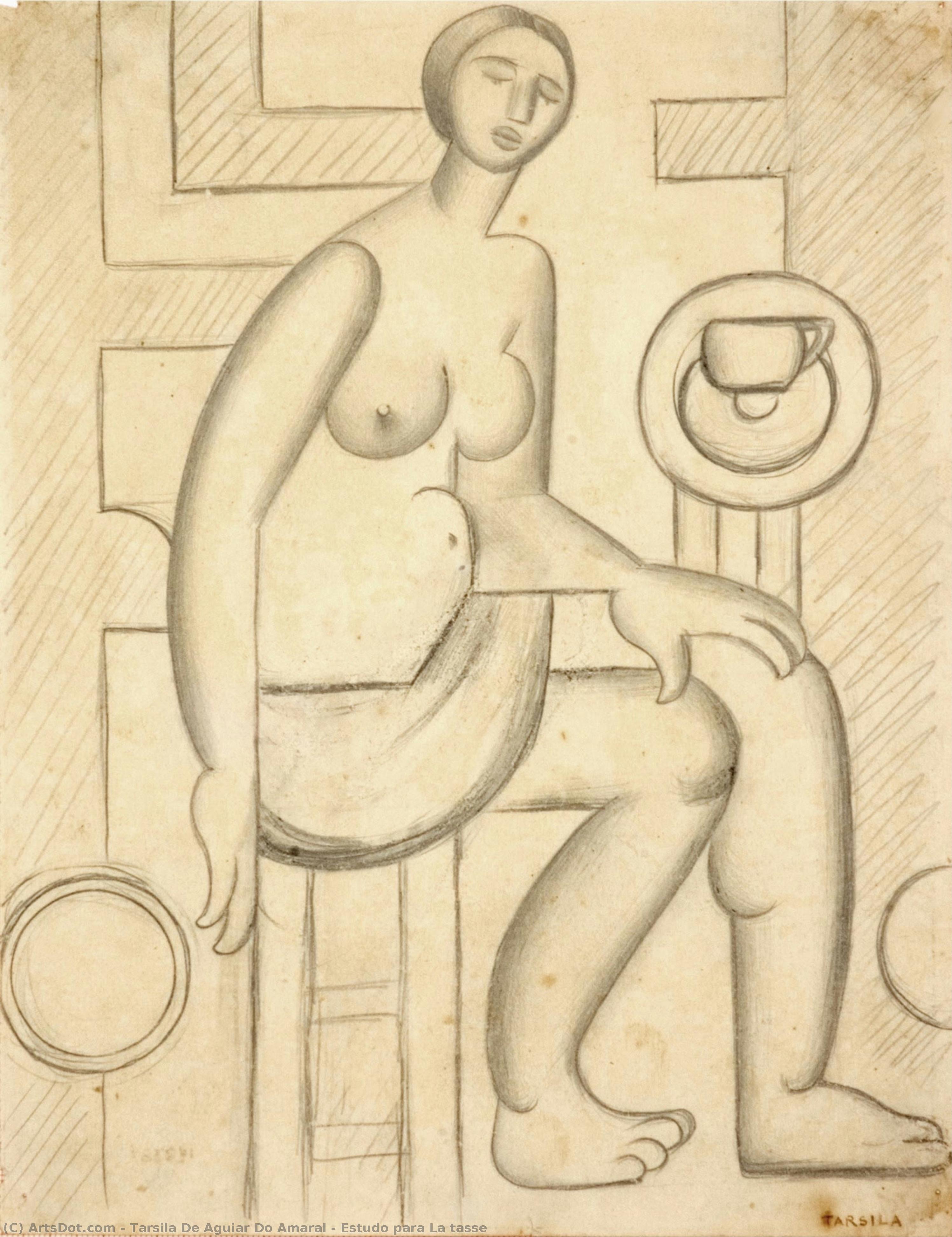
“Estudo para La tasse,” created in 1923 by Tarsila do Amaral, stands as a deceptively simple yet profoundly significant work within the canon of Brazilian modernist art. More than just a sketch—a preparatory study for a larger canvas—it encapsulates the spirit of Grupo dos Cinco and embodies the ambitious goals of Antropofagia (“cannibalism of ideas”), a movement that sought to liberate Brazilian artistic expression from European influences.
- Subject Matter: The drawing depicts a woman seated in a chair, her hands resting calmly on her lap. A bracelet adorns her wrist—a subtle detail hinting at personal reflection and perhaps representing connection to tradition amidst the burgeoning avant-garde.
- Style & Technique: Do Amaral’s distinctive style is immediately recognizable through her bold simplification of forms and use of flattened planes, characteristic of Cubist principles adopted during her formative years in Paris. The monochromatic palette—primarily black and white—emphasizes tonal variations and contributes to the drawing's contemplative mood.
- Historical Context: Produced at the dawn of the 1920s, “Estudo para La tasse” reflects the intellectual ferment surrounding Grupo dos Cinco – Andrade, Malfatti, Leitão Filho, Portinari and Modiano – who championed a rejection of academic conventions in favor of exploring indigenous Brazilian culture and mythology. Léger’s influence is palpable in the geometric abstraction.
- Symbolism: The woman herself serves as a symbol of resilience and quiet strength—a figure rooted in Brazilian femininity, yet simultaneously engaged with the complexities of modern artistic discourse. The chair represents stability and contemplation, mirroring the artist's intention to capture a moment of serene introspection.
The drawing’s emotional impact is understated but powerful. It invites viewers to consider themes of solitude, observation, and the negotiation between heritage and innovation—questions central to Brazilian identity during this pivotal period in artistic history. Its enduring appeal lies in its ability to convey a sense of profound stillness amidst the dynamism of artistic experimentation.
A high-quality reproduction of “Estudo para La tasse” offers an opportunity to bring this iconic piece of Brazilian modernist art into your home or studio, allowing you to appreciate Do Amaral’s masterful technique and contemplate its enduring message of quiet contemplation.