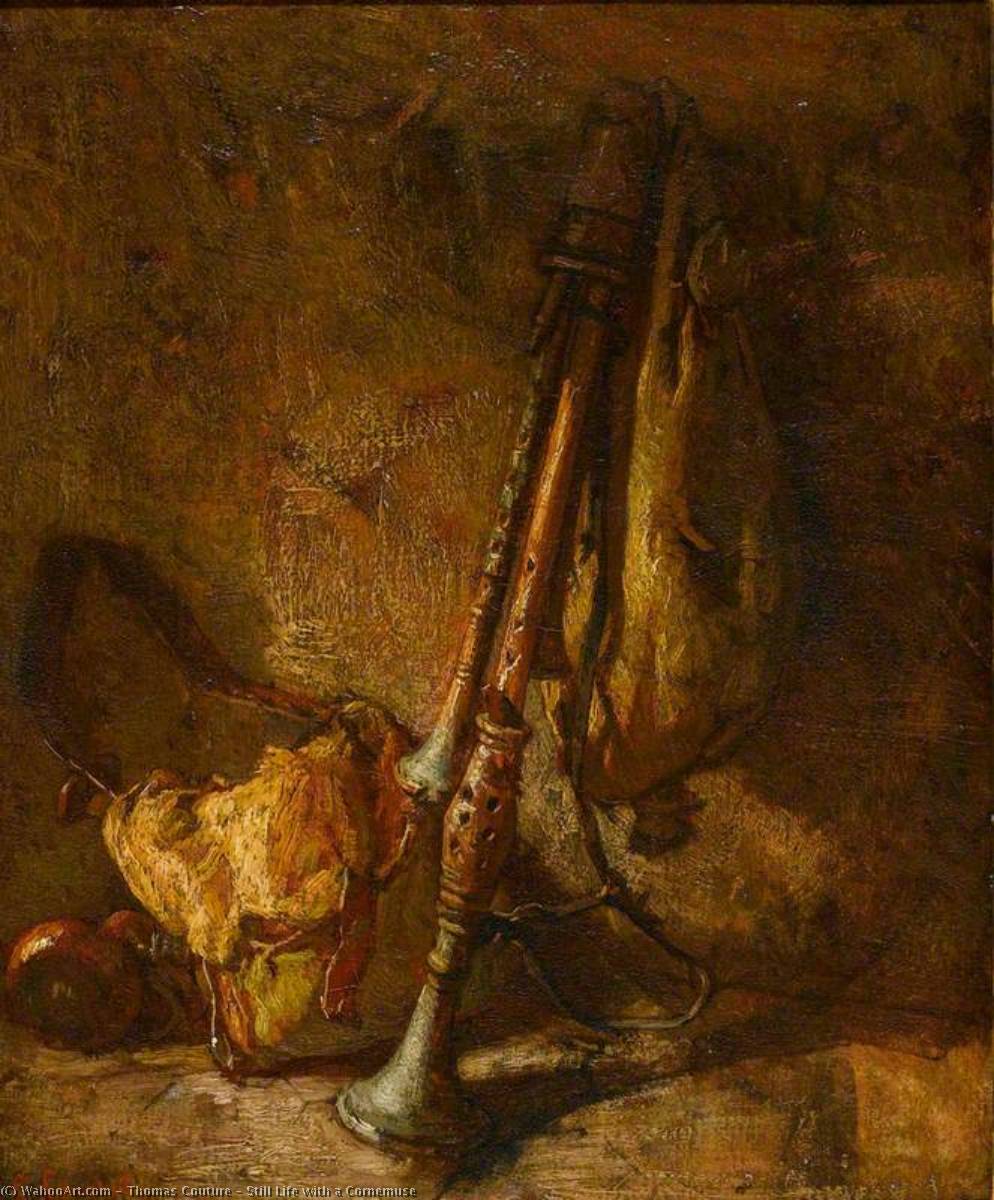
Still Life with a Cornemuse
Thomas Couture’s “Still Life with a Cornemuse” is more than just an arrangement of objects; it's a carefully constructed meditation on mortality and remembrance, rendered in the rich hues characteristic of Romanticism. Painted circa 1850-1855, this artwork resides within the Fitzwilliam Museum’s Keynes Collection, offering visitors a glimpse into Couture’s artistic vision during a pivotal moment in European art history.
- Subject Matter: The composition centers around a cornemuse—a simple pipe instrument—alongside an apple and two bags hanging from it. These elements aren't merely decorative; they are imbued with symbolic significance, reflecting themes prevalent in Romantic thought.
- Style & Technique: Couture employed oil paint on canvas, utilizing meticulous brushwork to achieve a velvety texture that captures the subtle nuances of light and shadow. His technique demonstrates mastery of chiaroscuro—the dramatic interplay between light and dark—creating depth and enhancing the emotional impact of the scene.
- Historical Context: Couture’s work emerged during the waning years of the Napoleonic era, a period marked by disillusionment following Napoleon's defeat and a yearning for idealized beauty amidst societal upheaval. Romantic artists sought to express profound emotions and grapple with existential questions, rejecting the rationalism of Enlightenment thought.
- Symbolism: The apple, traditionally associated with temptation and knowledge in Christian iconography, serves as a poignant reminder of human vulnerability and the inevitability of decay. Similarly, the cornemuse symbolizes pastoral simplicity and remembrance—a connection to nature and to cherished memories—themes central to Romantic aesthetics.
- Emotional Impact: Couture’s masterful execution evokes a sense of melancholy contemplation. The subdued palette and careful attention to detail invite viewers to ponder the transient beauty of life and the enduring power of memory, mirroring the Romantic preoccupation with emotion and experience.
Additional Research:
This artwork is part of the Fitzwilliam Museum’s Keynes Collection, accessible online at
Fitzwilliam Museum. You can explore Couture's broader artistic legacy and delve deeper into the stylistic influences of Dutch Golden Age Still Life & Floral Transience through
Wikipedia. Furthermore, consider examining the enduring appeal of Still Life Painting Across Centuries
Wikipedia for insights into its historical evolution and contemporary relevance. Finally, discover the beauty of ArtsDot’s reproductions
ArtsDot.
Related Links:
*
Still Life with a Cornemuse
*
Thomas Couture
*
File:Thomas Couture (1815-1879) - Still Life with a Cornemuse - PCF8 - Fitzwilliam Museum
*
Still Life with a Cornemuse | Art UK