A Portrait of Quiet Dignity: Encountering Dr. Rice Charleton
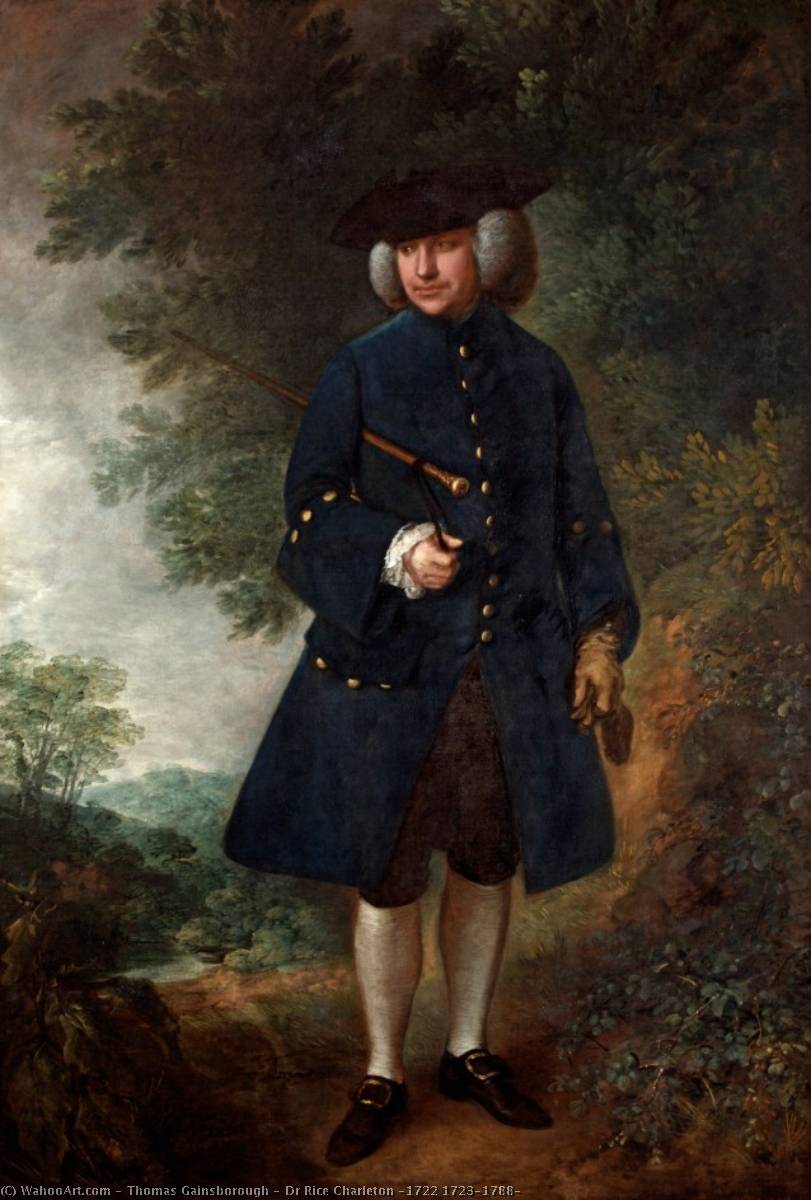
To step before Thomas Gainsborough’s “Dr. Rice Charleton” is to be transported into the heart of Georgian England, an era defined by a delicate balance of intellectual rigor and aristocratic grace. Painted around 1764, this portrait serves as much more than a mere anatomical likeness; it is a profound window into the soul of a man who embodied the spirit of his time. Dr. Charleton, a respected physician and landowner from Suffolk, sits captured in a moment of contemplative stillness. His gaze, direct yet deeply thoughtful, invites the viewer into a silent dialogue, conveying an air of calm confidence that suggests a life shaped by both scientific observation and social refinement.
Gainsborough, one of Britain’s most celebrated masters, avoids the stiff formality often found in 18th-century portraiture. Instead, he breathes life into the canvas through his signature technique—a masterful blend of loose, fluid brushstrokes and delicate glazing. This approach creates a luminous effect, where light seems to dance across the textures of Charleton’s attire, softening the contours of his face and lending a poetic glow to the drapery. Through the skillful use of chiaroscuro, Gainsborough employs dramatic contrasts between light and shadow to sculpt the figure, giving the subject a palpable sense of presence that commands the room.
The Elegance of Technique and Historical Context
The composition of the work is a study in understated elegance. The setting—a richly furnished but sparsely decorated room—is intentionally designed to ensure that Dr. Charleton remains the undisputed focal point. Every detail, from the subtle weight of the draped curtain to the intricate textures of the fabrics, contributes to an atmosphere of refined taste and comfort. This meticulous attention to realism does not merely document a person; it elevates the subject, transforming a private portrait into a monumental statement of status and character.
Historically, this piece emerges from the dawn of the Enlightenment, a period characterized by a burgeoning curiosity about the natural world and rational thought. While Charleton’s profession as a physician links him to this era of scientific advancement, Gainsborough’s artistic focus remains resolutely humanistic. He departs from the tradition of idealized, almost mythological representations, choosing instead to portray the authentic character of his sitter. The result is a work that feels remarkably modern in its psychological depth, capturing the tension between the formal expectations of the landed gentry and the internal life of the individual.
A Timeless Addition for the Discerning Collector
For the art lover or interior designer, “Dr. Rice Charleton” offers an unparalleled sense of prestige and historical weight. The painting’s palette—rich with deep greens, earthy browns, and warm ochres—provides a sophisticated anchor for any high-end interior, bringing a sense of warmth and intellectual gravity to a space. Whether placed in a sunlit library or a formal dining hall, the portrait acts as a conversation piece that evokes the grandeur of the 18th-century British landscape school.
Owning a high-quality reproduction of this masterpiece allows one to inhabit the world of Gainsborough daily. It is an investment in atmosphere, offering a touch of much-needed serenity and "quiet dignity" to the contemporary home. The emotional impact of the piece lies in its ability to soothe; it is a reminder of a time when beauty was found in subtlety, and strength was expressed through composure. For those seeking to curate a collection that speaks of heritage, intellect, and timeless aesthetic grace, this portrait remains an essential inspiration.