Thomas Gainsborough’s ‘Edward & William Tomkinson’: A Window Into Georgian Elegance
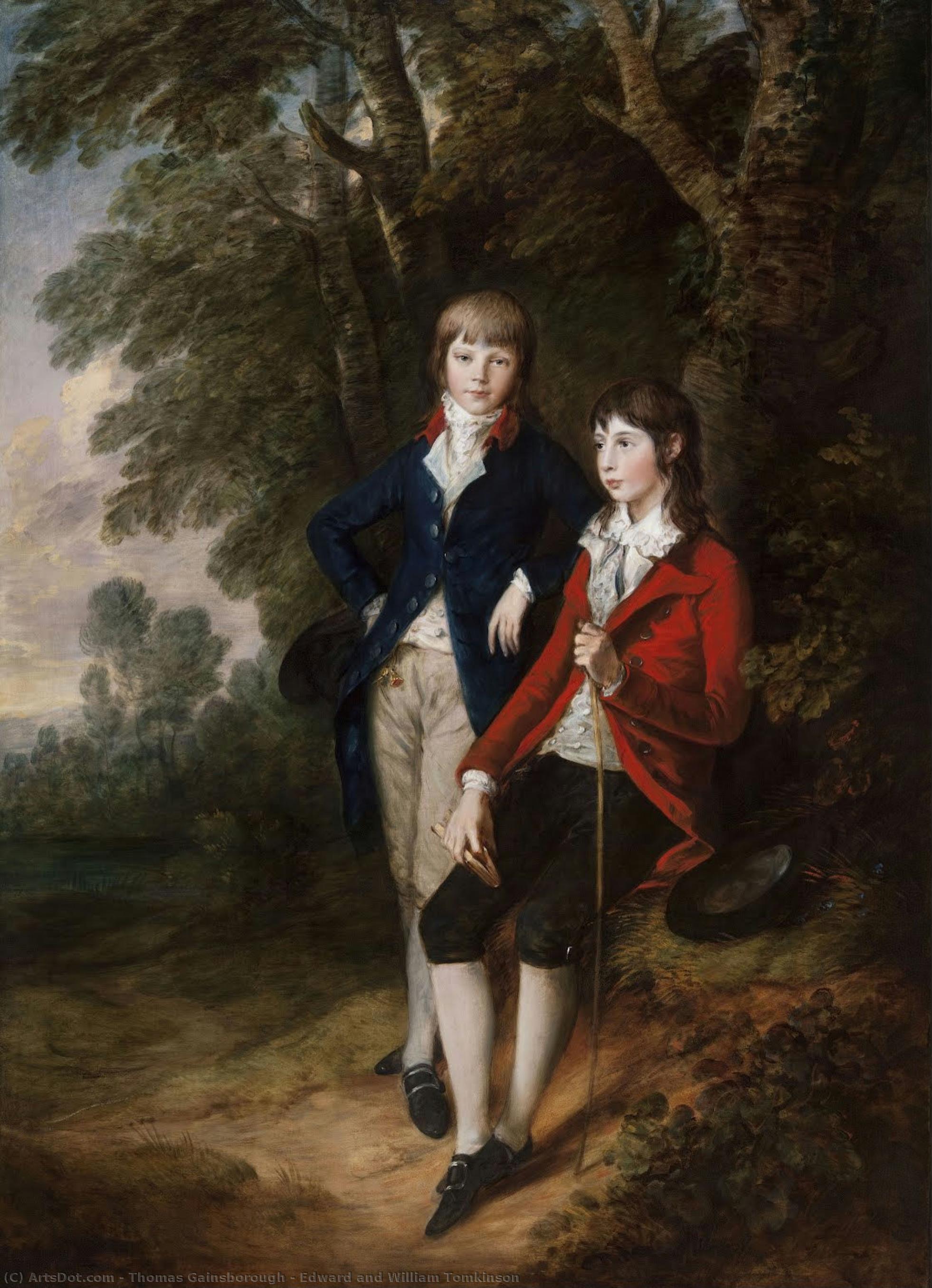
Thomas Gainsborough's 'Edward & William Tomkinson,' completed in 1784, stands as a quintessential example of British portraiture from the late Enlightenment. More than just a depiction of two young gentlemen—the Tomkinson cousins—it’s a masterful synthesis of observation and imagination, reflecting the prevailing aesthetic sensibilities of its time. The painting captures not merely likenesses but also an aura of refined leisure and intellectual curiosity, qualities highly valued within Georgian society. Gainsborough's skill lies in his ability to convey these intangible aspects through meticulous detail and subtle tonal harmonies.
- Composition & Setting: The scene unfolds outdoors amidst a tranquil landscape dominated by mature trees—a deliberate choice that speaks to the burgeoning Romantic movement’s fascination with nature as inspiration. The boys are positioned slightly off-center, creating visual balance while drawing the viewer's eye towards their faces and expressions.
- Color Palette & Technique: Gainsborough employs a rich color palette characterized by deep blues—representing nobility and serenity—contrasting sharply with warm reds—suggesting vitality and passion. His technique involves layering thin washes of paint to achieve luminosity and depth, capturing the texture of foliage and fabric with remarkable accuracy.
- Symbolism & Context: The inclusion of a fob bearing letter seals symbolizes Edward Tomkinson’s status as heir to his father's estate—a tangible representation of wealth and lineage within the aristocratic hierarchy. William Tomkinson’s gaze inward hints at contemplation and introspection, reflecting the intellectual pursuits favored by gentlemen of the era.
A Masterpiece of Academic Realism
Gainsborough’s approach aligns with academic realism—a dominant artistic style that prioritized meticulous observation and accurate representation—yet transcends mere imitation. He skillfully blends scientific precision with expressive artistry, resulting in a portrait that is both aesthetically pleasing and psychologically insightful. The artist's attention to detail extends beyond the figures themselves; he painstakingly renders the landscape, creating an immersive experience for the viewer. Gainsborough’s use of light—diffused and soft—further enhances the painting’s atmosphere, casting gentle shadows that illuminate the boys’ faces and garments.
Capturing Georgian Ideals
‘Edward & William Tomkinson’ embodies the ideals of Georgian society—a period marked by stability, reason, and a celebration of aristocratic culture. The painting exemplifies the belief in portraying subjects with dignity and grace, reflecting their social standing and intellectual pursuits. Gainsborough's work serves as a testament to the artistic achievements of his time, securing its place among Britain’s most celebrated portraits. It continues to inspire admiration for its beauty and sophistication, offering a glimpse into the values and sensibilities of Georgian England.
Reproductions & Appreciation
Today, high-quality reproductions of ‘Edward & William Tomkinson’ are available, allowing enthusiasts worldwide to experience Gainsborough's artistic vision firsthand. Consider framing it in a neutral tone to complement its understated elegance—a gesture that honors the legacy of this enduring masterpiece.