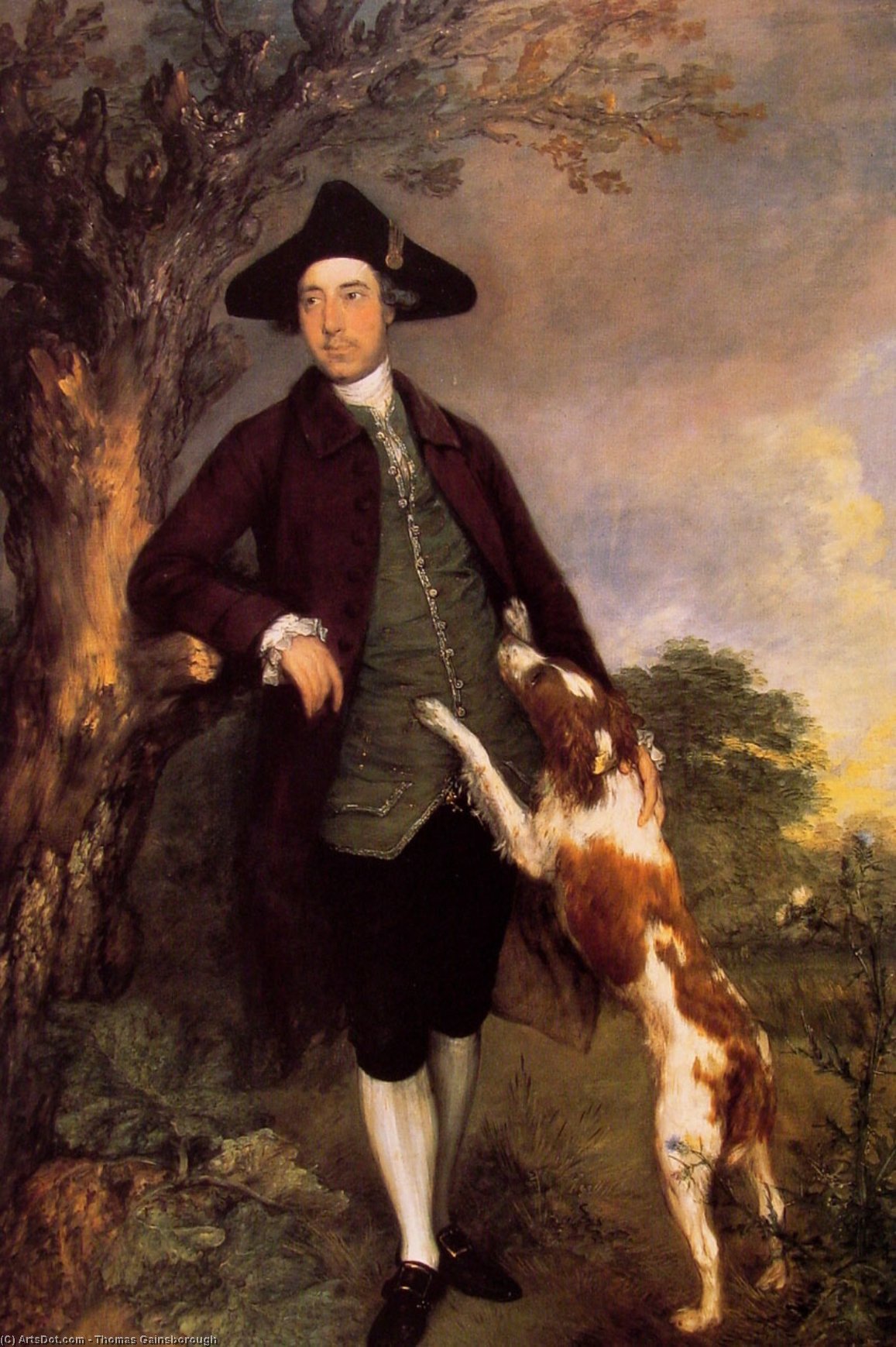
Thomas Gainsborough’s serene portrait captures Lord Vernon's dignified composure alongside his loyal spaniel companion—a hallmark of the Rococo era and Gainsborough’s masterful blend of realism and elegance. Explore this exquisite reproduction and bring timeless beauty into your home.
美しい肖像画と風景画で知られるイギリスの巨匠、ロイヤルアカデミー創設者であり、コンスタブルに影響を与えたトーマス・ゲインズボウグについて。彼の作品は繊細な筆使いと色彩感覚が特徴で、英国美術史における重要な人物です。
A Portrait Steeped in Dignity: Exploring Gainsborough’s George Vernon
Thomas Gainsborough's "George Vernon," completed in 1767, transcends mere representation; it embodies the spirit of Georgian England and stands as a cornerstone of British portraiture. Executed on canvas measuring 246 x 150 cm and currently residing at Southampton City Art Gallery, this painting offers more than just an image—it presents a window into the social landscape and artistic sensibilities of its time.
Subject Matter and Context
The portrait depicts George Vernon (1735–1813), a prominent landowner and politician who served as Governor of Gibraltar during the Napoleonic Wars. Gainsborough skillfully captures Vernon’s dignified composure, presenting him alongside his loyal spaniel companion—a symbol of trustworthiness and companionship deeply rooted in aristocratic tradition. The inclusion of two additional figures in the background subtly reinforces the importance of social connections within Vernon's milieu. Notably, a clock on the wall serves as a visual reminder of time’s passage and underscores the formality of the setting. This meticulous attention to detail reflects Gainsborough’s commitment to portraying not just physical likeness but also conveying the sitter’s character and status.
Stylistic Innovation: Soft Brushstrokes and Atmospheric Light
Gainsborough's artistic approach distinguishes him from his contemporaries, prioritizing subtlety and nuance over ostentation. He employs soft brushstrokes—a hallmark of his technique—to create a luminous surface that captures the diffused light characteristic of Suffolk’s countryside. This masterful manipulation of light contributes significantly to the painting’s emotional impact, bathing Vernon in an aura of warmth and serenity. The artist's palette is restrained yet harmonious, favoring muted tones that enhance the sense of intimacy and invite contemplation. Gainsborough deliberately avoids harsh contrasts, opting instead for a tonal gradation that lends depth and realism to the scene.
Symbolism Beyond Appearance
Beyond its depiction of Vernon’s physical presence, “George Vernon” resonates with symbolic significance. The spaniel embodies loyalty and fidelity—values highly esteemed in Georgian society—mirroring Vernon's steadfast dedication to duty and responsibility. Furthermore, the inclusion of the clock symbolizes the passage of time and serves as a poignant reminder of mortality – themes prevalent throughout Gainsborough’s oeuvre. These subtle gestures elevate the portrait beyond a simple likeness, transforming it into an emblem of virtue and aristocratic ideals.
Legacy and Emotional Resonance
“George Vernon” remains admired for its timeless beauty and psychological insight. Gainsborough's ability to convey emotion through visual means—particularly the quiet dignity radiating from Vernon’s gaze—continues to captivate viewers today. It exemplifies the Romantic spirit emerging in Britain, albeit tempered by Gainsborough’s refined aesthetic sensibilities. Reproductions of this masterpiece offer an opportunity to experience firsthand the artistry and emotional depth that defined a pivotal moment in British art history.