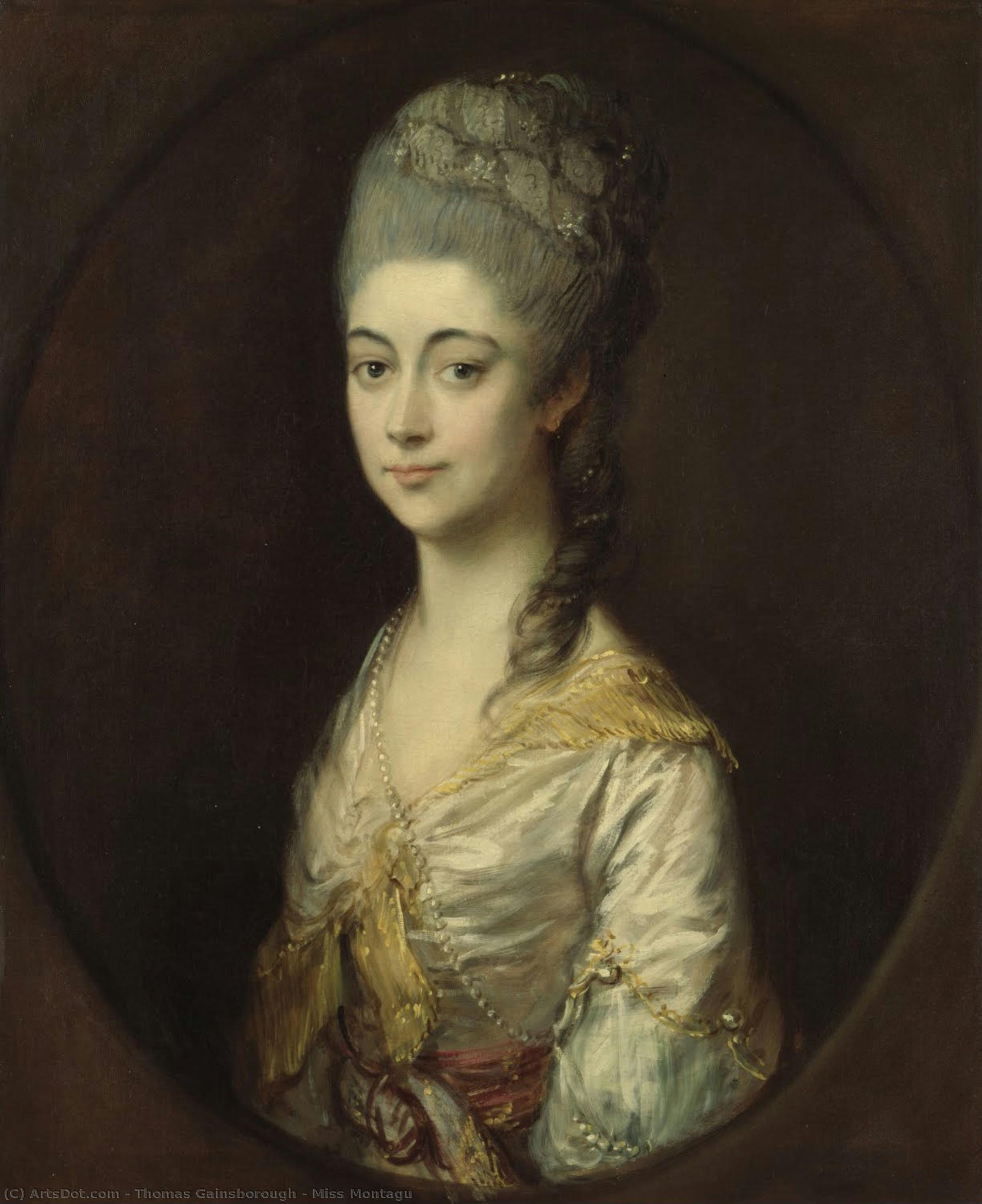
Admire 'Miss Montagu' by Thomas Gainsborough (1774), a captivating portrait showcasing elegance and grace with loose brushstrokes & shimmering details, reflecting British nobility.
美しい肖像画と風景画で知られるイギリスの巨匠、ロイヤルアカデミー創設者であり、コンスタブルに影響を与えたトーマス・ゲインズボウグについて。彼の作品は繊細な筆使いと色彩感覚が特徴で、英国美術史における重要な人物です。
クライスラー美術館の素晴らしいコレクションを探索しましょう。ティファニー・ガラスからヨーロッパの巨匠、アメリカのアイコンまで、数千年にわたる名品が揃っています。バージニア州ノーフォークにて、入場無料&魅力的なプログラムをご用意してお待ちしております。
The Enigmatic Grace of Miss Montagu
Sophia Montagu, a figure both striking and subtly melancholic, emerges from Thomas Gainsborough’s “Miss Montagu” (circa 1774), a painting that transcends mere portraiture to become a poignant study in aristocratic elegance and quiet introspection. The canvas captures her as she sits poised within a richly appointed interior, bathed in the diffused light of an afternoon – a scene meticulously rendered with Gainsborough's signature blend of loose brushstrokes and precise detail. More than just a likeness, this is an embodiment of Georgian society’s ideals of beauty, refinement, and social grace, yet beneath the surface lies a hint of something deeper, a suggestion of unspoken thoughts and perhaps even a touch of wistful longing.
A Portrait of a Socialite and Her World
The subject, Sophia Montagu, was the only daughter of John Montagu, 1st Earl of Sandwich – a man famously known for popularizing the sandwich. This lineage immediately situates the painting within the heart of London’s elite circles. Gainsborough's choice to depict her in this manner speaks volumes about the social conventions of the time: a young woman of quality presented with an air of quiet dignity, emphasizing her status and connections. The elaborate grey satin gown, adorned with gold fringe and strings of pearls, is not merely decorative; it’s a visual shorthand for wealth, influence, and adherence to fashionable standards. The loose brushstrokes used in depicting the fabric create a shimmering effect, reflecting the light and adding a sense of luxurious movement – an intentional detail that draws the eye and emphasizes the opulence surrounding her.
Gainsborough’s Technique: Light, Shadow, and Psychological Depth
Gainsborough's mastery lies not just in his technical skill but also in his ability to imbue his subjects with psychological depth. Notice how he contrasts the shimmering textures of the dress with the carefully rendered features of Miss Montagu’s face. Her expression is enigmatic – a subtle smile plays on her lips, yet her eyes hold a hint of contemplation. The artist skillfully uses light and shadow to sculpt her form, creating a sense of volume and three-dimensionality that brings her vividly to life. The loose brushwork, particularly around the edges of her clothing and hair, contributes to an overall feeling of movement and vitality, while the sharper lines defining her face convey a sense of composure and self-awareness. This delicate balance between fluidity and precision is characteristic of Gainsborough’s style and what makes his portraits so enduringly captivating.
Symbolism and the Portrait as Window
Beyond its aesthetic beauty, “Miss Montagu” offers a glimpse into the social and cultural landscape of 18th-century England. The setting itself – a richly furnished interior – suggests a life of comfort and privilege. The inclusion of objects like the chair and the window frame provide further clues about her world. The window, in particular, is significant; it frames a view beyond the confines of the room, hinting at the wider world she inhabits and perhaps suggesting a yearning for something more. It’s a subtle but powerful symbol of aspiration and the constraints placed upon women of her social standing. The painting, therefore, functions not just as a portrait but as a window into a specific time and place, offering insights into the values, aspirations, and complexities of Georgian society.
A Timeless Appeal: Reproduction and Interior Design
Today, “Miss Montagu” continues to resonate with art lovers and interior designers alike. Its elegant composition, evocative atmosphere, and psychological depth make it a perennial favorite for reproduction and adaptation. When selecting a high-quality print or canvas, consider the nuances of Gainsborough’s technique – the subtle gradations of light and shadow, the delicate brushstrokes that capture the texture of fabric and skin. The painting's inherent grace and sophistication would complement a wide range of interior design styles, from classic Georgian to contemporary spaces seeking a touch of timeless elegance. It serves as a beautiful reminder of the power of art to transport us across time and space, inviting us to contemplate the lives and experiences of those who came before us.