The Enigmatic Jackson: A Portrait of an Era
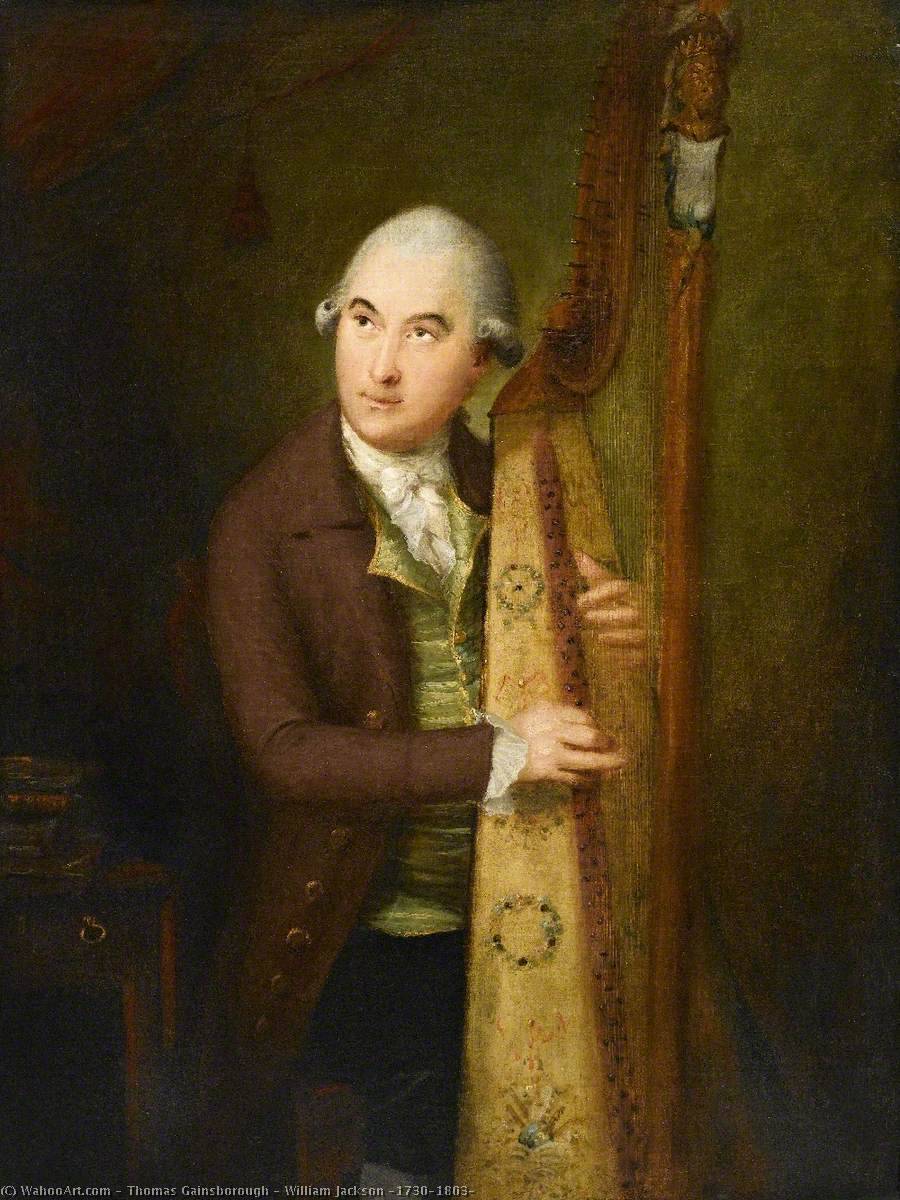
Thomas Gainsborough’s “William Jackson (1730–1803)” is not merely a portrait; it's a carefully constructed window into the social and artistic landscape of 18th-century England. Painted around 1762-1765, this captivating work transcends the simple depiction of an individual, offering instead a glimpse into the world of music, patronage, and the burgeoning spirit of the British Enlightenment. The painting’s enduring appeal lies in its subtle complexities – a masterful blend of realism, psychological insight, and a hint of melancholic beauty.
The subject himself, William Jackson, was more than just an organist; he was a significant figure within Gainsborough's circle, a composer, and a respected musician. The portrait captures him in the midst of his professional life, holding two substantial stringed instruments – likely harps or violins – suggesting both his musical prowess and perhaps a hint of scholarly inclination. The inclusion of books scattered throughout the scene is particularly telling; they speak to Jackson’s intellectual pursuits and his engagement with the wider world beyond the realm of music. The composition itself is carefully balanced, utilizing atmospheric lighting and a restrained palette dominated by browns, greens, and golds – colors that evoke both the warmth of domesticity and the contemplative nature of artistic creation.
A Study in Light and Shadow: Gainsborough’s Technique
Gainsborough's distinctive style is immediately apparent. He eschews the rigid formality favored by many of his contemporaries, opting instead for a looser, more expressive approach. Note the subtle variations in brushstroke – the rapid, confident strokes used to capture the texture of the clothing, contrasted with the softer, blended tones applied to the background and Jackson’s face. This technique creates a remarkable sense of depth and immediacy, drawing the viewer into the scene.
The artist masterfully employs chiaroscuro—the dramatic use of light and shadow—to sculpt Jackson's form and imbue the portrait with emotional resonance. The strong directional lighting highlights his features, emphasizing his gaze and conveying a sense of quiet contemplation. Gainsborough’s ability to capture fleeting expressions and subtle nuances of personality is truly remarkable, making this portrait feel remarkably alive.
Historical Context: Patronage and the Rise of the Musical Elite
“William Jackson” was painted during a period of significant social and cultural change in England. The 18th century witnessed the rise of the musical elite – composers, organists, and patrons who shaped the development of music and art. Portraits like this one served as powerful symbols of status and wealth, commissioned by wealthy individuals to commemorate their connections with prominent artists and musicians.
Jackson’s position within Gainsborough's circle highlights the interconnectedness of artistic and social networks. The portrait reflects a world where patronage played a crucial role in supporting creative endeavors, and where artists relied on the generosity of their patrons for sustenance and recognition. The inclusion of the books further underscores this context, suggesting Jackson’s engagement with intellectual circles and his appreciation for learning.
Symbolism and Emotional Resonance
Beyond its technical brilliance, “William Jackson” is rich in symbolic meaning. The instruments represent Jackson's profession and perhaps a hint of his scholarly interests. The books symbolize knowledge, wisdom, and the pursuit of enlightenment – values that were central to the intellectual climate of the time. The overall mood of the portrait is one of quiet dignity and thoughtful reflection.
There’s an undeniable melancholy woven into the fabric of the painting. Jackson's gaze seems directed inward, suggesting a contemplative spirit and perhaps a hint of loneliness. This emotional depth elevates the portrait beyond a simple likeness, transforming it into a poignant meditation on human experience. It invites us to consider not just who William Jackson was, but what he represented – a man caught between the demands of his profession and the yearning for something more.
A Timeless Masterpiece: Reproductions and Legacy
Today, “William Jackson” stands as a testament to Thomas Gainsborough’s artistic genius. High-quality reproductions capture the painting's exquisite detail and atmospheric quality, making it an ideal choice for interior design projects and art collections alike. The portrait’s enduring appeal lies in its ability to transport us back to a bygone era – a time of elegance, intellectual curiosity, and profound human emotion.