A Glimpse into Post-War Humanity
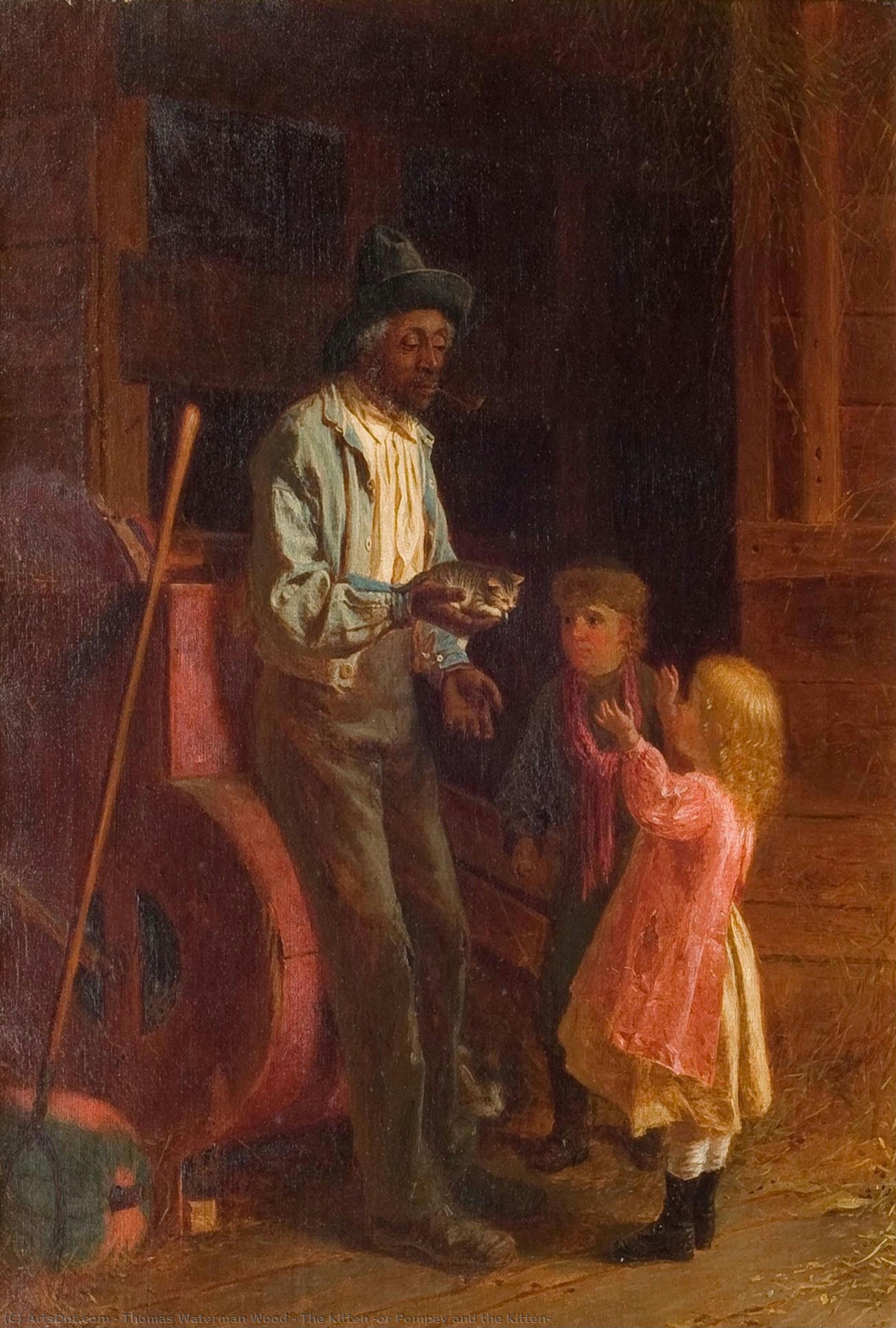
Thomas Waterman Wood’s The Kitten (or Pompey and the Kitten) is far more than a charming genre scene; it is a poignant historical document rendered with delicate brushwork. Painted in 1873, this work captures a moment of quiet domesticity set against the tumultuous backdrop of Reconstruction in the American South. The painting presents a portrait featuring a man gently cradling a kitten while standing beside a young girl whose gaze follows the small creature with evident curiosity. The composition is imbued with an immediate sense of tenderness, yet beneath this surface sweetness lies the weight of profound social change.
Historical Resonance and Social Commentary
To view this piece without understanding its context would be to miss its radical heart. Wood was renowned for painting genre scenes focusing on African Americans in Nashville and Louisville following the Civil War. His work served a vital, if sometimes sentimentalized, purpose: it sought to humanize a newly freed population for northern white audiences. While the image of the man with his kitten might appear purely pastoral today, its very existence speaks to a narrative of resilience and re-establishment. It was an attempt to portray former slaves not merely as subjects of charity, but as integral members of a community rebuilding itself—a radical act of visual affirmation.
Technique and Evocative Detail
The painter’s skill is evident in the masterful handling of light and texture. Observe the soft fur of the kitten against the sturdy fabric of the man's attire, or the subtle interplay of shadow cast by the potted plant in the corner. The inclusion of everyday objects—the visible chairs, the pipe resting near the man’s mouth—grounds the scene in tangible reality. Wood employs a narrative realism that allows the viewer to feel present in this quiet moment, making the emotional connection immediate and deeply personal.
Symbolism of Innocence and Renewal
The kitten itself acts as a potent symbol. It represents fragile life, innocence, and the delicate nature of new beginnings. Paired with the gentle interaction between man and child, it speaks to themes of nurturing and continuity. The entire tableau suggests that even after immense upheaval—the social and political earthquake of war and emancipation—humanity possesses an innate capacity for tenderness and the quiet joy of simple connection. Owning a reproduction of this piece allows one to bring home not just a painting, but a meditation on enduring spirit.