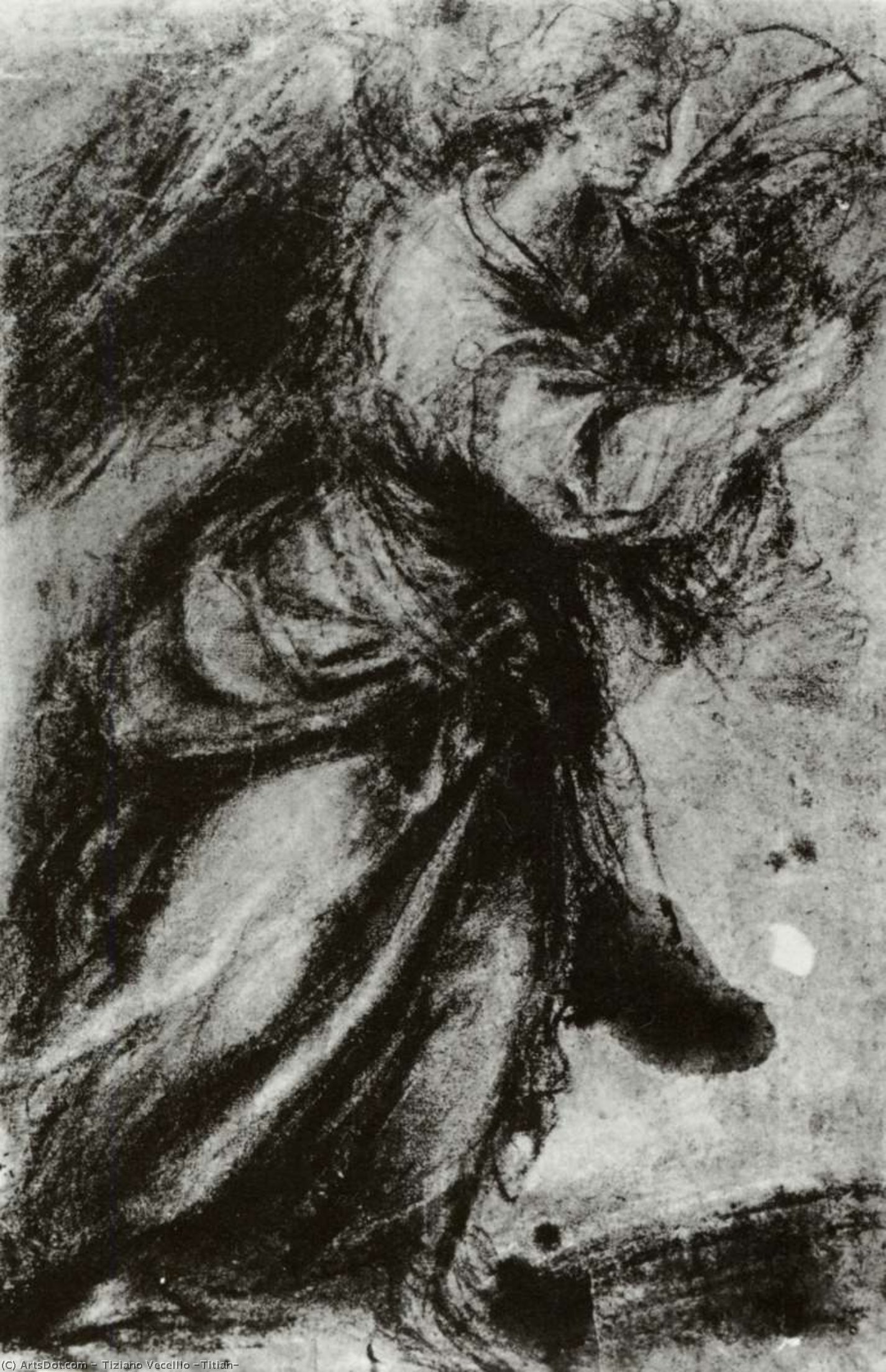
A Glimpse into Titian’s Studio – The Preparatory Drawing for ‘Angel of the Annunciation’
This arresting black-and-white preparatory drawing, a window into the creative process of the Venetian master Titian, offers an intimate encounter with a pivotal moment in his artistic journey. Dating back to 1560, it's not merely a sketch; it’s a distillation of ideas, a restless exploration captured on paper before the final brilliance of oil paint could fully realize the vision for what would become part of the monumental ‘Angel of the Annunciation’. The drawing itself is remarkably dynamic – a figure, likely an angel, caught in a flurry of motion, leaning forward with an urgency that speaks to the momentous announcement about to be delivered. The loose charcoal lines, punctuated by strategic hatching and cross-hatching, aren’t striving for photographic realism but rather conveying the artist's immediate impression, the fleeting gesture, the vital energy of the pose. It’s a testament to Titian’s ability to capture not just likeness, but the *feeling* of a scene – a crucial element that would later define his monumental works.
The Epic Narrative: Lepanto and the Symbolism of Triumph
To fully appreciate this drawing, it's essential to understand its historical context. Titian was working during a period of intense religious fervor following the pivotal naval battle of Lepanto in 1571. This victory for Christian forces against the Ottoman Empire represented an extraordinary turning point, a symbolic blow against perceived Islamic aggression and a surge of hope across Europe. The drawing’s genesis lies directly within this atmosphere – it's a study, undoubtedly, for Titian’s larger composition depicting the battle itself. The very title, ‘Angel of the Annunciation,’ hints at the broader narrative: an announcement of divine intervention, a promise of salvation delivered through military triumph. The swirling drapery and the outstretched arm are not simply decorative; they embody the unfolding drama, the communication between heaven and earth, the embodiment of victory itself.
Titian’s Technique – A Dance with Charcoal
Examining the drawing's technique reveals a fascinating insight into Titian’s working method. The artist masterfully employs charcoal to build up tonal values, utilizing hatching and cross-hatching to create a sense of volume and texture. The rough, almost tactile quality of the surface speaks to the immediacy of the medium – it feels as though we're witnessing the artist’s hand moving directly onto the paper. Notice how the lighting is suggested through variations in tone; an unseen light source illuminates the figure’s form, casting dramatic shadows that emphasize its dynamism. The lack of rigid perspective—instead relying on overlapping forms and value shifts—further contributes to the drawing’s expressive quality, prioritizing emotional impact over precise representation. This approach was characteristic of Titian's preparatory drawings – a focus on capturing the essence of the subject rather than adhering strictly to academic rules.
Emotional Resonance: Grace, Urgency, and Divine Promise
Beyond its technical merits, this drawing possesses a profound emotional resonance. The angel’s pose—leaning forward, arm outstretched—conveys a sense of urgency and grace, an almost palpable anticipation. It's not merely a depiction of an angel; it’s the *moment* of announcement, pregnant with significance. The composition invites us to contemplate the divine message being conveyed, the hope offered in the face of adversity. The drawing serves as a powerful reminder of Titian’s ability to imbue his work with both historical context and deeply felt human emotion – qualities that continue to captivate viewers centuries later. It's a glimpse into the heart of an artist at the height of his creative power, translating complex narratives and profound spiritual themes onto paper with breathtaking skill.