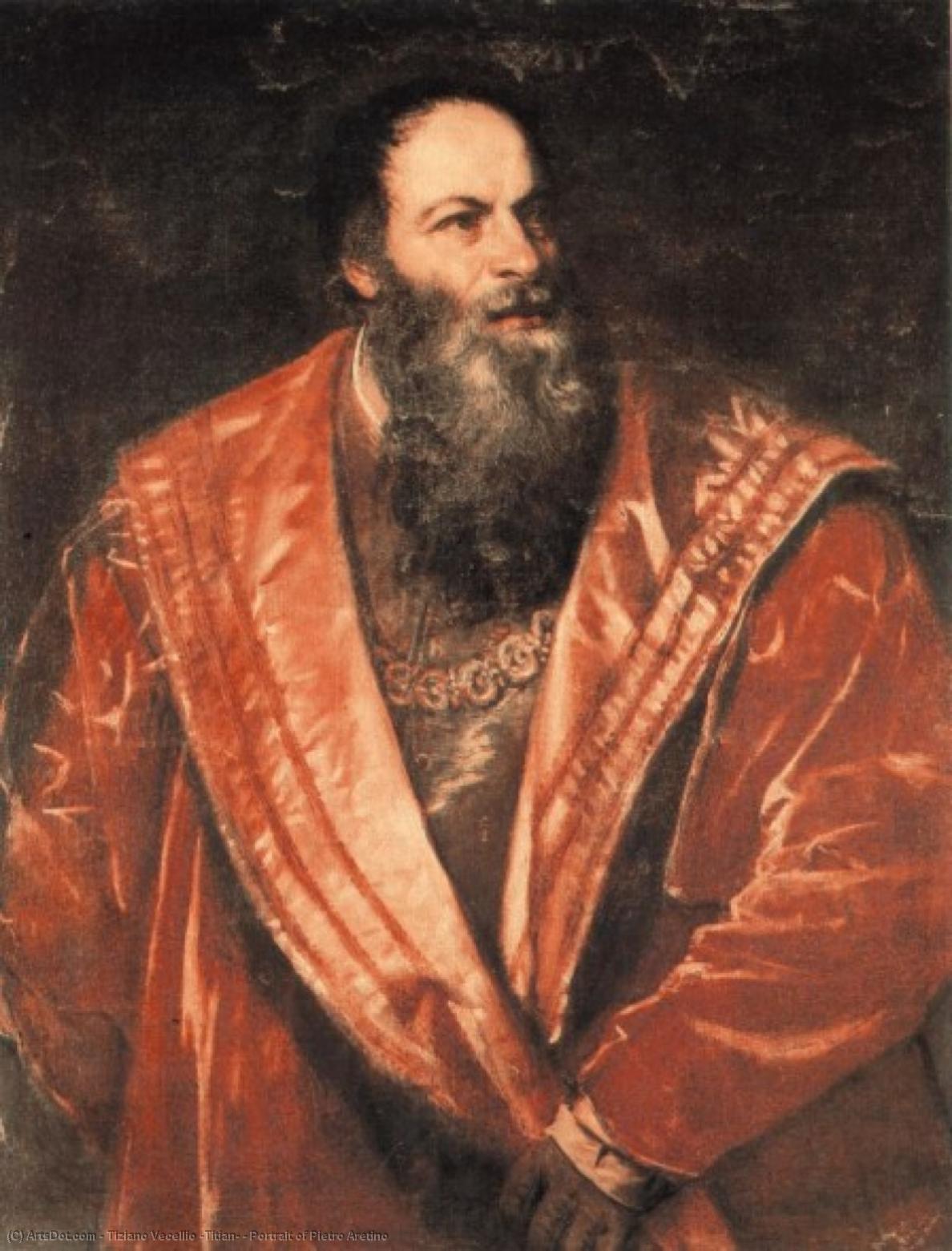
Portrait of Pietro Aretino: An Elegant Reflection of Renaissance Patronage
The Portrait of Pietro Aretino by Titian stands as a quintessential example of Venetian High Renaissance portraiture—a masterful blend of observation, artistic innovation, and subtle symbolism designed to elevate its subject’s status within the opulent courts of Florence. Painted around 1545 for Cosimo I de' Medici, Grand Duke of Tuscany, this oil on canvas artwork transcends mere likeness; it embodies the humanist ideals that dominated the era and showcases Titian’s unparalleled ability to capture both physical appearance and psychological nuance.
- Subject Matter: Pietro Aretino (1492-1573) was a celebrated poet, playwright, and diplomat of his time, renowned for his satirical verses that challenged societal conventions and championed intellectual freedom. His exile from Mantua propelled him to Venice where he achieved considerable acclaim as a literary figure.
- Historical Context: Cosimo I’s reign marked the zenith of Florentine power and artistic patronage. The Medici family actively commissioned artists like Titian to decorate their palaces and solidify their prestige—a practice that fueled creativity and established Florence as Europe's cultural capital.
Stylistic Innovation: Titian’s Delicate Approach
Titian’s technique distinguishes itself from earlier portraitists through a remarkable sensitivity to light and color. Unlike the often stiff poses and idealized features of his predecessors, Titian portrays Aretino with an understated grace—a characteristic that reflects the humanist preoccupation with portraying human individuality. The artist employs a masterful glazing technique, layering thin washes of pigment over thicker underpaintings to achieve luminous effects and subtle tonal variations. This method imbues the portrait with an ethereal quality, capturing not just Aretino’s physical form but also his inner character.
- Color Palette: Titian utilizes a restrained palette dominated by reds—particularly in Aretino's robe—symbolizing power and nobility. Accents of gold and crimson further enhance the richness of the composition, reflecting the grandeur of Cosimo’s court.
- Brushwork: The artist’s brushstrokes are remarkably fluid and expressive, conveying a sense of movement and vitality. Noticeably, Titian acknowledged that the velvet sleeves were rendered economically by a few slashing brush strokes—a deliberate choice that prioritizes visual impact over meticulous detail.
Symbolism and Emotional Resonance
Beyond its technical brilliance, the Portrait holds profound symbolic significance. Aretino’s downward gaze suggests introspection and contemplation—reflecting the humanist belief in the importance of self-awareness and moral reflection. The chain around his neck symbolizes authority and prestige—a visual reminder of his position within Florentine society. Furthermore, Titian's depiction of Aretino as a man of kindness towards his dissolute features speaks to the Renaissance ideal of reconciling virtue with worldly pleasures.
Conclusion:
The Portrait of Pietro Aretino by Titian remains an enduring testament to the artistic achievements of the Venetian Renaissance—a captivating artwork that continues to inspire admiration for its masterful technique, elegant composition, and evocative portrayal of human dignity. Its luminous colors and subtle brushwork encapsulate the spirit of a bygone era, inviting viewers to contemplate the complexities of human experience and appreciating the transformative power of art.
Additional Resources