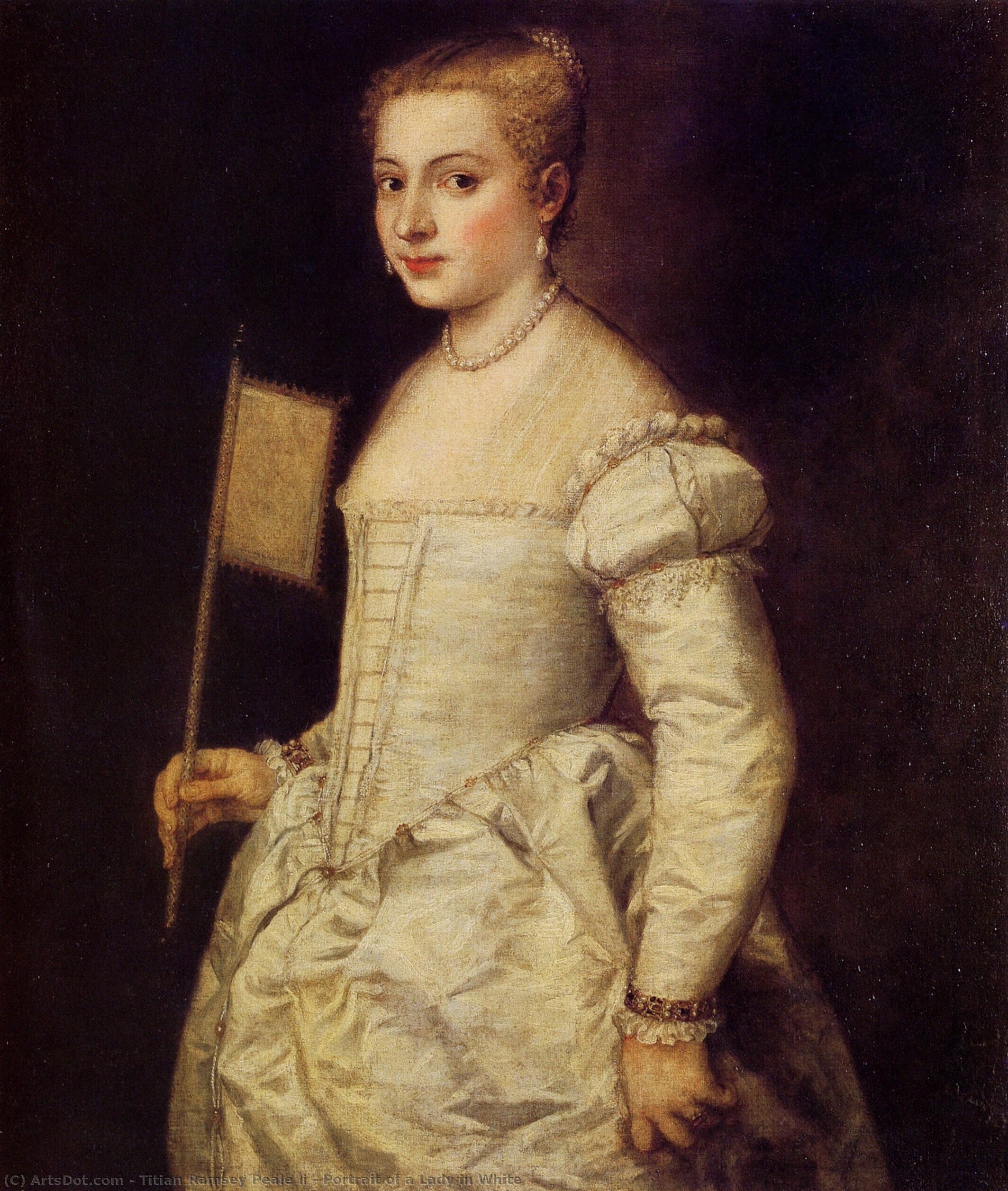
Portrait of a Lady in White: A Renaissance Reverie
“Portrait of a Lady in White” by Titian Ramsey Peale II stands as a testament to the enduring beauty and sophistication of the High Renaissance, capturing not merely an image but an essence—a moment frozen in time. Executed around 1561, this oil on canvas masterpiece resides within the Gemäldegalerie Alte Meister in Dresden, Germany, offering visitors a glimpse into the artistic sensibilities of its era.
The painting’s subject is a woman draped in flowing white attire, her gaze serene and dignified as she holds aloft a flag—a symbol likely representing honor or allegiance. Peale II meticulously rendered every detail: the ruffled collar framing her neck, the delicate pearl necklace adorning her bosom, and the carefully styled updo emphasizing her grace. These elements speak to the prevailing ideals of feminine beauty during the Renaissance – purity, refinement, and noble bearing.
Artistic Style & Technique
Titian Ramsey Peale II’s artistic style is firmly rooted in the Renaissance tradition. Characterized by a profound respect for realism and humanism, it eschews stylized conventions in favor of capturing the subtleties of human anatomy and emotion. Peale skillfully employed chiaroscuro—the dramatic interplay of light and shadow—to sculpt the woman's form and imbue the painting with depth and luminosity. The brushstrokes are smooth and blended, demonstrating mastery of glazing techniques that create a rich surface texture and enhance color vibrancy.
Historical Context & Significance
Created during a period marked by intellectual ferment and artistic innovation—the Renaissance—“Portrait of a Lady in White” reflects the humanist spirit prevalent at the time. Artists like Titian were deeply influenced by classical Greek and Roman art, striving to emulate their grandeur and idealism. The painting serves as an invaluable window into aristocratic life in sixteenth-century Europe, portraying a woman of considerable status and conveying a sense of composure and elegance.
Symbolism & Emotional Resonance
Beyond its aesthetic qualities, “Portrait of a Lady in White” carries symbolic weight. The flag held by the woman symbolizes honor and virtue—values highly esteemed during the Renaissance. Her gaze directs towards the viewer, inviting contemplation and establishing an intimate connection between subject and observer. Peale II’s masterful depiction captures not only physical likeness but also psychological depth, conveying a feeling of quiet dignity and inner peace.
Related Works & Artistic Legacy
To appreciate Titian Ramsey Peale II's contribution to art history fully, consider examining his other paintings: “Doge Antonio Grimani Kneeling Before the Faith,” showcasing similar attention to detail and capturing the solemnity of religious devotion; “Tiziano Vecellio (Titian)”’s “Venus Anadyomene,” a dynamic depiction of mythological beauty; and Sandro Botticelli’s “Lamentation over the Dead Christ with the Saints Jerome, Paul and Peter,” which exemplifies Renaissance artistic ideals.
For those seeking to experience the splendor of this iconic artwork firsthand, ArtsDot.com offers meticulously crafted oil paintings—handmade reproductions that faithfully preserve the original's brilliance and artistic essence. Visit ArtsDot.com today!