The Weight of Eternity: A Masterpiece of Human Endurance
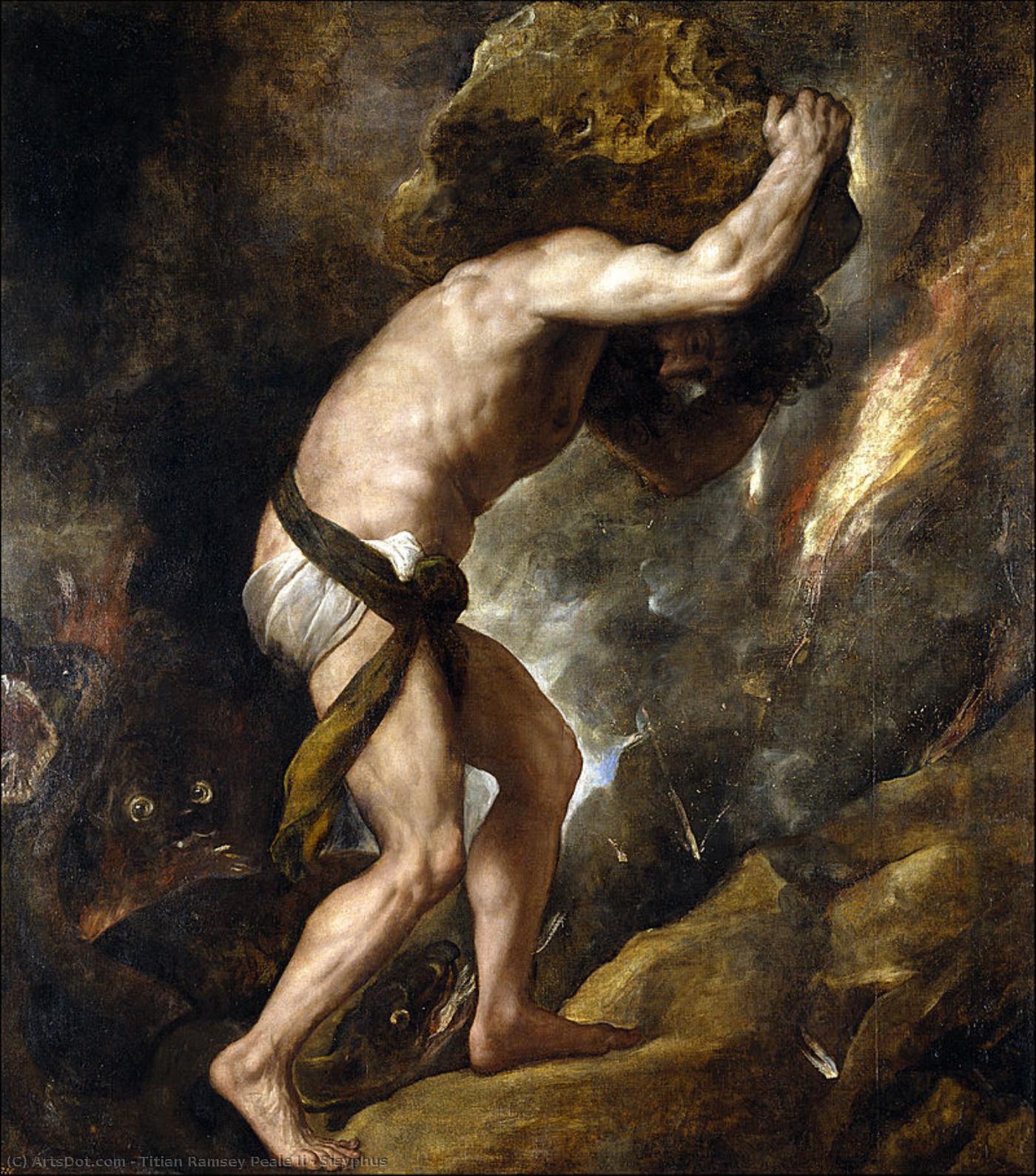
In the profound stillness of Titian Ramsay Peale II’s “Sisyphus,” one is immediately confronted by the raw, visceral reality of human struggle. This is not merely a depiction of a classical myth; it is an embodiment of endurance rendered with a meticulousness that echoes the High Renaissance. The painting captures the legendary Greek figure in a moment of agonizing physical exertion, his muscles straining beneath a loincloth, sweat glistening upon his brow like beads of crystalline sorrow. Peale transcends the distant, idealized figures of antiquity to present us with a man who is profoundly human—vulnerable, burdened, and undeniably caught in the grip of an eternal, repetitive fate. For the discerning collector or lover of classical drama, this work offers a window into the very essence of the human condition.
The composition is anchored by the immense weight of the boulder, a massive presence that occupies much of the lower frame and serves as the central antagonist to Sisyphus’s will. As he pushes against the stone, the viewer can almost feel the friction of rock against earth and the heavy rhythm of labored breathing. Peale utilizes a technique reminiscent of the great Venetian masters, employing a vibrant color palette and an anatomical precision that brings the tension of the scene to life. The interplay of light and shadow—the chiaroscuro effect—accentuates the contours of Sisyphus’s physique, highlighting the grit and determination etched into his very skin. This mastery of materiality ensures that the painting is not just seen, but felt.
A Fusion of Old World Grandeur and New World Spirit
While the subject matter is rooted in the ancient traditions of Greece, the soul of this piece resides in a fascinating historical intersection. Completed during an era when American identity was beginning to find its footing, Peale’s work acts as a bridge between the aesthetic ideals of Europe and the burgeoning intellectual currents of the 19th-century Americas. As the son of the legendary Charles Willson Peale, Titian Ramsay Peale II was steeped in a lineage of artistic excellence. However, he chose to look backward to the masters like Michelangelo and Raphael to find a language for his own expression. This creates a compelling tension within the canvas: a work that feels timelessly resonant through its classical themes, yet possesses a unique, distinctly American sensibility in its execution.
For those looking to integrate such a piece into a curated interior, "Sisyphus" offers an unparalleled depth of character. It is more than a decorative element; it is a conversation starter that invites contemplation on the nature of persistence and the beauty found within struggle. The painting’s ability to command a room lies in its symbolic complexity. The boulder represents the insurmountable obstacles we all face, while Sisyphus himself embodies the relentless spirit that refuses to yield. Whether placed in a grand library, a sophisticated study, or a contemporary gallery space, this reproduction serves as a powerful emblem of strength and the eternal dance between effort and futility.