A Visceral Encounter with Mythic Tragedy
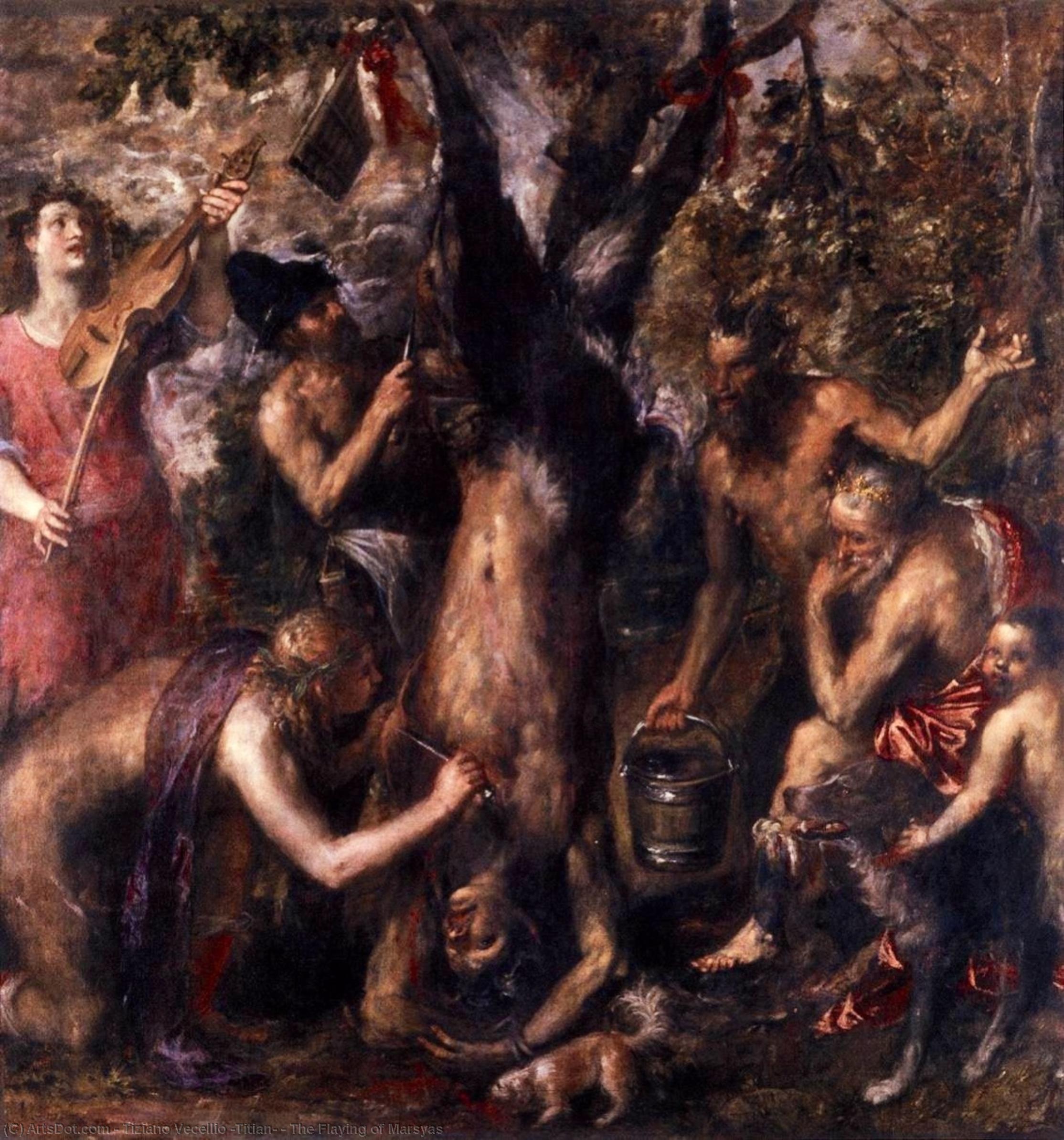
In the twilight of his illustrious career, Tiziano Vecellio, known eternally as Titian, produced a work that transcends the boundaries of mere painting to become a profound psychological experience. The Flaying of Marsyas is not simply a depiction of a mythological event; it is a harrowing descent into the rawest elements of human and divine conflict. The scene captures the moment of ultimate retribution, where the satyr Marsyas, having dared to challenge the musical supremacy of Apollo, faces a punishment so brutal it defies the limits of endurance. As the skin is stripped from his body, the viewer is thrust into a chaotic forest setting that feels both ancient and immediate, a place where the divine and the mortal collide in a spray of blood and shadow.
The composition is a masterclass in Baroque dynamism, eschewing the static perfection of the High Renaissance for a sense of unsettling movement. Titian utilizes diagonal lines and overlapping figures to create a landscape that feels unstable, as if the very earth might shift beneath the weight of the tragedy. The lighting is nothing short of theatrical, with dramatic chiaroscuro casting deep, impenetrable shadows that contrast sharply against the illuminated, muscular forms of the figures. This interplay of light and dark does more than define shape; it heightens the emotional tension, pulling the eye toward the central, agonizing struggle and forcing a confrontation with the visceral reality of the scene.
The Mastery of Color and Texture
To behold this masterpiece is to witness the pinnacle of colorito, the Venetian technique where form is sculpted through the harmonious application of pigment rather than rigid line. Titian’s palette in this late work is dominated by a somber yet intense array of reds, deep browns, and earthy ochres. These warm, heavy tones create a sense of heat and physical weight, mirroring the biological reality of the flaying process. The artist employs a remarkable impasto technique, applying paint with such thickness that the canvas itself seems to pulse with life. Every visible brushstroke serves a purpose, conveying the rugged texture of the forest, the sinewy strength of the satyr, and the palpable atmosphere of dread.
<
For the discerning collector or interior designer, this artwork offers an unparalleled sense of gravity and historical depth. The painting functions as a profound meditation on the themes of justice, hubris, and the inevitable triumph of divine order over human folly. It is a piece that demands attention, acting as a powerful focal point in any curated space. Whether placed in a gallery setting or integrated into a sophisticated residential design, a high-quality reproduction of this work brings with it the prestige of the Venetian Renaissance and an emotional resonance that continues to captivate the human spirit centuries after its creation.