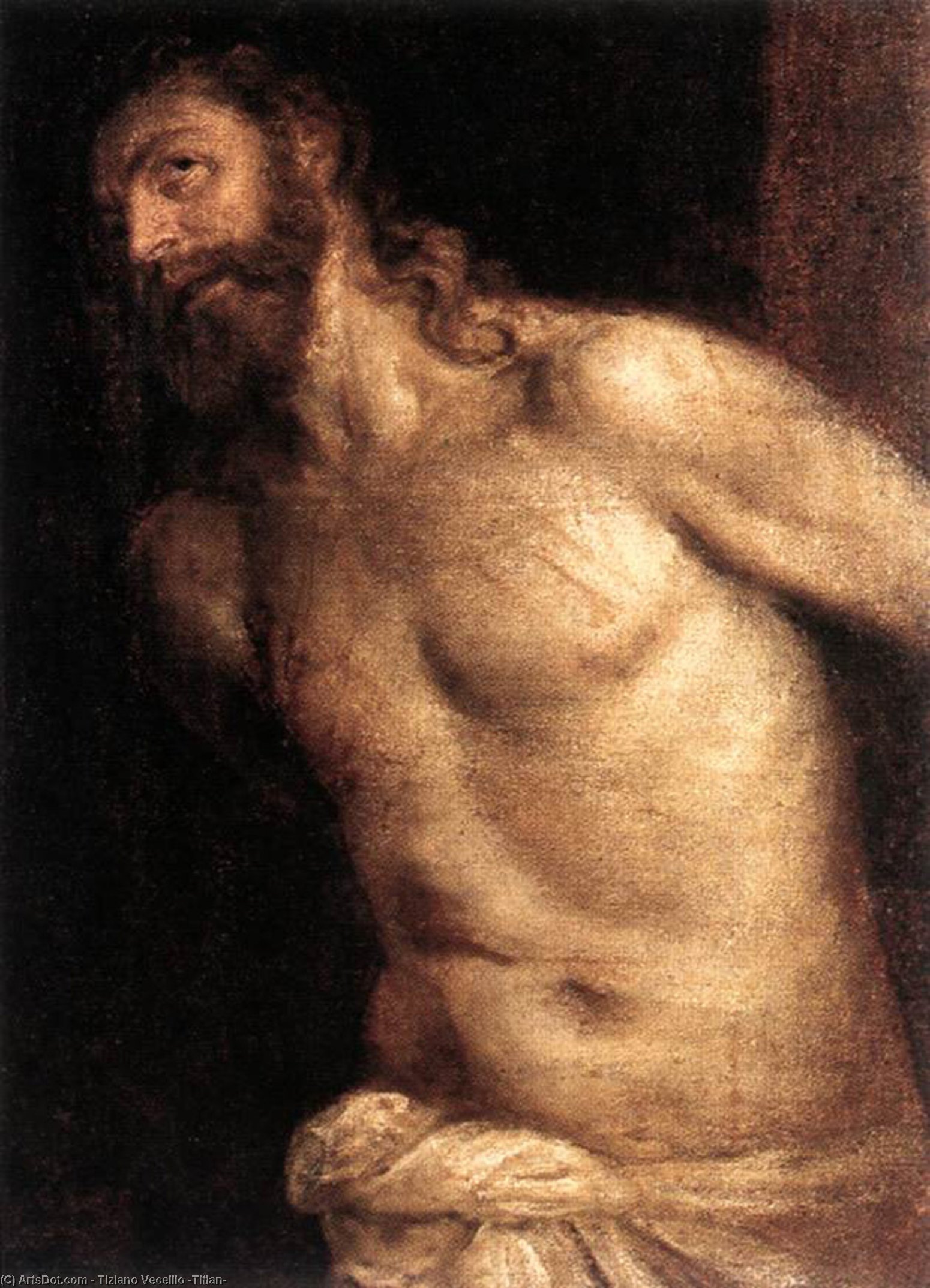
Explore Titian’s 'The Scourging of Christ,' a dramatic Baroque masterpiece showcasing intense emotion & anatomical detail. A preparatory work for a Louvre portrait, this oil painting offers a poignant glimpse into religious suffering.
A Study in Suffering and Light: Titian’s ‘The Scourging of Christ’
Titian Vecellio, universally recognized as Titian, occupies an unparalleled position within the annals of Renaissance art—a luminary whose mastery of color irrevocably altered artistic conventions and cemented his legacy as arguably its most celebrated pigmentist. Born circa 1490 in Pieve di Cadore, a picturesque Alpine village near Venice, his ascent from modest origins to global renown embodies the transformative power of innate talent coupled with unwavering dedication to artistic innovation. Precise biographical details surrounding Titian’s formative years remain elusive, yet records indicate he was among several children born to Gregorio Vecellio, a military officer, and Lucia. Recognizing their sons' exceptional aptitude for art, the family proactively orchestrated an apprenticeship arrangement in Venice—a decisive step that propelled young Tiziano and his brother Francesco onto the path of artistic greatness.
Venice during the mid-16th century pulsed with dynamism – a nexus of commerce, erudition, and artistic fervor. This milieu profoundly influenced Titian’s artistic trajectory, fostering an environment ripe for experimentation and challenging established aesthetic paradigms. Initially trained under Sebastiano del Piombo, Titian swiftly honed his skills and absorbed the stylistic nuances prevalent in Venetian Mannerism—a movement characterized by elongated figures, stylized drapery, and a deliberate distortion of perspective. This formative period instilled within him a profound appreciation for expressive gesture and psychological depth – qualities that would become hallmarks of his oeuvre throughout his illustrious career.
- Subject Matter: The painting portrays Jesus Christ undergoing the scourging—a ritualistic act symbolizing his agonizing torment during the crucifixion. This depiction aligns seamlessly with Christian iconography, conveying a message of profound sacrifice and spiritual suffering.
- Style: ‘The Scourging of Christ’ exemplifies Mannerism, reflecting a stylistic shift away from the idealized forms of High Renaissance art toward a more emotionally charged and intellectually sophisticated aesthetic. Artists sought to convey inner turmoil and psychological complexity rather than merely replicating external reality.
Technique: Oil Painting on Canvas – A Symphony of Color and Texture
Titian’s artistic prowess resided principally in his unparalleled command of oil painting—a medium he elevated to unprecedented heights of expressive potential. Employing a meticulous layering technique, he achieved remarkable luminosity and vibrancy through the strategic application of thin glazes superimposed upon thicker impasto strokes. This masterful manipulation of pigment allowed him to capture subtle nuances of tonal gradation and textural variation – elements crucial for conveying emotional intensity and visual realism. The canvas surface itself served as an integral component of the artistic process, responding dynamically to Titian’s brushstrokes and contributing significantly to the overall aesthetic impact.
- Color Palette: Dominated by earthy hues—ochres, siennas, umbers—the palette incorporates splashes of crimson and scarlet to accentuate Christ's wounds and heighten the dramatic atmosphere. Titian’s masterful blending of colors created a harmonious interplay of tones that evoked feelings of solemnity and spiritual contemplation.
- Composition: The vertical orientation of the canvas draws the viewer’s gaze upward, emphasizing the central figure—Jesus Christ—and reinforcing his dominance within the composition. Careful attention to anatomical detail—particularly the musculature of Christ's torso—underscores Titian’s commitment to scientific accuracy while simultaneously conveying a palpable sense of physicality.
Symbolism and Emotional Impact: A Testament to Faith and Human Suffering
Beyond its formal qualities, ‘The Scourging of Christ’ resonates deeply with symbolic significance – encapsulating the core tenets of Christian faith and articulating the profound experience of human suffering. The depiction of Christ's wounds—his pierced hands and feet—serves as a poignant reminder of his sacrificial death for humanity’s salvation. Furthermore, Titian’s masterful use of chiaroscuro—the dramatic interplay between light and shadow—amplified the emotional impact of the scene, conveying a sense of vulnerability and anguish that captivated audiences throughout Europe.
Ultimately, Titian's ‘The Scourging of Christ’ transcends mere visual representation; it embodies an enduring testament to human compassion and spiritual aspiration. Its luminous color palette, meticulous technique, and evocative composition continue to inspire artists and collectors alike—affirming Titian’s indelible mark upon the history of art as a beacon of beauty and profound emotional resonance.