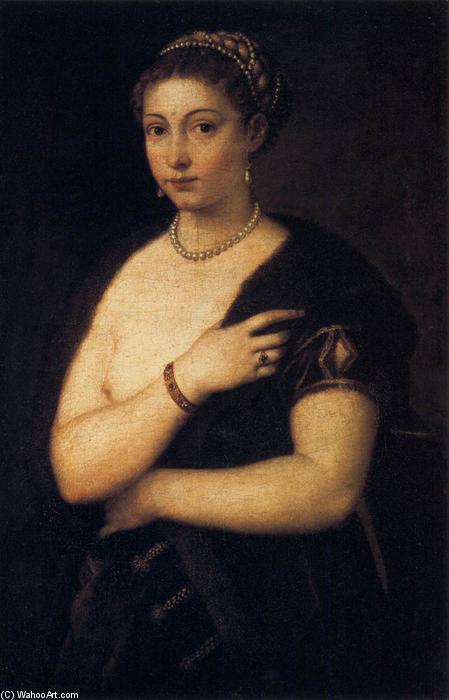
Titian’s opulent Woman in a Fur Coat captures the melancholic beauty of Venetian Renaissance art, showcasing masterful color blending and intricate detail. This iconic painting explores themes of mortality alongside luxurious symbols—a testament to Titian's genius and an invitation to bring timeless elegance into your home.
A Vision of Venetian Splendor
To gaze upon Titian’s “Woman in a Fur Coat” is to step directly into the golden light of the sixteenth-century Venetian Renaissance. Painted in 1536, this masterpiece serves as more than a mere portrait; it is an intimate encounter with a soul captured in time. The subject, draped in the luxurious textures of her era, commands the viewer's attention through a pyramidal composition that anchors her presence with profound stability and grace. As she rests her hand near her chest, there is a palpable sense of quiet psychological intensity, a moment of stillness that feels both penetrating and enigmatic. For the discerning collector or interior designer, this piece offers an unparalleled sense of classical elegance, bringing the sophisticated atmosphere of the Kunsthistorisches Museum directly into a contemporary living space.
The brilliance of this work lies in Titian’s revolutionary command of colorito—the Venetian method where form is sculpted through color rather than rigid lines. The artist utilized groundbreaking glazing techniques, layering thin, translucent pigments to achieve an astonishingly vibrant tapestry of hues. One cannot help but be captivated by the rich, deep crimson of the fur coat and the luminous gold accents of her jewelry, which seem to glow from within the canvas. This mastery of light and texture creates a breathtaking illusion of tactile luxury; one can almost feel the softness of the fur and the cool weight of the precious metals. It is this extraordinary depth that makes a high-quality reproduction of this work such a transformative element for any curated art collection.
Symbolism and the Breath of Mortality
Beyond its surface aesthetic, the painting operates within the profound philosophical framework of vanitas—a genre preoccupied with the fleeting nature of life and the inevitability of mortality. While the woman is adorned in the symbols of earthly wealth and status, Titian weaves a subtle meditation on the ephemeral beauty of the human condition. The interplay of light and shadow serves as a metaphor for the passing of time, reminding the viewer that even the most opulent textures and radiant jewels are subject to the decay of ages. This layer of intellectual depth provides a compelling narrative for those who seek art that speaks to the complexities of existence.
For those looking to adorn a home or gallery with works of historical significance, "Woman in a Fur Coat" represents the pinnacle of Renaissance innovation. It is a piece that balances the opulence of the Habsburg and Medici eras with a haunting, timeless emotional resonance. Whether placed as a focal point in a grand salon or as a sophisticated accent in a private study, this reproduction invites a continuous dialogue between the viewer and the storied past of the Venetian masters.