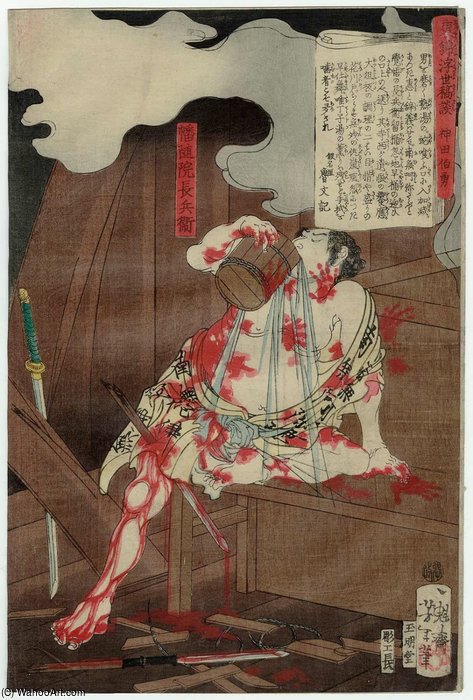
Discover Tsukioka Yoshitoshi's powerful woodblock print 'Banzuin Chôbei,' a striking example of Japanese ukiyo-e art. Featuring bold lines, vivid colors, and intense emotional storytelling, perfect for art collectors.
月岡芳年(1839-1892):浮世絵の最後の巨匠。幕末から明治初期にかけて、激動の時代を鮮烈なタッチで描き出し、武者絵や役者絵などで知られる。西洋の影響を取り入れながらも、日本の伝統美を継承した革新的な作品群は、今なお多くの人々を魅了し続けています。
Subject and Narrative
This powerful woodblock print vividly captures a dramatic moment from Japan’s rich historical and mythological tapestry. The central figure, a wounded warrior or legendary hero, is depicted in a moment of intense reflection and suffering. Bloodstains and expressive gestures evoke the chaos of battle, while the figure’s upward gaze and open mouth convey anguish, resilience, and a profound emotional depth. The scene invites viewers to contemplate themes of heroism, sacrifice, and the human condition amidst turmoil.
Artistic Style and Technique
Created during Japan’s Meiji period, this print exemplifies the traditional ukiyo-e style, renowned for its bold lines, flat areas of color, and emphasis on narrative storytelling. The artist employs expressive, sweeping lines to define the figure’s elongated limbs and muscular form, heightening the emotional impact. The use of vivid reds, earthy browns, and contrasting whites enhances the scene’s intensity, while the stylized background with dark clouds and smoke adds a sense of ominous atmosphere. The meticulous craftsmanship of the woodblock technique ensures sharp detail and vibrant coloration, making this piece a striking example of Japanese printmaking mastery.
Historical Context and Cultural Significance
Produced in the late 19th century, this artwork reflects Japan’s transition from traditional Edo culture to a modern era, capturing the enduring themes of heroism and tragedy that resonate through Japanese history and folklore. The subject likely references legendary warriors or mythic figures celebrated for their bravery and moral integrity. Such prints served both as popular entertainment and as cultural symbols, embodying ideals of resilience and justice. The period’s artistic innovations allowed artists like Yoshitoshi to push the boundaries of visual storytelling, blending realism with stylized symbolism.
Symbolism and Emotional Impact
The blood-red accents symbolize violence, sacrifice, and the raw reality of combat, evoking visceral reactions from viewers. The figure’s posture and expression communicate a complex mixture of pain, exhaustion, and unwavering resolve, inspiring empathy and admiration. The stark contrasts and dynamic composition create a visceral experience, making the viewer feel immersed in the scene’s emotional gravity. This artwork not only captures a moment of crisis but also celebrates the enduring spirit of heroism amid adversity.
Inspiration and Interior Design
This compelling print is an ideal centerpiece for collectors and interior designers seeking to infuse their spaces with cultural depth and artistic sophistication. Its vivid colors and dramatic composition make it a striking visual statement, perfect for a gallery wall or a dedicated art nook. As a high-quality reproduction, it offers art lovers the opportunity to own a piece of Japan’s artistic heritage, inspiring reflection, conversation, and admiration for the mastery of traditional Japanese printmaking.