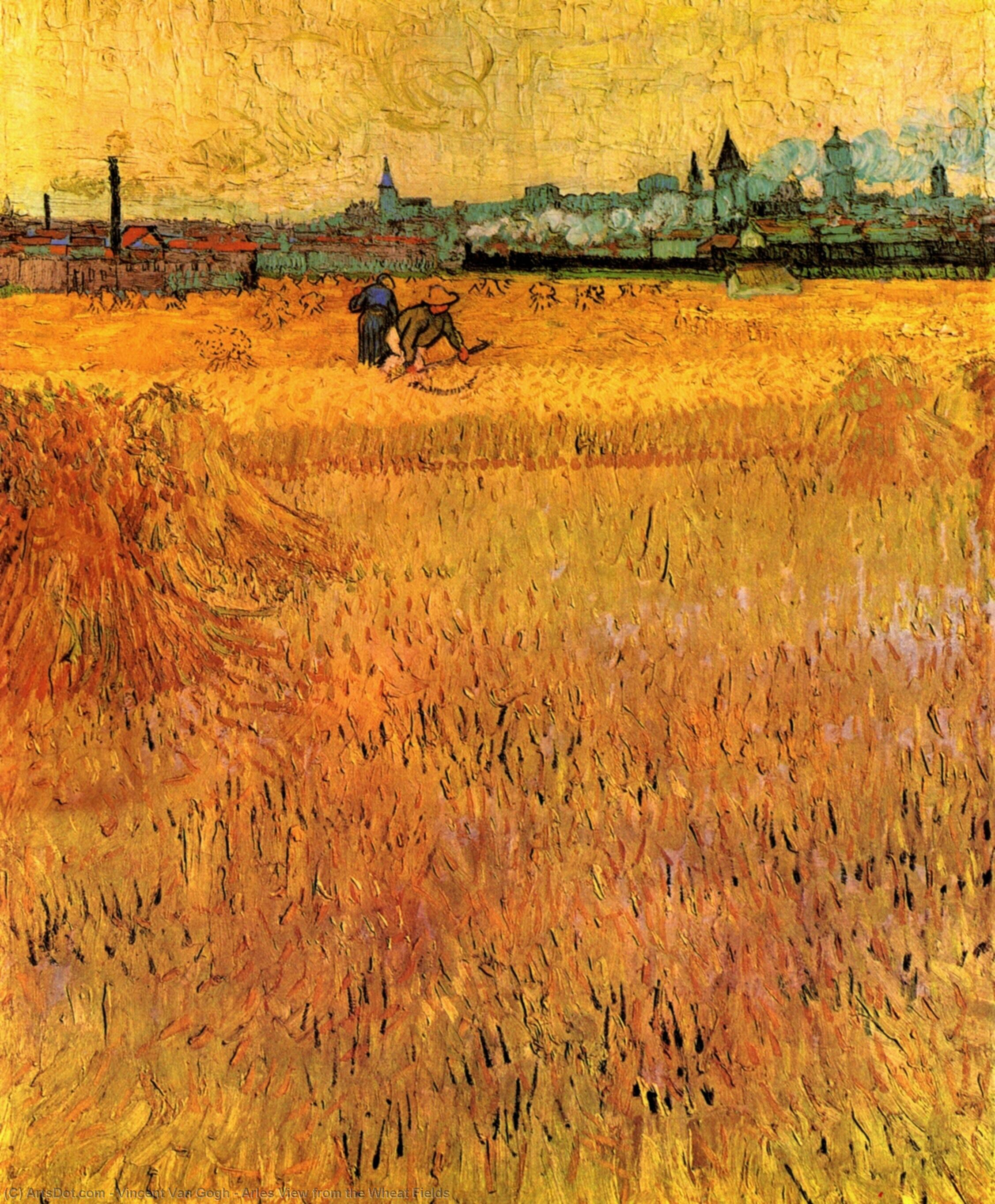
Arles View from the Wheat Fields: A Post-Impressionist Masterpiece
Vincent van Gogh's "Arles View from the Wheat Fields," painted in June 1888, is a captivating representation of rural life and the artist’s evolving style. This artwork showcases Van Gogh's signature use of vibrant colors and expressive brushstrokes, capturing the essence of the French countryside with remarkable emotional depth.
Painting Overview
- Subject: The painting depicts a sweeping view of wheat fields surrounding Arles, France. A lone figure is seen plowing the land, suggesting labor and connection to nature. Several horses are visible in the background, adding to the scene's dynamic energy.
- Style: This piece exemplifies Van Gogh’s Post-Impressionist style, characterized by bold brushstrokes, intense colors, and a focus on conveying emotion rather than strict realism. The painting moves beyond mere representation, aiming to express the artist's subjective experience of the landscape.
- Technique: Van Gogh employed oil paints on canvas, allowing for rich textures and layering of color. His impasto technique – applying paint thickly – creates a tactile surface that adds depth and visual interest. The visible brushstrokes contribute to the painting’s overall sense of movement and vitality.
Historical Context & Symbolism
- Van Gogh's Arles Period: In 1888, Van Gogh moved to Arles in southern France seeking artistic inspiration and a community of fellow artists. This period marked a prolific time for him, producing some of his most iconic works.
- Wheat Fields as Symbolism: Wheat fields held significant symbolic meaning for Van Gogh. He saw them as representing life, growth, and the cyclical nature of existence. The vast expanse of golden wheat evokes feelings of abundance and hope, while also hinting at the toil and labor required to cultivate it.
- The Lone Figure: The solitary figure plowing the field can be interpreted as a symbol of human perseverance and connection to the land. It speaks to the enduring relationship between humanity and nature, highlighting both its beauty and challenges.
Emotional Impact & Legacy
- Evoking Emotion: "Arles View from the Wheat Fields" is not merely a depiction of a landscape; it's an emotional expression. The vibrant colors and dynamic brushstrokes convey a sense of energy, optimism, and awe in the face of nature’s grandeur.
- Influence on Modern Art: Van Gogh’s work profoundly influenced subsequent generations of artists, particularly those associated with Expressionism and Fauvism. His bold use of color and expressive style paved the way for new artistic movements that prioritized emotional expression over realistic representation.
- A Timeless Masterpiece: Today, "Arles View from the Wheat Fields" remains a beloved masterpiece, admired for its beauty, technical skill, and profound emotional resonance. It stands as a testament to Van Gogh’s enduring legacy as one of history's greatest artists.
Acquiring a Reproduction
For art enthusiasts and collectors seeking to bring the beauty of "Arles View from the Wheat Fields" into their homes, high-quality handmade oil reproductions are available. These meticulously crafted reproductions capture the original painting’s colors, textures, and overall aesthetic, allowing you to experience Van Gogh's genius firsthand.