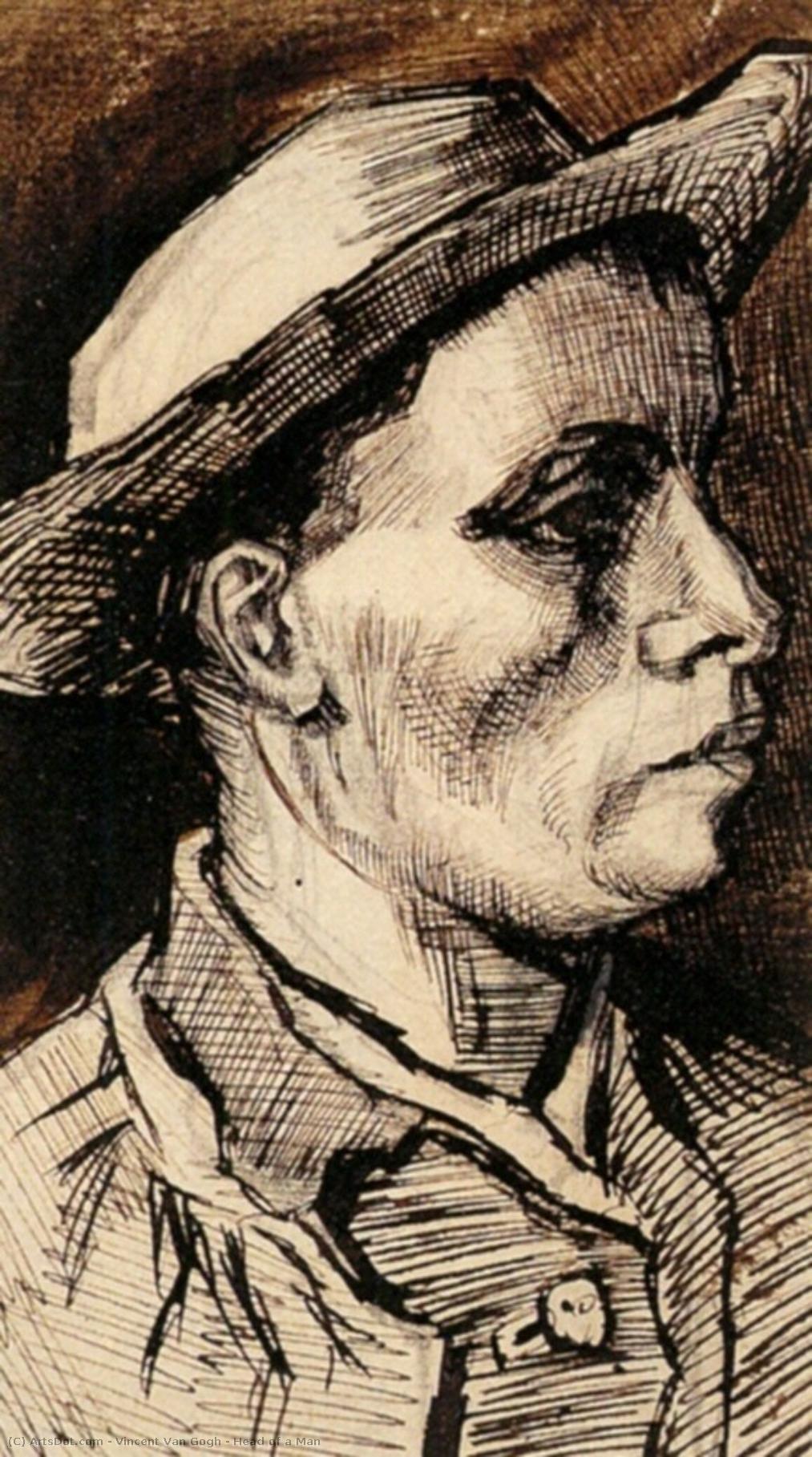
Explore Vincent van Gogh’s ‘Head of a Man,’ a striking black & white drawing showcasing his expressive sketching technique & melancholic emotion. A key work from 1885.
ズント
オランダ
フィンセント・ファン・ゴッホ
Van Gogh, Vincent van Gogh
鮮烈な色彩と感情的な筆致が特徴のポスト印象派画家、フィンセント・ファン・ゴッホ。代表作「星月夜」「ひまわり」は世界中で愛され、表現主義に大きな影響を与えました。短い生涯ながらも、その作品は芸術史に不朽の名を残しています。
ポスト印象派
表現主義
レンブラント・ファン・レイン
1853年3月30日
1890年7月29日
フィンセント・ウィレム・ファン・ゴッホ
オランダ人
農民と土器
フランス
3
フィンセント・ファン・ゴッホは、どの国で生まれましたか?
ゴッホ美術館
(Amsterdam, Netherlands)
🌻ゴッホの魂に触れる旅!アムステルダムのゴッホ美術館で、名画「ひまわり」から生涯を物語る手紙まで、感動的な芸術体験を。🎨✨
A Portrait of Quiet Intensity: Vincent van Gogh’s ‘Head of a Man’
The drawing, titled “Head of a Man,” embodies the very essence of Vincent van Gogh's artistic vision – raw emotion channeled through meticulous observation and masterful technique. Executed in 1885 during his formative years in Paris, this seemingly simple portrait transcends its subject matter to become a poignant meditation on solitude and introspection, reflecting the artist’s profound engagement with the human condition. It stands as a testament to Van Gogh's ability to distill complex feelings into deceptively understated lines, cementing its place within the canon of Post-Impressionist art.
Style and Technique: The Language of Hatching
Van Gogh’s approach to this piece is distinctly expressive, prioritizing tonal variation over precise realism. He employs a technique characterized by heavy hatching and crosshatching—a method he honed during his time studying Japanese prints—to sculpt the form of the man's face and hat with remarkable precision. Unlike Impressionists who sought to capture fleeting moments of light, Van Gogh aimed for an internal representation of his subject, conveying mood and texture through dense layers of intersecting lines. This deliberate choice underscores his belief that art should communicate feeling as much as it depicts appearance; the resulting surface possesses a palpable physicality, mirroring the artist’s own turbulent emotional state. The loose, agitated brushstrokes contribute to the overall impression of vulnerability and contemplation.
Historical Context: Parisian Influence and Spiritual Exploration
Painted amidst Van Gogh's burgeoning artistic experimentation in Paris, “Head of a Man” reflects the broader intellectual currents of the era. Influenced by Symbolism—particularly artists like Edvard Munch—Van Gogh wrestled with questions of faith and mortality, themes that would recur throughout his oeuvre. The drawing’s subdued palette – primarily black and white – reinforces this sense of solemnity and invites contemplation on universal human experiences. It's a deliberate departure from the vibrant colors favored by Impressionists, aligning instead with a desire to delve beneath surface appearances and explore the psychological depths of his subject.
Symbolism: The Face as Vessel of Emotion
Beyond its technical brilliance, “Head of a Man” carries subtle symbolic weight. The man’s gaze—directed downwards—suggests introspection and perhaps even melancholy, hinting at an inner turmoil that mirrors Van Gogh's own struggles with mental illness. The hat serves as a visual anchor, grounding the figure in a recognizable reality while simultaneously emphasizing his isolation. These elements combine to create a portrait not merely of a person but of a state of mind—a powerful distillation of emotion rendered with unwavering conviction.
Emotional Impact: A Window into Van Gogh’s Soul
Ultimately, “Head of a Man” resonates deeply with viewers due to its ability to evoke empathy and understanding. It captures the quiet dignity of human experience amidst profound uncertainty, mirroring Van Gogh's own relentless pursuit of beauty and truth. The drawing’s understated elegance—achieved through masterful hatching—serves as a poignant reminder that art can communicate emotion without resorting to grand gestures; it is a testament to Van Gogh’s enduring legacy as an artist who dared to confront the complexities of human consciousness with unflinching honesty. Its reproduction offers a captivating glimpse into the inner world of one of history's most influential figures, inviting contemplation and inspiring appreciation for the transformative power of art.