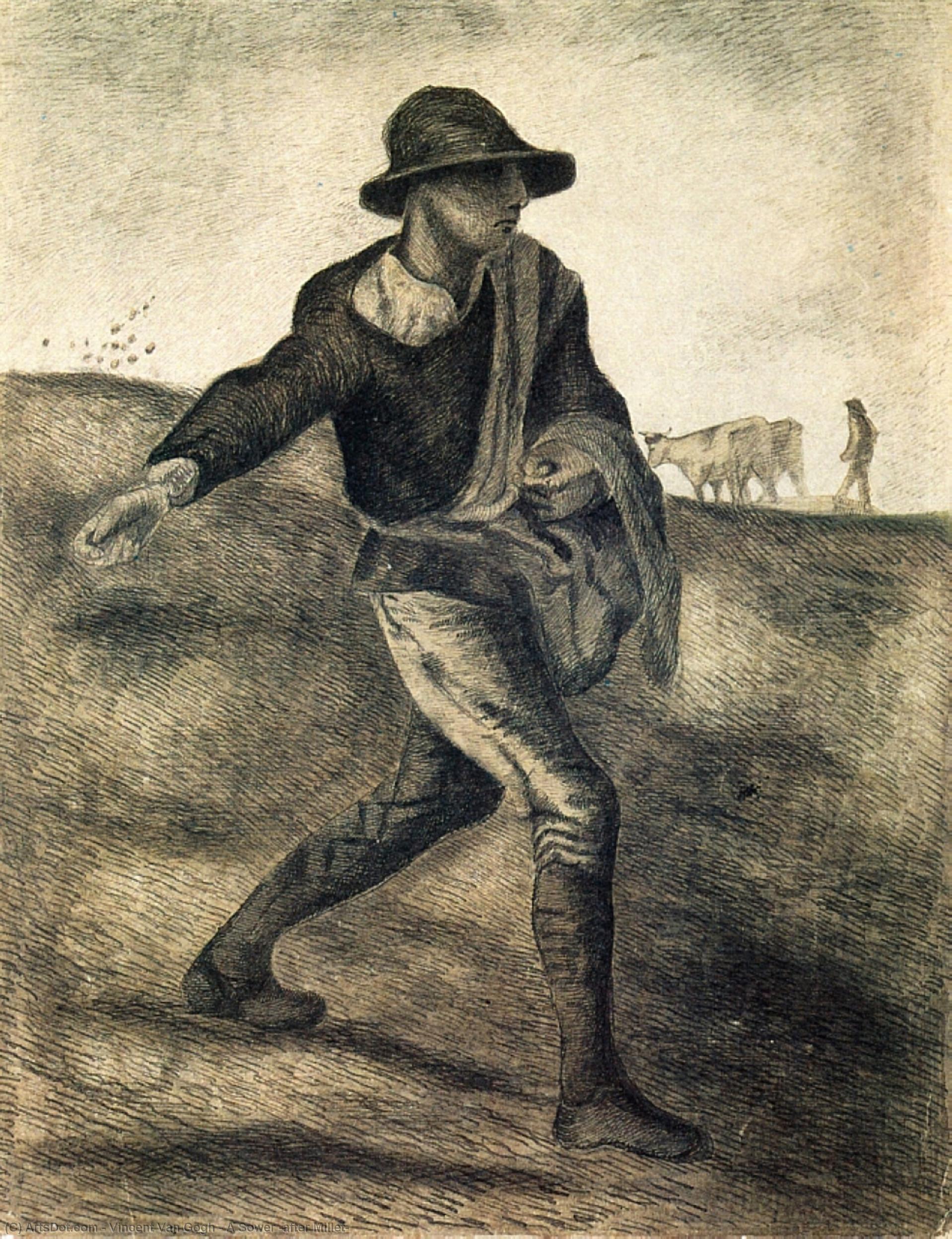
A Sower (after Millet)
Vincent Van Gogh's
A Sower (after Millet) is a captivating pencil drawing that exemplifies the artist's unique interpretation of rural life. Created in 1881, this piece reflects Van Gogh’s early fascination with the works of Jean-François Millet, a renowned French painter known for his depictions of peasants and landscapes.
The Influence of Millet
Millet's influence on Van Gogh is evident in A Sower (after Millet). The drawing features a man walking in a field with two cows behind him, reminiscent of Millet’s style. However, Van Gogh's rendition is characterized by bold lines and expressive strokes, which were hallmarks of his Post-Impressionist technique.
Post-Impressionism
Post-Impressionism was an art movement that emerged in the late 19th century as a reaction against Impressionism. It emphasized the artist’s emotional response to the subject matter and often featured distorted forms and exaggerated colors. Van Gogh, along with other notable artists like Paul Cézanne and Georges Seurat, played a significant role in shaping this movement.
Van Gogh's Style
In A Sower (after Millet), Van Gogh's style is evident in the dynamic lines and expressive brushstrokes. The drawing captures the essence of rural life, with the sower and cows set against a backdrop of rolling hills and flying birds. This piece showcases Van Gogh’s ability to convey emotion and movement through his art.
Relevance to ArtsDot
ArtsDot offers high-quality, handmade oil painting reproductions of famous artworks, including those by Vincent Van Gogh. Our collection includes pieces like Marsh with Water Lillies and Field with Factory, which demonstrate Van Gogh's unique style and technique.
- Marsh with Water Lillies by Vincent Van Gogh: A beautiful example of Van Gogh's Realism style.
- Field with Factory by Vincent Van Gogh: A Post-Impressionist masterpiece showcasing the contrast between nature and industry.
- Sower by Vincent Van Gogh: Another rendition of the sower theme, highlighting Van Gogh's fascination with rural life.
For more information on Post-Impressionism and its key figures, visit
Post-Impressionism Art Movement Introduction at ArtsDot.