Vincent van Gogh’s ‘Near the Hearth’: A Study in Quiet Intensity
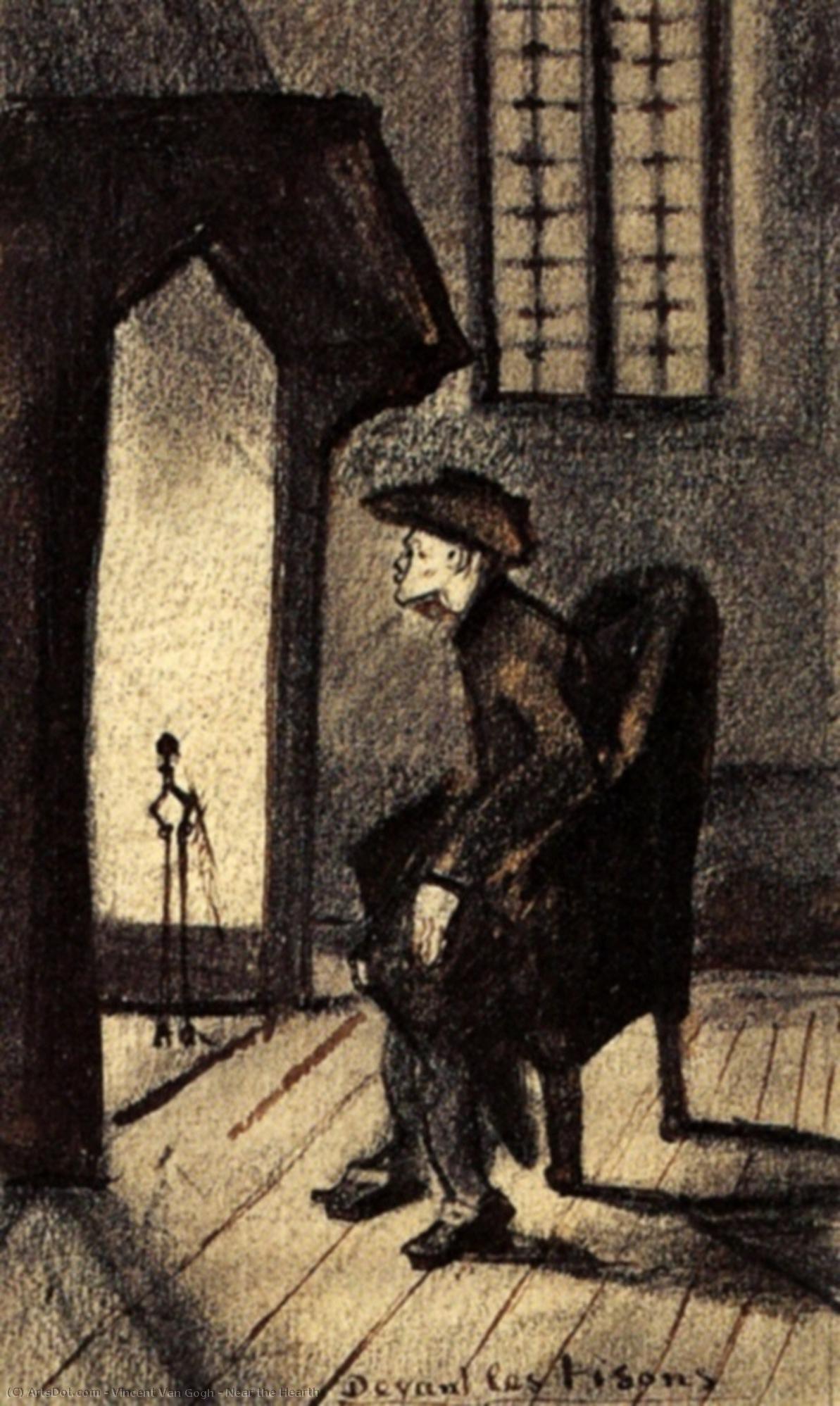
“Near the Hearth,” painted by Vincent van Gogh in 1881, offers a poignant glimpse into a moment of domestic tranquility – or perhaps, a carefully constructed illusion thereof. This seemingly simple depiction of an elderly man seated before a fireplace is far more than just a genre scene; it’s a concentrated distillation of Van Gogh's evolving artistic concerns and his profound engagement with the human condition. The black-and-white drawing, meticulously rendered in pencil, ink, and on paper, possesses a remarkable stillness that draws the viewer into the man’s solitary contemplation. The image, as documented by WikiArt, exemplifies Van Gogh’s early foray into Realism, a style characterized by its direct observation of everyday subjects and rejection of idealized representations.
A Window into the Artist's World
Created during a pivotal period in Van Gogh’s artistic development – specifically while he was living in Brussels – “Near the Hearth” reflects his growing interest in capturing not just appearances, but also the emotional weight associated with ordinary scenes. The man himself is an enigmatic figure, identified by WikiArt as having a wig and mustache, suggesting a deliberate attempt to portray a specific social type of the time. His posture, leaning slightly forward, coupled with the held umbrella, hints at vulnerability and perhaps a quiet struggle against the elements – both literal and metaphorical. The two windows behind him are crucial; they aren’t merely architectural details but act as portals, inviting us into the man's private world and suggesting a yearning for connection or escape.
Symbolism of Hearth and Light
The central element, the hearth itself, is laden with symbolic significance. Historically, the hearth represented warmth, family, security, and domesticity – values that were increasingly threatened by the rapid social changes occurring in 19th-century Europe. Van Gogh’s focus on this traditional space suggests a nostalgic longing for simpler times or perhaps a commentary on the disruption of established social structures. The light emanating from the fireplace is equally important; it's not merely illumination but represents hope, comfort, and the enduring spirit within the man. As noted in another online resource, the painting aligns with genre paintings focused on leisure-and-sleep activities.
Technique and Emotional Resonance
Van Gogh’s masterful use of pencil and ink creates a remarkable sense of texture and depth despite the monochromatic palette. The subtle gradations of tone convey not just form but also mood – a quiet melancholy that permeates the entire scene. The artist's deliberate attention to detail, particularly in rendering the folds of the man’s clothing and the worn surface of the chair, speaks to his meticulous observation skills and his desire to capture the essence of his subject. This piece exemplifies Van Gogh’s early experimentation with tonal values, a technique that would become increasingly central to his expressive style. ArtsDot offers exceptional reproductions capturing this nuanced approach.