A Study in Raw Observation: The Soul of Nuenen
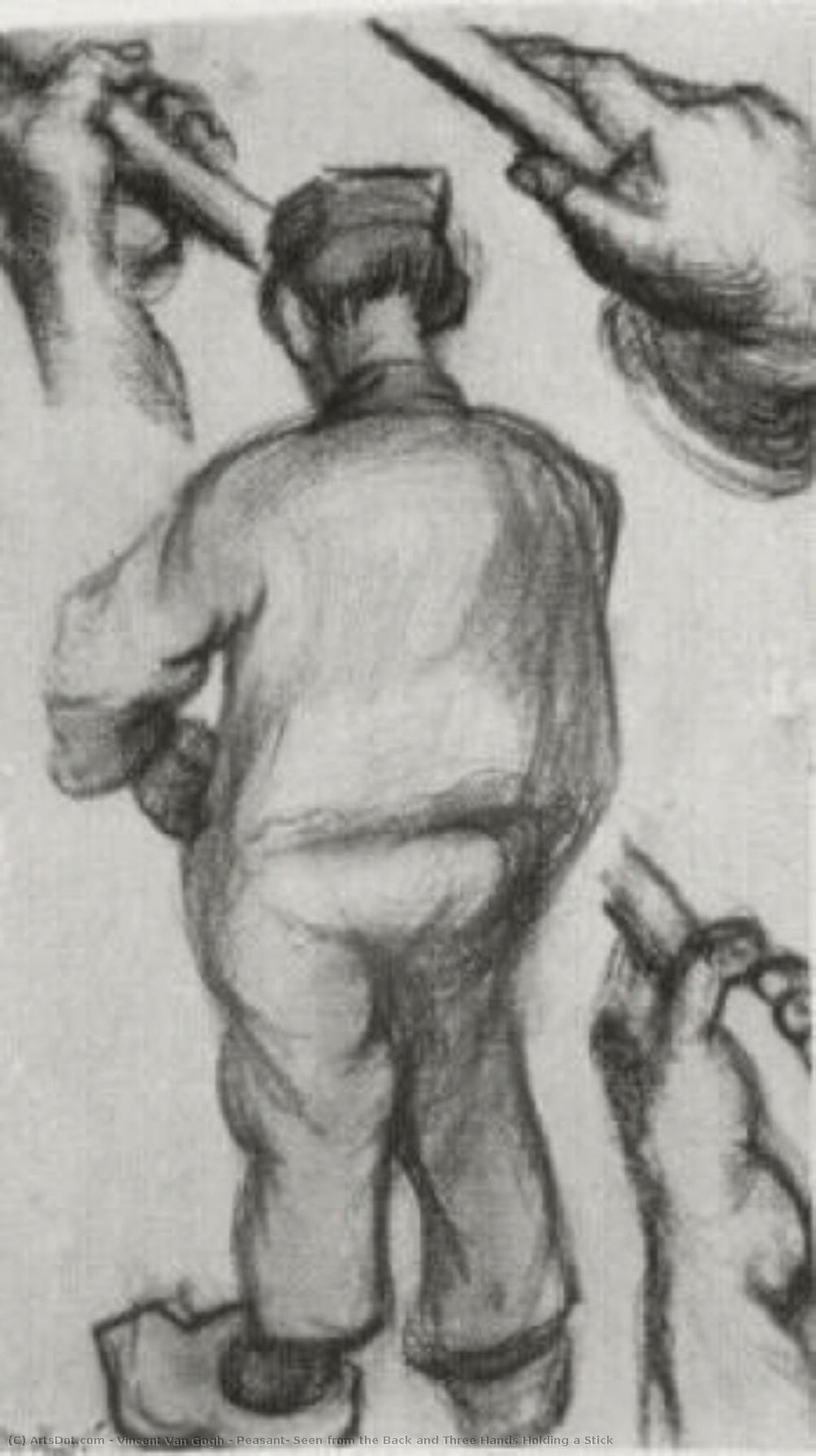
In the quiet, somber landscapes of 1885 Nuenen, a young Vincent van Gogh was engaged in a profound dialogue with the earth and its people. The chalk sketch titled “Peasant, Seen from the Back and Three Hands Holding a Stick” serves as an intimate window into this formative period, capturing a moment of intense anatomical study and social empathy. Unlike his later, explosive canvases filled with swirling yellows and blues, this work belongs to his early Realist phase, where the artist sought to honor the dignity of rural labor through unflinching honesty. The piece is not merely a drawing; it is a rhythmic exploration of weight, texture, and the very essence of human presence within a landscape of toil.
The composition draws the viewer into a meditative state, focusing on the physical reality of the peasant life. By presenting the figure from behind, Van Gogh strips away the distraction of facial expression, forcing us instead to find emotion in the curve of a shoulder and the tension of a limb. This perspective invites a deeper, more universal connection, as the subject becomes an archetype of the hardworking class that defined the Dutch countryside during this era. For the collector or designer, this piece offers a grounding presence, bringing a sense of historical weight and quiet strength to any curated space.
The Mastery of Line and Texture
Technically, this work showcases Van Gogh’s burgeoning mastery over the medium of chalk. There is a tactile quality to the sketch that transcends the flatness of the paper; through delicate shading and strategic layering, he sculpts the contours of the human form with remarkable precision. The artist’s focus on the anatomy of gesture is most evident in the rendering of the three hands gripping the stick. Each hand is positioned at a slightly different angle, allowing Van Gogh to demonstrate varying degrees of musculature, grip strength, and skeletal structure. This meticulous approach reveals an artist who was as much a scientist of sight as he was a poet of color.
The interplay of light and shadow in this monochrome study creates a profound illusion of depth. The way the chalk catches the light to define the ruggedness of the clothing and the solidity of the hands provides a sense of permanence and grit. This emphasis on texture makes the reproduction particularly captivating for interior decoration, as it introduces a sophisticated, organic element that complements both modern minimalist settings and more traditional, classical interiors. It is a piece that demands close inspection, rewarding the observer with new details of light and shadow upon every viewing.
An Enduring Legacy of Empathy
Beyond its technical brilliance, “Peasant, Seen from the Back and Three Hands Holding a Stick” carries an emotional resonance that has endured for over a century. It represents a pivotal moment in Van Gogh’s evolution—a transition from the somber, earthy tones of his Dutch period toward the expressive liberation of his later years. The work embodies his unwavering commitment to portraying the world with profound empathy, finding beauty not in idealized perfection, but in the rugged, unvarnished truth of existence. To possess a reproduction of this work is to hold a fragment of art history’s most passionate journey.
For those looking to inspire others through art, this piece serves as a testament to the power of observation and the beauty found in the everyday. It is an ideal selection for those who appreciate the intersection of historical narrative and raw, emotive technique. Whether placed in a gallery-style living room or a quiet study, Van Gogh’s early mastery continues to pulse with a life force that remains as vibrant today as it was in the studios of Nuenen.