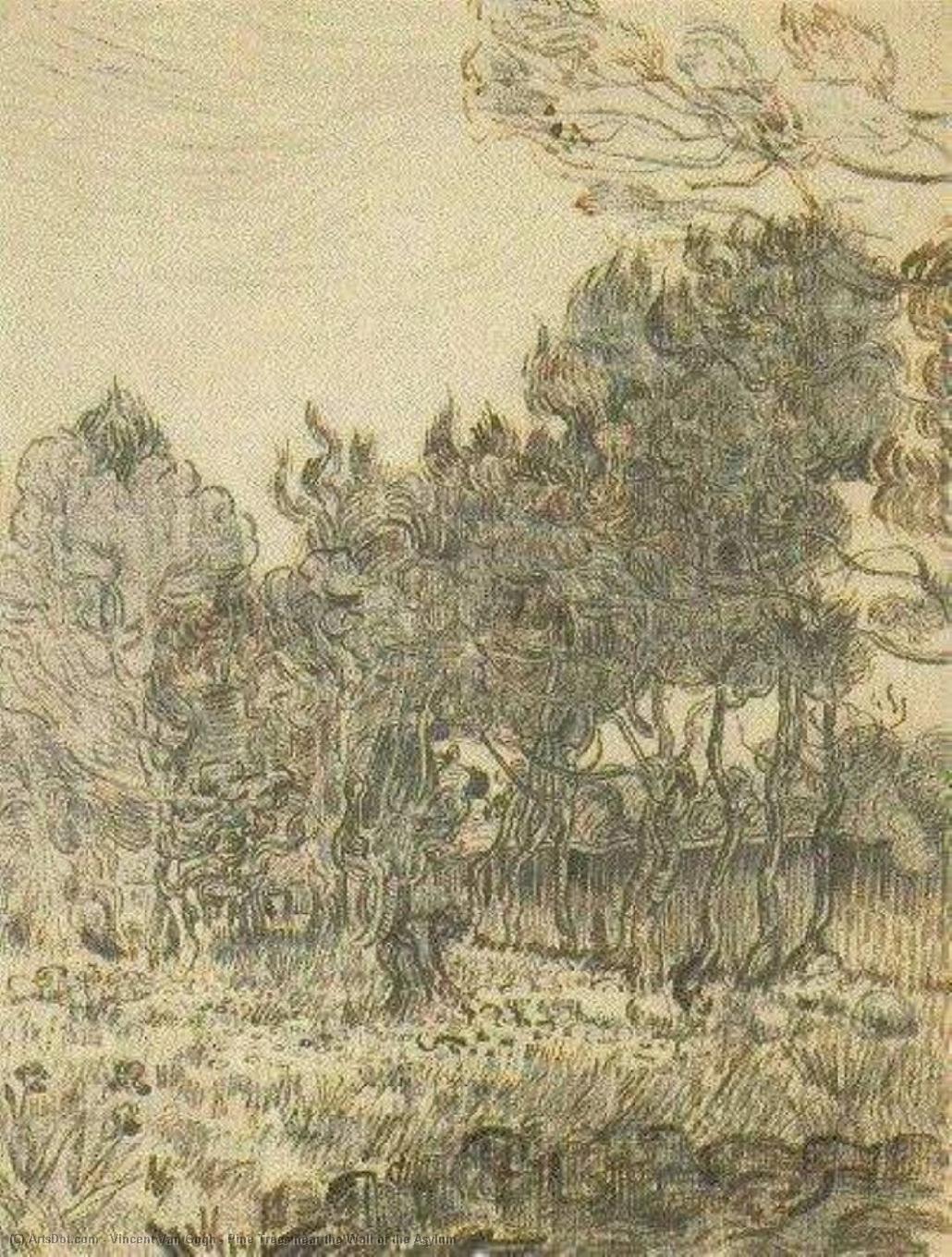
The Enclosure of Emotion: Van Gogh’s “Pine Trees Near the Wall of the Asylum”
Vincent van Gogh's "Pine Trees Near the Wall of the Asylum," painted in November 1889 during his voluntary confinement at the Saint-Paul-de-Mausole asylum in Saint-Rémy, is far more than a simple depiction of trees. It’s a poignant window into the artist’s turbulent inner world, a visual embodiment of isolation and longing for connection rendered with an intensity that continues to resonate profoundly today. The painting captures a serene yet subtly unsettling scene: a dense grove of pine trees stands before a stark, imposing stone wall – the boundary of the asylum's garden, and by extension, Van Gogh’s own psychological landscape.
The composition is deceptively simple. Van Gogh employs a limited palette dominated by deep greens, blues, and browns, creating a sense of both depth and claustrophobia. The trees themselves are not idealized; they are rendered with a raw, almost brutal honesty – their branches gnarled and twisted, their forms suggesting struggle rather than grace. Notice the deliberate lack of detail in the foliage; Van Gogh isn’t striving for botanical accuracy but rather capturing the *feeling* of the forest—its density, its shadow, its quiet power. The wall, a monumental presence in the background, acts as a visual barrier, reinforcing the sense of confinement and separation that characterized Van Gogh's experience within the asylum.
A Window into Turmoil: Context and Technique
Painted during a particularly challenging period in his life—a time marked by episodes of intense anxiety and hallucinations—the painting offers a rare glimpse into Van Gogh’s state of mind. The asylum, while providing a refuge from the streets of Paris, was also a place of profound loneliness and psychological distress. He had voluntarily entered seeking treatment for mental illness, and his stay was punctuated by periods of instability and hospitalization. This context is crucial to understanding the painting's emotional weight; it’s not merely a landscape but a visual diary entry.
Technically, Van Gogh utilizes a technique known as “broken brushwork”—short, distinct strokes applied in an almost chaotic manner. This method isn’t intended to create a smooth or realistic image, but rather to convey the energy and immediacy of his experience. The thick application of paint—often visible beneath subsequent layers—adds texture and depth, creating a vibrant, tactile surface. He uses a technique called impasto, where he applies paint thickly, building up the surface with multiple layers of color. This creates a three-dimensional effect that draws the viewer into the scene.
Symbolism and Emotional Resonance
The pine trees themselves are rich in symbolic meaning. Traditionally associated with resilience, longevity, and connection to the earth, they represent strength and endurance—qualities Van Gogh desperately sought during his time of struggle. However, their gnarled forms also suggest vulnerability and pain. The wall, a symbol of restriction and isolation, underscores the artist’s feeling of being trapped within himself and his mental illness. The lone figure glimpsed in the background – often interpreted as Van Gogh himself – adds another layer of complexity, suggesting a yearning for connection and escape.
Furthermore, the painting's color palette contributes significantly to its emotional impact. The cool blues and greens evoke feelings of melancholy and introspection, while the darker browns create a sense of foreboding. The interplay between light and shadow further intensifies this effect, suggesting both hope and despair. It’s a masterful demonstration of how Van Gogh used color not merely to represent reality but to convey emotion.
A Timeless Masterpiece: Reproduction and Legacy
"Pine Trees Near the Wall of the Asylum" is now housed in the Van Gogh Museum in Amsterdam, a testament to its enduring artistic value. Its powerful imagery continues to captivate audiences worldwide. For those seeking to bring this iconic work into their own homes or workspaces, high-quality reproductions offer an accessible and affordable way to experience Van Gogh’s genius. ArtsDot.com offers meticulously crafted prints that faithfully capture the painting's vibrant colors and expressive brushwork, allowing you to connect with this profound masterpiece on a personal level.
Consider pairing "Pine Trees Near the Wall of the Asylum" with other works by Van Gogh, such as “Starry Night” or “Sunflowers,” to explore the breadth and depth of his artistic vision. The Van Gogh Museum provides invaluable resources for further research and appreciation of this extraordinary artist’s life and work.