A Portrait of Childhood: Vincent van Gogh’s *Portrait de Camille Roulin*
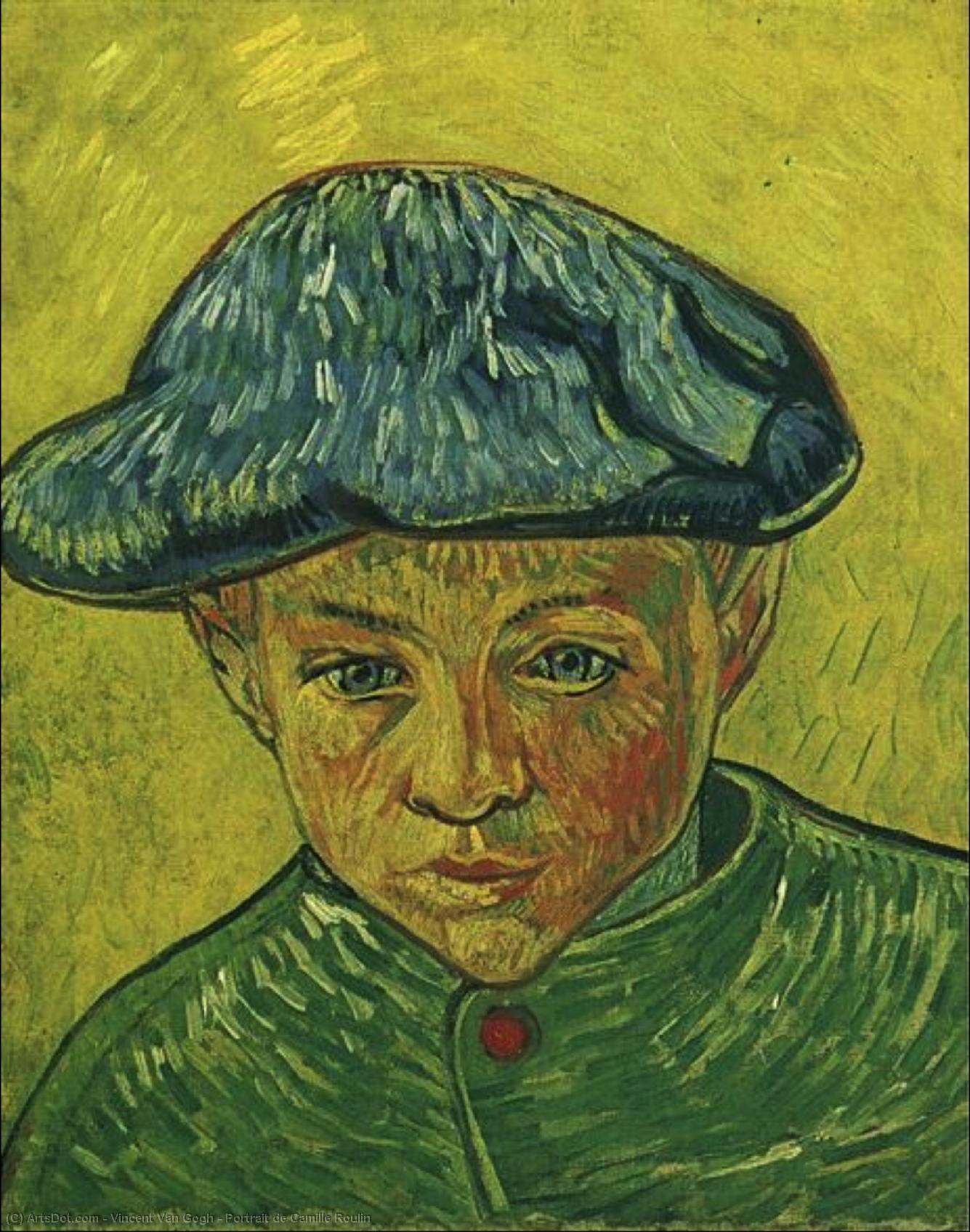
Portrait de Camille Roulin is a captivating depiction of youthful innocence rendered in Van Gogh's signature Post-Impressionist style. This painting, created around 1888-1890, offers a poignant glimpse into the artist’s exploration of character and his deeply empathetic approach to portraiture. The subject, Camille Roulin – son of the postman Joseph Roulin, a close friend of Van Gogh in Arles – is presented with an immediacy that transcends mere physical likeness.
Style & Technique: Impasto and Emotional Expression
The artwork exemplifies Van Gogh’s revolutionary technique.
Thick impasto brushstrokes, applied with vigorous energy, define the form of young Camille. The paint isn't merely *on* the canvas; it *is* the canvas, building a tactile surface that seems to vibrate with life. This deliberate texture is not accidental – it’s integral to Van Gogh’s expressive intent. He used color and brushwork not to replicate reality, but to convey his emotional response to his subject. The vibrant yellow-green background, while unconventional, serves to intensify the focus on Camille's face and upper body, creating a sense of intimacy and drawing the viewer into the boy’s world.
Historical Context: Portraits & Post-Impressionism
During the late 19th century, portraiture was evolving beyond simple representation. The advent of photography freed painters to explore psychological depth and emotional resonance in their depictions of individuals. Van Gogh embraced this shift wholeheartedly. He believed that a portrait should reveal not just *what* someone looked like, but *who* they were – their inner character and spirit.
His portraits are less about physical accuracy and more about capturing the essence of his sitters. This work is part of a series of paintings Van Gogh created of the Roulin family, whom he considered kindred spirits during his time in Arles.
Symbolism & Interpretation: Innocence and Vulnerability
While not overtly symbolic, *Portrait de Camille Roulin* subtly conveys themes of childhood innocence and perhaps a hint of vulnerability. The boy’s direct gaze, combined with the slightly somber tones of his clothing, suggests a quiet thoughtfulness beyond his years.
The blue cap and green jacket, while simple garments, are rendered with such care that they become integral to Camille's identity within the painting. Van Gogh often used color to express emotion; here, the cooler hues may hint at a gentle melancholy or introspection.
Emotional Impact & Aesthetic Appeal
This portrait is profoundly moving. It’s not simply a picture of a boy; it’s an encounter with a soul. The painting's raw emotional honesty and dynamic brushwork create a powerful connection between the viewer and the subject.
Its vibrant colors and textured surface make it a visually striking piece, capable of adding depth and character to any interior space. *Portrait de Camille Roulin* is a testament to Van Gogh’s genius – his ability to transform an everyday scene into a timeless work of art that continues to resonate with audiences today.
Collecting & Reproduction Considerations
- Due to its historical significance and the artist's enduring popularity, original works by Van Gogh are exceptionally rare and valuable.
- High-quality reproductions on canvas or fine art paper offer an accessible way to experience the beauty and emotional power of this masterpiece.
- When selecting a reproduction, pay attention to the texture and color fidelity to ensure it accurately reflects Van Gogh’s distinctive style.
- This painting's bold colors and expressive brushwork make it a versatile addition to various interior design schemes, from traditional to contemporary.