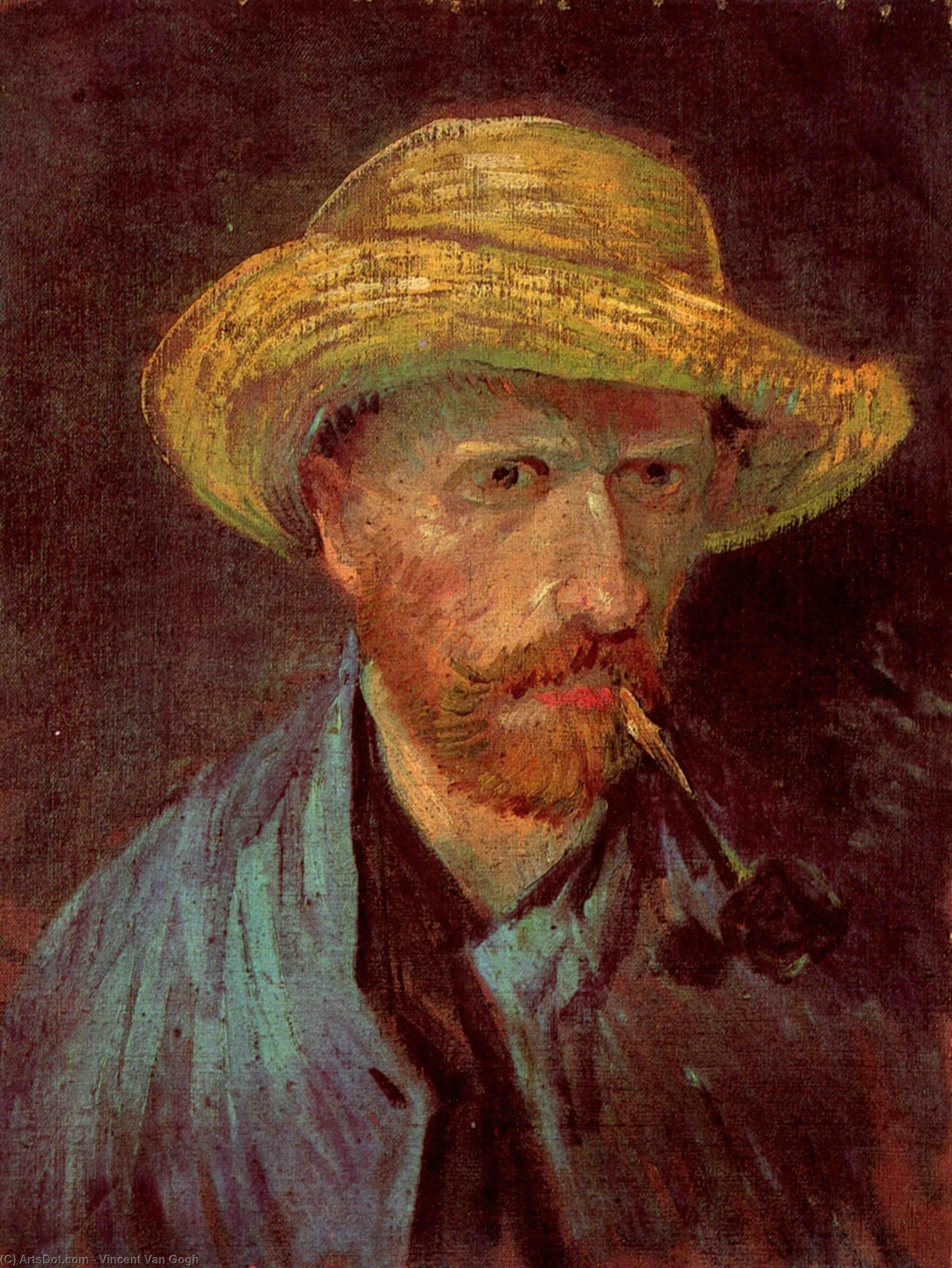
Self-Portrait with Straw Hat and Pipe: A Glimpse into Van Gogh's Soul
- Title: Self-Portrait with Straw Hat and Pipe
- Artist: Vincent van Gogh
- Date: 1887
- Medium: Oil on Canvas
- Size: Unknown
- Location: Museum Ateneum, Helsinki, Finland
A Detailed Examination of the Artwork
Vincent van Gogh's "Self-Portrait with Straw Hat and Pipe," painted in 1887, offers a profound window into the artist’s inner world during his Parisian period. This self-portrait isn't merely a likeness; it's an exploration of identity, introspection, and the burgeoning artistic style that would define Van Gogh's legacy. The portrait depicts Van Gogh wearing a simple straw hat and smoking a pipe, elements that suggest a moment of quiet contemplation amidst a period of intense creative development.
The composition is straightforward yet compelling. Van Gogh gazes slightly off-camera, his expression conveying a sense of focused intensity. A chair sits near the center, grounding the scene in an everyday reality. The background remains relatively subdued, drawing all attention to the artist himself and his immediate surroundings. This deliberate simplicity amplifies the emotional weight carried by Van Gogh's face.
Artistic Style and Technique
This self-portrait exemplifies Van Gogh’s evolving post-Impressionist style. The use of vibrant hues, though restrained compared to some of his later works, is already evident. Thick paint application, a hallmark of his technique, creates a dynamic texture that brings the canvas to life. The straw hat and pipe are rendered with meticulous detail, showcasing Van Gogh's developing skill in capturing form and light. The brushstrokes themselves reveal an energy and emotion that transcends mere representation.
During this period in Paris (1886-1888), Van Gogh was deeply influenced by Impressionist and Neo-Impressionist techniques, experimenting with color theory and broken brushwork. While he absorbed these influences, he ultimately forged his own unique path, characterized by a heightened emotional intensity and expressive use of color that would become synonymous with his name.
Historical Context and Symbolism
Painted during Van Gogh's time in Paris, this self-portrait reflects his immersion in the burgeoning modernist art scene. He was exposed to new artistic movements and techniques, which he incorporated into his work. The straw hat itself can be interpreted as a symbol of rural simplicity and connection to nature, contrasting with the urban environment of Paris. The pipe, frequently depicted in Van Gogh's self-portraits, represents moments of respite and contemplation – a brief pause from the relentless pursuit of artistic expression.
It’s important to note that this period was marked by significant personal struggles for Van Gogh. While he found inspiration in the Parisian art scene, he also battled with mental health challenges and financial instability. This self-portrait can be seen as a testament to his resilience and determination to continue creating despite adversity.
Emotional Impact and Legacy
"Self-Portrait with Straw Hat and Pipe" resonates deeply with viewers due to its raw honesty and emotional vulnerability. It offers an intimate glimpse into the mind of one of history's most celebrated artists, inviting us to connect with his struggles, aspirations, and unwavering dedication to his craft.
Today, Van Gogh’s paintings are revered for their emotional depth and innovative style. This self-portrait, along with his other works, continues to inspire artists and art lovers worldwide, solidifying his place as a pivotal figure in the history of Western art. The Museum Ateneum in Helsinki is fortunate to house this remarkable piece, allowing generations to experience its power and beauty.